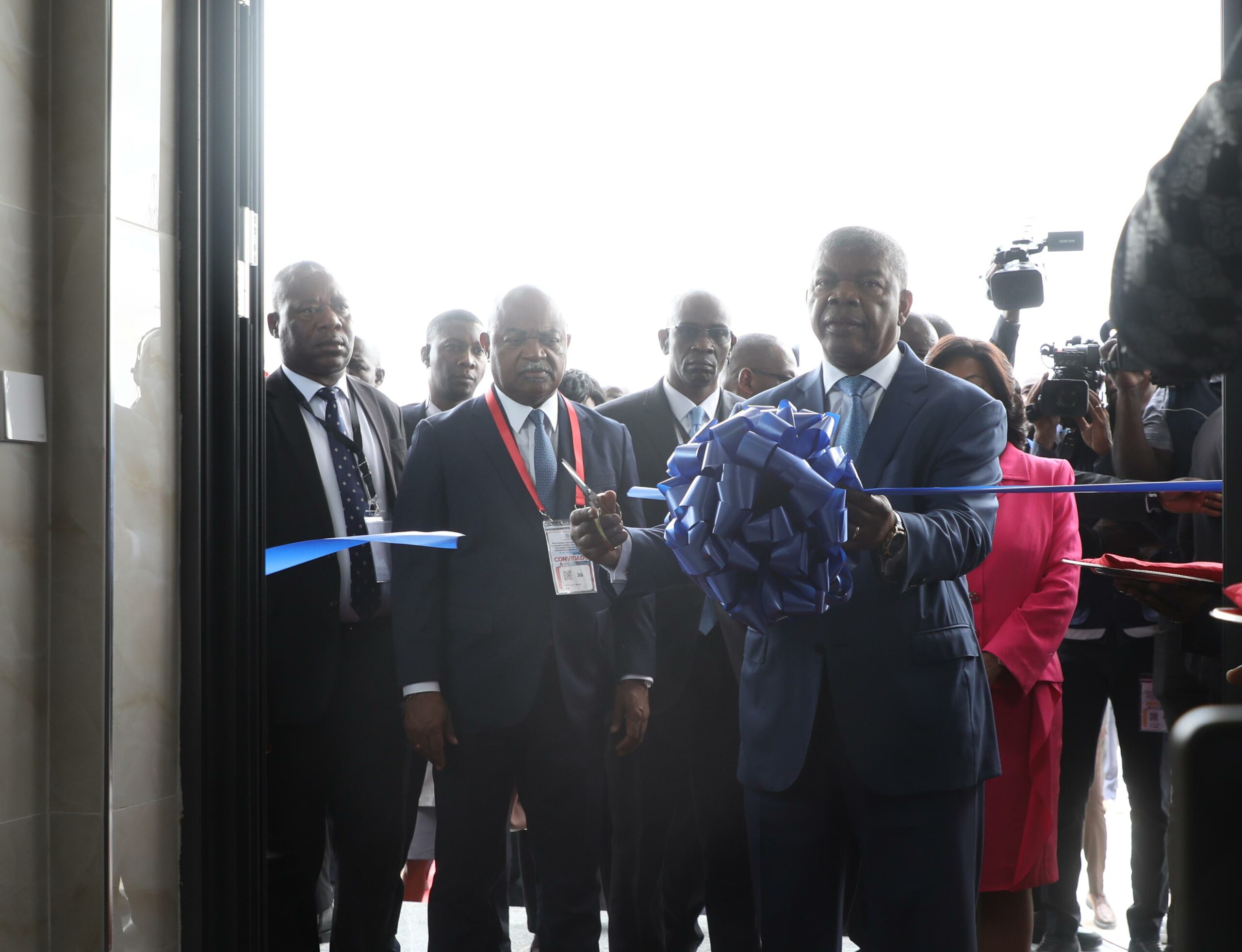
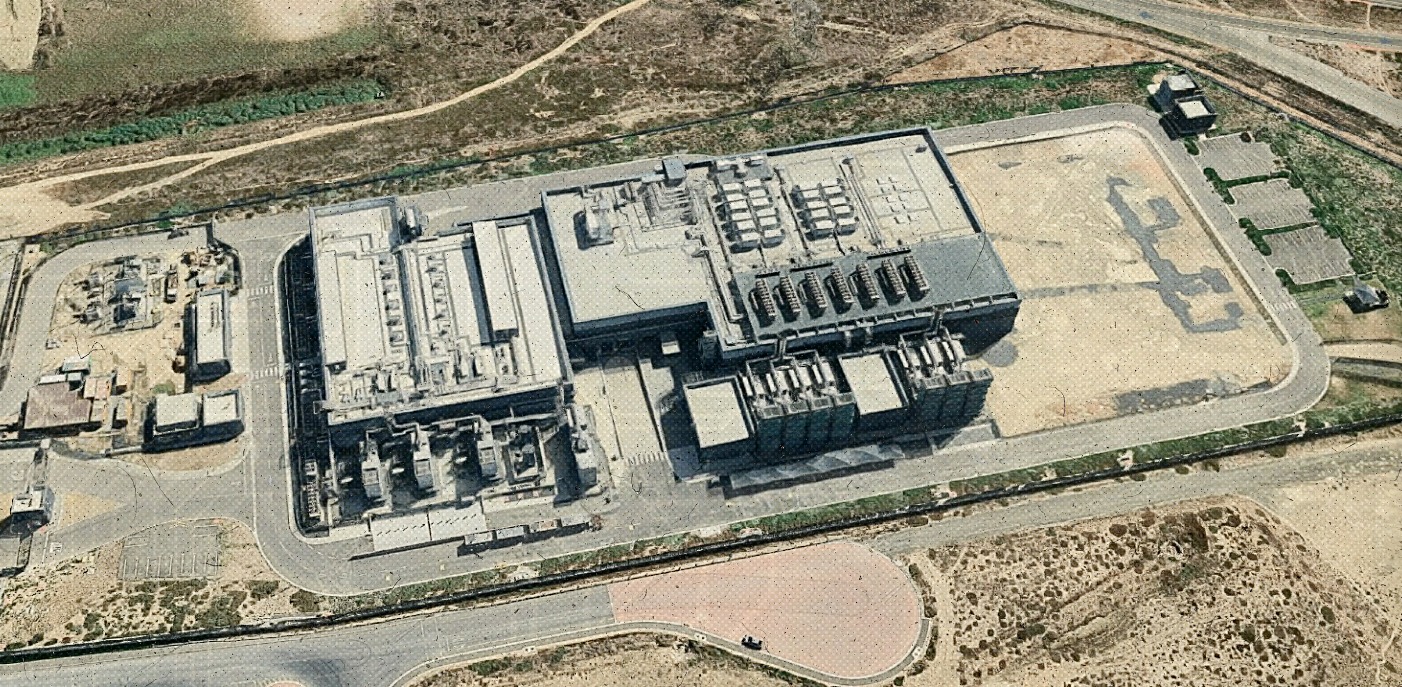
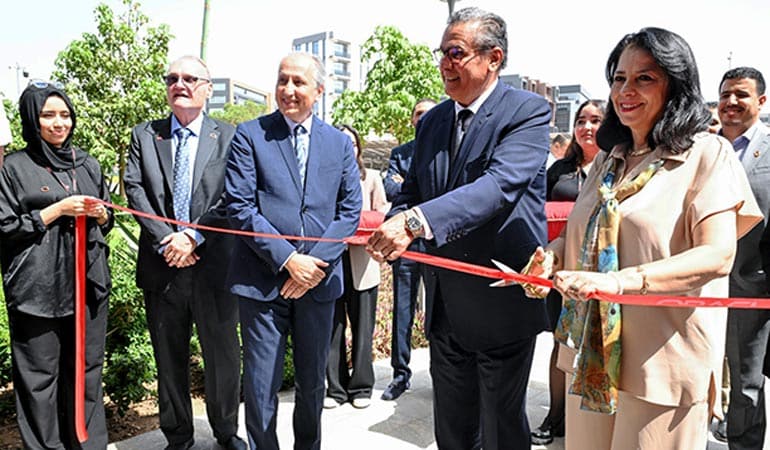
Algeria's post and telecommunications minister laid the foundation stone for a government-owned AI data centre in the Akid Lotfi district of Oran. No capacity or cost figures were released; the facility is meant to give researchers, startups and universities access to AI compute. The government says it expects AI to contribute 7% of GDP by 2027.
South African investor INFRAGORA Global Capital plans two Tier III+/IV AI-ready data centres in Nigeria under its AFRIDATA platform, costing US$650 million to US$1 billion, with 80MW to 100MW of initial capacity and construction from Q2 2027. A 160MW to 200MW gas, renewables and battery plant from sister company Ocha Energy would supply them, and USTDA is funding a feasibility study. Investors, funding secured, tariffs and a financial close date were not disclosed.
Mali's state transmission company SMTD-SA and Sénégal Numérique SA switched on a fibre interconnection between their national backbones at the Kidira-Diboli border crossing on 5 October 2026, giving the landlocked country another path to subsea cables, which Malian authorities say runs via Cabo Verde and Portugal. Ecofin sets this against World Bank findings from 2023: Mali already had 12 cross-border fibre links through seven exit points, yet 29 of its 57 cercles and 130 of 704 secondary towns were not connected to the national backbone, which SMTD puts at 3,500km. The new route adds resilience at the border, while reach inside the country remains the weak point.
Teraco, controlled by Digital Realty, is buying vacant industrial land with existing substation infrastructure in Brackenfell, next to its 50MW CT2 campus. The Competition Commission has recommended unconditional approval, with the Tribunal still to rule. The price was not disclosed and Teraco says it has not settled plans for the site.
London-based SoleCrypt announced at NVIDIA GTC Berlin a 40MW AI and HPC campus in Bizerte, targeting operations in 2028. Phase 1 is 7MW built around NVIDIA HGX Rubin NVL8, with up to 1,728 GPUs, and the company says power will come from a dedicated 60MW solar and battery project in Tozeur feeding the national grid. The site sits 3.6km by fibre from the Medusa cable; Schneider Electric, Supermicro and Sterling & Wilson are among named partners, and no cost was disclosed.
Uganda's ICT ministry has launched a National Data Strategy for 2026/27 to 2030/31, developed with UN Global Pulse and UNDP, that targets two Tier IV data centres with 10 petabytes of combined sovereign storage by 2030/31. It also aims to raise government platforms linked through the Ug-Hub integration layer from 135 to 300. The plan is costed at shs1,662.6 billion over five years, funded mainly through government budgets plus partner support and private co-investment, and is meant to lay groundwork for a national AI strategy.
Enterprise estimates Egypt's installed data centre IT load at 15 to 60MW, with only about 20MW of new capacity firmly committed against 400 to 500MW of unfunded plans, as officials aim to finish a first national data centre strategy by end-2026. It argues Gulf insecurity after strikes on regional data centres may favour Egypt, but flags gas-dependent power, US approval for Nvidia chips and data protection guarantees as hurdles. The Electricity Ministry expects the telecom sector to need about 1GW over two years.
The Medusa subsea cable made its first Libyan landing in Benghazi on 17 October 2026, with a second landing planned for Tripoli. Private Benghazi operator O3 Group used the occasion to set out plans for a 12,000-13,000km national fibre network and a Tier III data centre with 160-plus racks, about 2MW expandable to 5MW. The outlet notes that apart from the landing, the figures are design targets rather than built capacity.
Burundi's Council of Ministers adopted a national cybersecurity strategy on 14 October 2026, covering protection of critical infrastructure, a legal and institutional framework and a national incident response team. The strategy had been drafted with World Bank PAFEN support and was awaiting approval as of December 2025. Burundi scored 16.77 out of 100 in the ITU's 2024 Global Cybersecurity Index, with zero on technical and organisational measures.
LinkWise's US$1.35 billion integrated project in Djibouti, announced in July 2026 under an MoU with the government, includes a high-performance AI computing centre, a digital industrial park, telecoms infrastructure, international data corridors and renewable generation. Officials expect about 2,000 construction jobs and 500 to 700 skilled posts once operating, and the labour minister met the company on 14 October on local hiring and training. No compute or power capacity has been disclosed, and the project remains at MoU stage.
FiveNines Group will lead design management and permitting preparation for a 20MW AI data centre on the outskirts of Casablanca for Nexus Core Systems, built on NVIDIA's Vera Rubin NVL72 reference architecture. The facility is the first block of the 180MW AI factory that Nexus agreed with Moroccan agencies in April 2026 and plans to deliver next year. Investment for the 20MW phase was not stated.
On 8 October 2026 the Central African Republic revived a plan to connect to DR Congo's fibre, which runs about 650 km from Kinshasa to the WACS landing at Moanda, to reduce its reliance on routes through Cameroon and Congo. Route, cost and timeline were not given. CAR's 935 km national backbone dates from February 2023, and internet penetration was about 12% at end 2025.
Equinix's two planned hyperscale data centres at King Air Industria Park, part of a R7.5 billion South African plan, are on hold after appeals by Foxglove, the SAHRC and community groups suspended the city's approval in September. Cape Town mayor Geordin Hill-Lewis, as planning appeals authority, will decide. Equinix has not disclosed the sites' water or power needs.
Niger was set to open its fibre link with Algeria on 5 October 2026 at Assamaka on the border, giving the landlocked country a northern route onto Algerian international capacity along the Agadez to Assamaka corridor of the Trans-Saharan backbone. Niger's share of the backbone is 1,031km on five routes plus an 88km urban loop connecting government sites to a planned Tier III national data centre. Its existing southern path through Benin reaches three subsea systems with about 580 Gbit/s of combined installed capacity at end-2024.
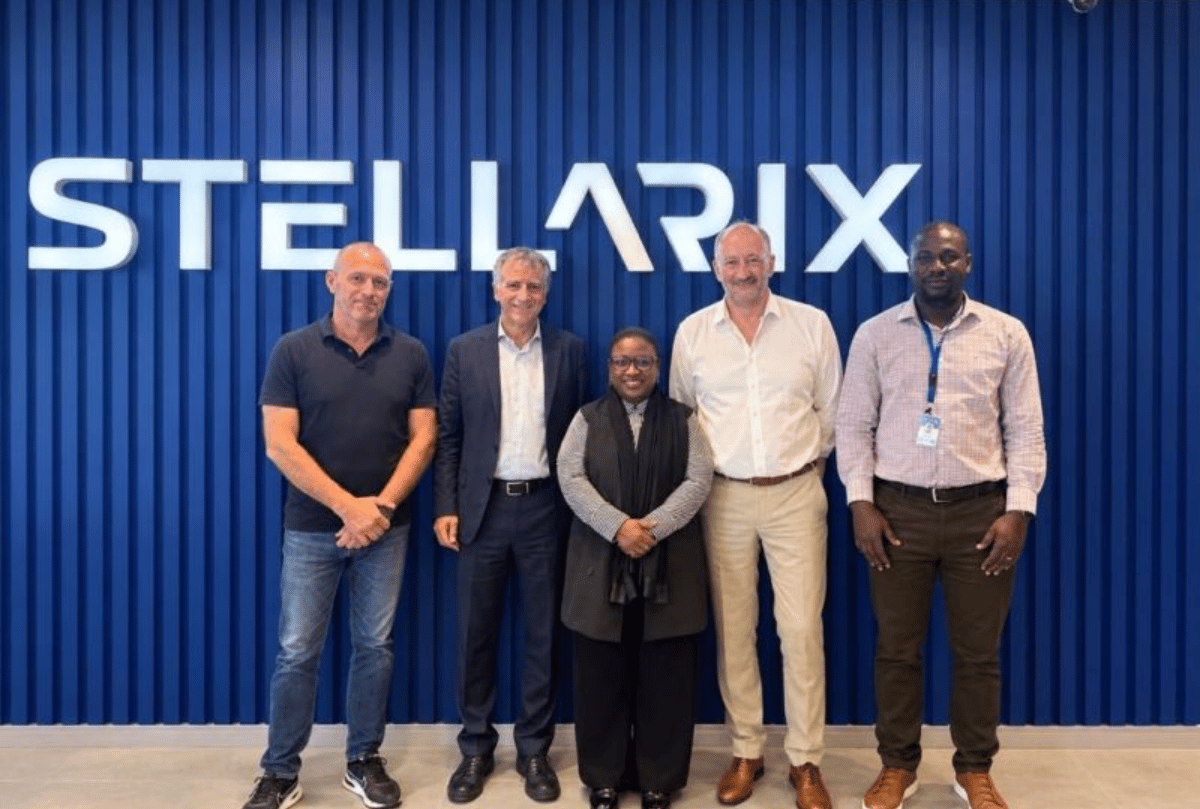
Stellarix, the data centre business of the Axian Group, has added capacity at its Senegal facility, pitching it at sovereign cloud, AI workloads and enterprise hosting. Snef, SERTEM Groupe and Kent Data Centres worked on the build. The announcement gives no megawatt, investment or timing figures, so the scale of the expansion is undisclosed.
Angola Cables is fitting Ciena WaveLogic 6 Extreme optics to its SACS (6,165 km, Angola to Brazil) and MONET (10,556 km, Brazil to the US) systems, enabling 800 Gb/s services and capacity sold from 100 Gbps up to a full fibre pair. The company quotes a 130 ms round trip between Angola and the United States. It is pitching the upgraded route to hyperscale, cloud, wholesale and content customers, along with spectrum and managed fibre offerings.
Liberia is looking for investors in a national data centre, which it pitched at a recent investor dialogue in New York, but participants questioned whether the grid can power it. The country had 126MW of installed generation in 2024, about 70% of it hydro, and 32.5% electricity access per World Bank data, and Mount Coffee output falls in the dry season. Posts and Telecommunications Minister Sekou M. Kromah said feasibility studies will set the approach; no site or investment model has been chosen.
Cabo Verde Telecom and exchange operator DE-CIX signed a letter of intent to study a South Atlantic interconnection corridor between Lisbon and São Paulo, with CVTelecom supplying transport capacity and DE-CIX its exchange ecosystems in Europe and the Americas. CVTelecom would gain access to DE-CIX in Frankfurt, Madrid, Marseille, New York and São Paulo; scope and commercial terms await a definitive agreement, and no dates were given.
Intro Group will put nearly US$270m into the first phase of the 80MW Kemet Data Center in the Suez Canal Economic Zone, which it intends to be the zone's first Tier III facility. According to the ICT ministry, engineering designs are finished and supply contracts for equipment and systems have been signed. No dates were given for later phases.
Congo's national data centre in Bacongo, Brazzaville, built by China's Sumec, is now promised by end 2026 after work stopped in October 2025 at about 95% complete because the state ran short of funds. The building is designed to Tier III-level availability (99.98%), with three 3,000 kVA generators giving 72 hours of autonomy and a hybrid grid and solar supply under study. It belongs to the Central African Backbone programme, a CFA43.65bn envelope co-financed by the AfDB and the Congolese state.
A World Bank Group private sector diagnostic estimates Djibouti could draw up to US$240 million and 1,300 jobs in data centre investment, plus up to US$390 million in private solar, if it fixes regulation, energy supply and market access. The country hosts up to eight subsea cables but only two data centres, both close to full, with three more in development. The barriers named are opaque licensing (decrees under the 2025 Digital Code are still unclear), self-generation caps and electricity pricing, and a state-owned entity's grip on wholesale internet capacity.
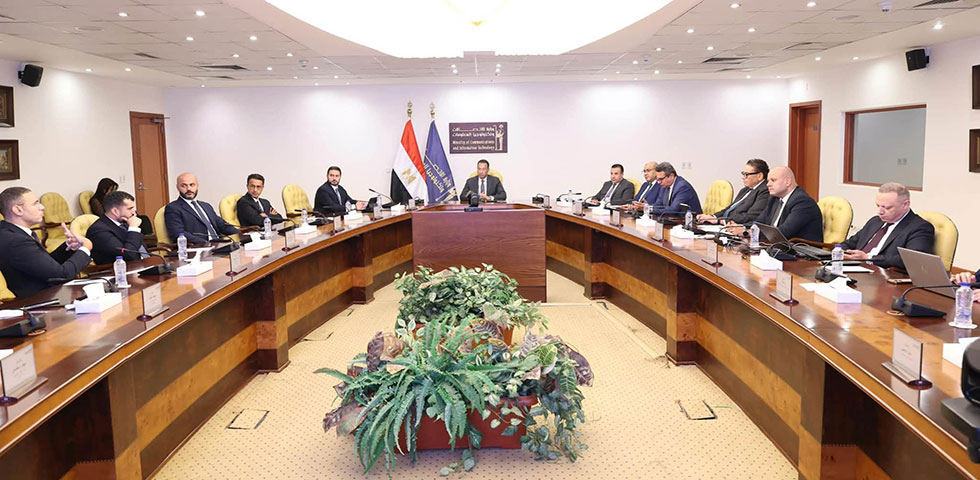
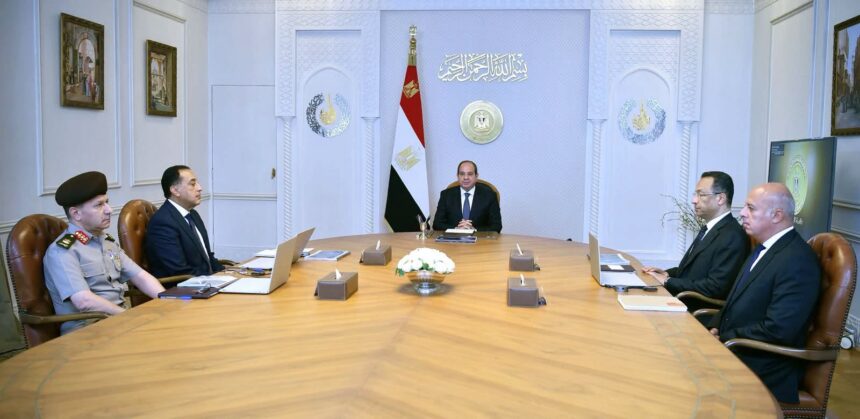
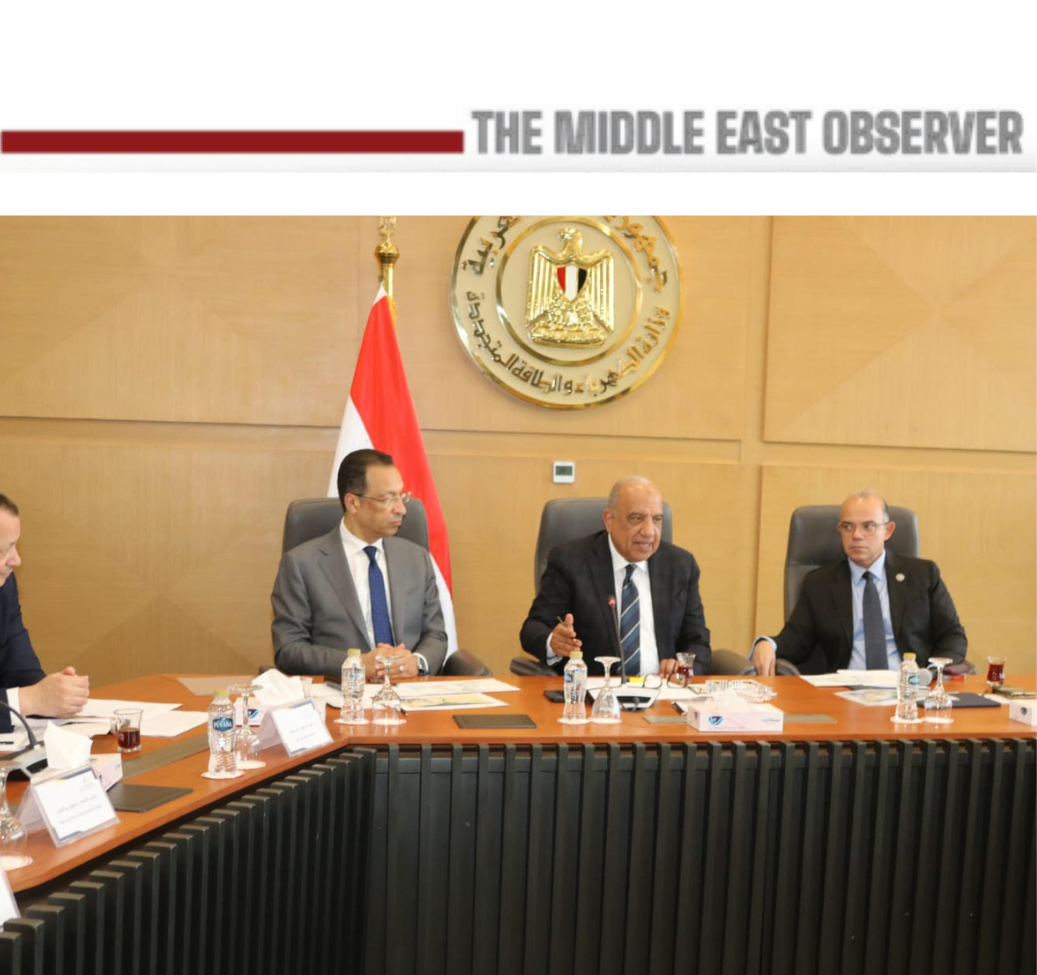
President Al-Sisi directed more investment in cloud and AI and an expansion of large-scale data centres, alongside a wider 5G rollout and steps to reduce concentration risk in communications networks. The meeting set targets of $8bn in digital exports by 2028 and $12bn in digital outsourcing exports in 2029, and reviewed the Karnak Arabic-language AI programme. No data centre capacity or budget was announced.
Communications minister Solly Malatsi told Parliament the National Data and Cloud Policy was designed to give multinationals the certainty to invest in data centres, with incentives handled by the trade department. He said closer work with host municipalities is needed to avoid delays that could deter investment. President Ramaphosa had said in July that hyperscalers have put well over R35.8 billion into local cloud and data centres.
Chad's telecoms minister told the World Bank on 15 September 2026 that the country needs about 8,000 km more fibre, and that six provinces are still off the national backbone. Since the conflict in Sudan cut the eastern link, Chad's only working international exit runs through Cameroon. The report notes that the 1,200 km in the state modernisation programme is planned capacity rather than installed cable, and that a World Bank project with about US$92.2m in grants runs to 2029.
Nigeria's digital economy minister Bosun Tijani visited N'Djamena on 16 September 2026 to discuss linking Chad to Nigeria's planned 90,000 km open-access BRIDGE fibre network, which would give Chad access to international capacity landing at Lagos. The two sides signed a joint communiqué and handed details to technical teams. No financing was mentioned.
The Ethiopian Artificial Intelligence Institute is courting high-performance computing, cloud and AI infrastructure on the strength of cheap renewable power: the country has 9,760MW installed, about 96% hydro, with 5,150MW at GERD alone. The analysis notes that existing facilities from Raxio and RedFox at the Ethio ICT Park are far below hyperscale, that being landlocked leaves Ethiopia without direct subsea cable access, and that no major hyperscaler has publicly committed. It frames the push as positioning rather than a secured investment pipeline.
The Competition Tribunal approved an AIIM-managed vehicle's purchase of an interest in JNB11, Vantage's 16MW hyperscale facility on its R15 billion, 80MW Waterfall campus in Midrand. AIIM, owned by Old Mutual Alternative Investments, already backs fibre operators Octotel and MetroFibre. The report leaves unclear whether the deal covers a 50% stake or only the property company's share, and no price was given.
Ethiopia's state utility has throttled electricity to bitcoin miners in stages, first to 75%, then 50% and later 23% of contracted supply, after El Niño-linked drought cut inflows to hydro reservoirs by 20%, according to CEO Ashebir Balcha. Miners use almost a third of the country's 9,730MW output and supplied 35% of Ethiopian Electric Power's revenue last financial year; the utility holds PPAs with 39 mining firms, 31 of them operating. It will reassess in October, may curb power exports further, and has cut its export revenue forecast by 40% to US$279 million.
Somaliland Cable (Somcable) operates both the 2Africa and PEACE subsea landings at Berbera and is tying them into terrestrial fibre toward Ethiopia and South Sudan, pitching Berbera as an alternative gateway to Kenya's Mombasa for landlocked markets. The company says the two physically separate subsea routes give it a technical edge, and it has opened talks with Ethio Telecom on larger international capacity leases. No distances, capacities or investment values were given.
US firm Cybastion announced in Washington on 14 September 2026 about $300m for Senegalese digital infrastructure, covering data centre development, cybersecurity, technology transfer and skills, after its CEO met President Bassirou Diomaye Faye. The pledge builds on a July 2026 agreement with the Ministry of Digital Economy under which Cybastion leads a consortium of US technology firms, and local start-ups are to take part in delivery. The company already leads construction of Côte d'Ivoire's national data centre.
Côte d'Ivoire's first state-owned national data centre, under construction in the VITIB zone at Grand-Bassam, is reported on track to open in 2027 with 1.73MW of IT load, 3MW of total power, 228 racks and 10PB of storage. Washington-based Cybastion leads the build with Ivorian contractor Porteo Group and Cisco, HPE and Schneider Electric as technology partners, backed by a $66.1m US EXIM guarantee approved in August 2025 within a $170m package. Construction had passed 20% by December 2025, and the site joins a private market that already includes Equinix, PAIX, Stellarix, Raxio and ST Digital.
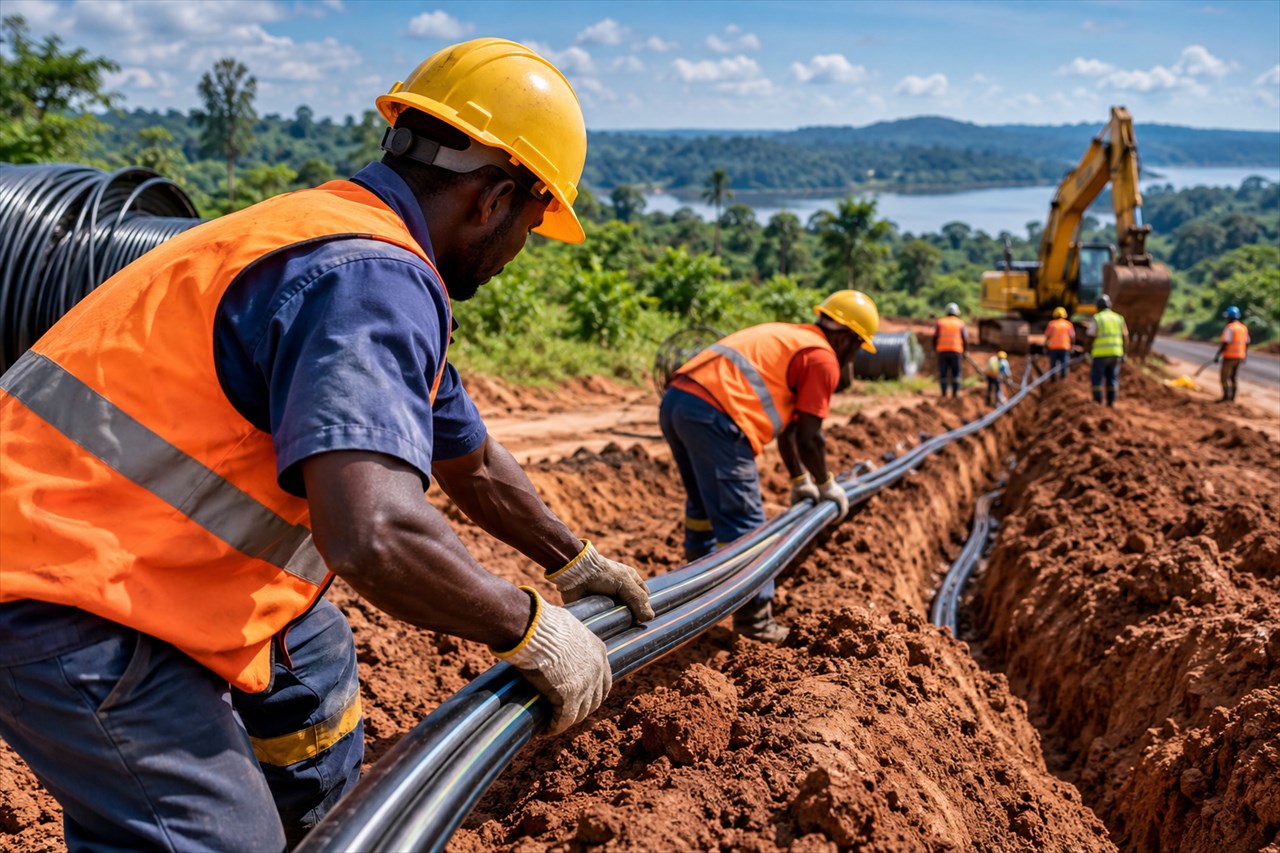
Gabon plans 1,651 km of new fibre, close to doubling its national backbone, under a public-private partnership between asset holder SPIN and Gabon Fiber S.A. validated at Libreville workshops and due for signature on 14 September 2026. Authorities put current international capacity across 2Africa, ACE, Maroc Telecom West Africa and SAT-3/WASC systems at 20 terabytes, rising to 400 with Medusa Africa by 2028. An August fibre cut across four provinces and rising cable theft underline resilience problems.
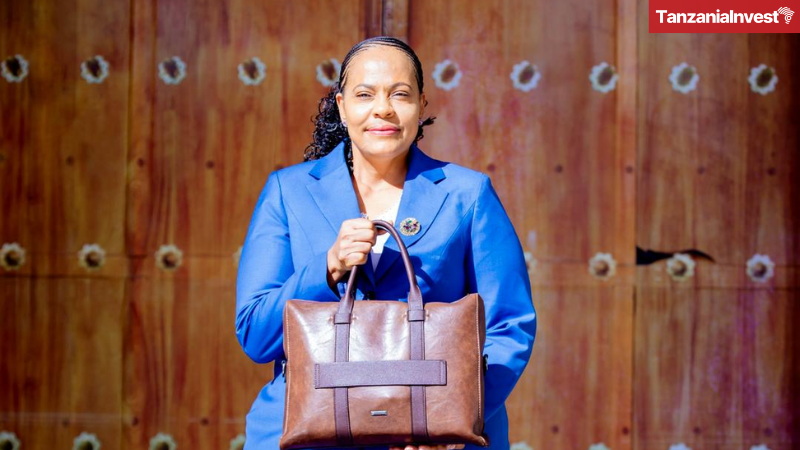
Communications and IT Minister Angela Kairuki says Tanzania intends to build AI data centres and is seeking international partners for infrastructure, skills and financing, citing clean electricity and adequate water as advantages. She spoke at the 2026 KOAFEC ministerial conference in Seoul, where about US$2.5 million has been secured through the South Korea partnership, including support for a digital technology university at Nala in Dodoma. No site or budget for the AI data centres was given.
Telekom Networks Malawi has bought the OCL data centre in Kanengo, Lilongwe, to expand its enterprise offering, including data centre as a service. The operator says the facility will also carry its Mpamba mobile money platform and planned AI services. Neither the price nor the site's capacity was disclosed.
Digital Parks Africa, part of the Master Power Technologies group, announced Nigeria Data Centre 1, a carrier-neutral Lagos facility for banks, cloud and connectivity providers, at ITW Africa on 8 September 2026; capacity, cost and timeline were not disclosed. The report sets it against a Lagos pipeline of about 146MW and a Central Bank of Nigeria directive that payment data generated in Nigeria be stored locally, with full compliance due on 1 January 2027.
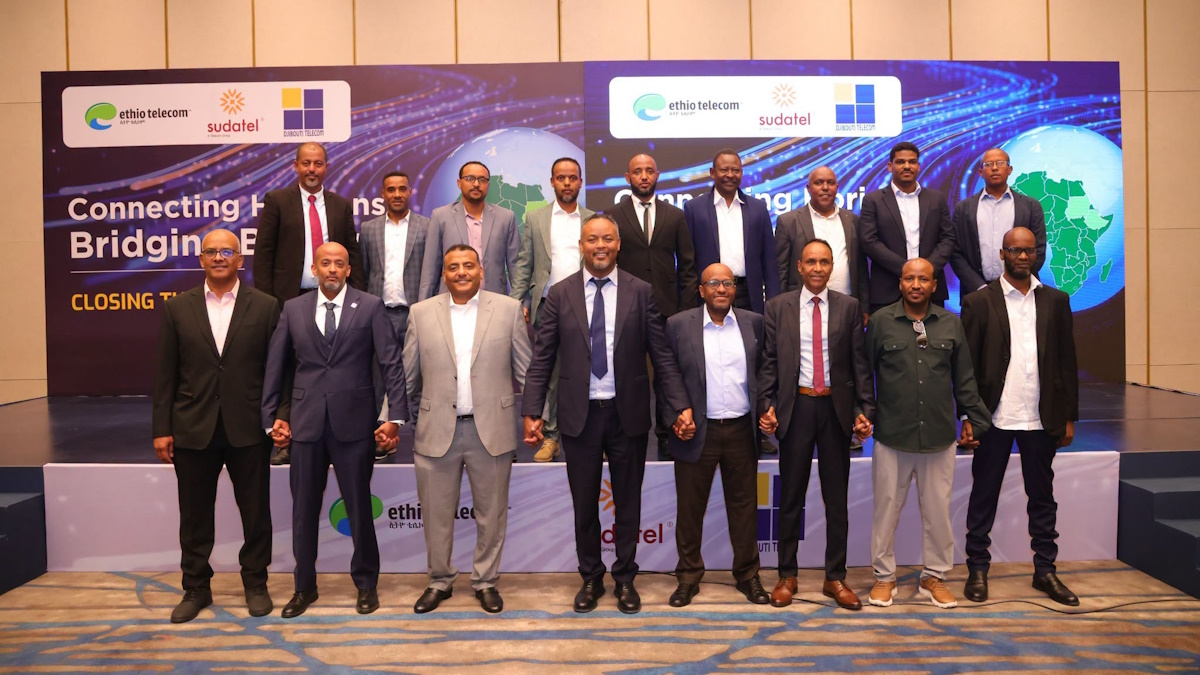
Ethio Telecom, Djibouti Telecom and Sudatel are moving the Horizon Fibre terrestrial corridor toward commercial launch after a stakeholder meeting in Addis Ababa attended by Google, Meta, Microsoft, AWS, Airtel Africa, WIOCC, China Mobile International and others. The multi-terabit route links subsea landing stations in Djibouti and Port Sudan through Ethiopia, offering carriers and hyperscalers an overland alternative to the Red Sea path. Ciena, Nokia and BringCom are advising on the architecture; route length and a build timeline were not given.
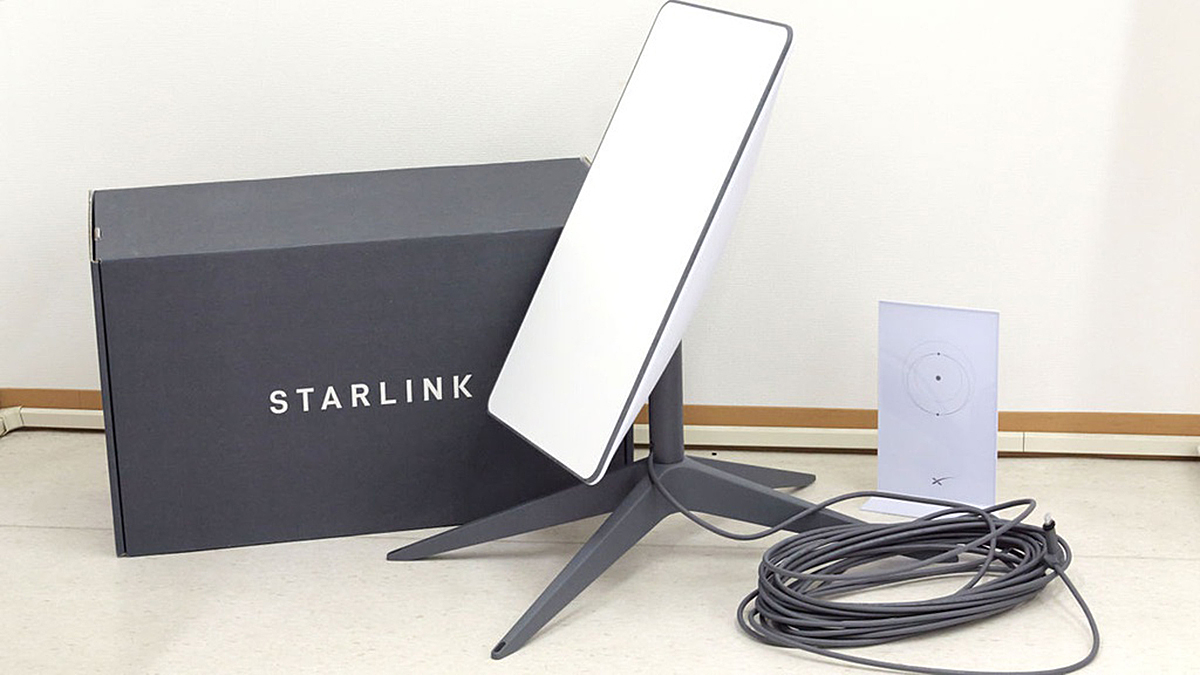
On 8 September 2026 Equatorial Guinea's government gave the telecom regulator ORTEL control of Starlink's commercial operations, under the state secretariat for artificial intelligence, after months of talks with SpaceX over licence fees, tax, security requirements and a possible local entity. Licence terms, ORTEL's operating role and the tax regime have not been published.
Algeria Telecom and Niger Telecom signed agreements in Niamey on 8 September 2026 for a 100Gb terrestrial link between In Guezzam and Agadez, with Algeria donating the transmission equipment, as part of the Trans-Saharan backbone that also targets Nigeria, Chad, Mali and Mauritania. The telling figure is on the compute side: according to Niger's digital economy minister, the backbone was 97% built at the start of 2026, but the national data centre attached to the same project was only 8% complete. The Niger fibre segment received provisional acceptance in November 2025; no financing figures were given.
The US Trade and Development Agency signed an agreement on 9 September 2026 to fund a feasibility study by CSquared Ghana for an open-access fibre network strung along power lines run by the Northern Electricity Distribution Company (NEDCo). The study is to assess commercial viability, technical design, expected demand and a financing plan for northern Ghana. The grant size and route length were not disclosed.
Vodafone Egypt and Cassava Technologies launched what they call Egypt's first sovereign AI factory, offering NVIDIA GPU capacity as a service with data kept inside Egypt. It sits within Vodafone Egypt's plan to spend more than EGP 20bn this fiscal year. GPU count, site and project cost were not disclosed.
Mauritius-based INDOI (IOX) and partners announced the LuLu Coastal Cable System, about 500 km along Kenya's coast with five landings from Mombasa to Lamu, including Vipingo SEZ, Kilifi and Malindi, pairing a submarine cable with a protected terrestrial route. Blue Trade Investments is the Kenyan landing party, with ARISE IIP, AfriTrade and Kingdom Bank involved; the developers cite 144 fibre pairs and up to 60 Tbps per pair. Ready for service is targeted for Q2 2028 subject to contracts, and no supplier, construction start or cost has been named.
Vodafone Business, Elsewedy Electric and Cassava Technologies are forming Africa Data Centers Egypt, starting at 20MW and planned to grow to 200MW for AI workloads. ICT minister Raafat Hindy expects about US$200m in the first phase rising to US$1bn at full build, with Elsewedy bringing energy and construction capability. The minister also said a national data centre strategy is being prepared.
The Communications Authority of Kenya opened a 30-day public consultation on a dedicated licence category for co-location data centres, which are now licensed under the Network Facilities Provider Tier 2 regime. The regulator says a separate licence would sharpen oversight, support investment and match peer jurisdictions. It follows a 2025 revision of the Unified Licensing Framework; no fees were disclosed.
Digital Realty has opened NBO2, a 6.2MW facility beside its existing NBO1 on a Nairobi campus planned for 34,000 square metres, with up to 4,000 square metres of IT space in the new building. The site connects to more than 100 networks, two internet exchange points and a satellite teleport for backup. The former iColo business now trades under the Digital Realty brand in Kenya and Mozambique. Mordor Intelligence puts Kenya's total data centre capacity at 15MW in 2025, forecast to reach 25MW by 2030.
Orange has announced ReuNION, a 16-fibre-pair cable of about 320Tbit/s linking La Reunion to the South African coast, costing about EUR93.1m with EU, French state and operator funding, and due for service in 2028. It is meant to replace the Safe cable, in service since 2002 from Melkbosstrand and Mtunzini via Mauritius to Asia, which Reunion operators expect to reach end of life from 2027. Orange has not named the South African landing site.
ICT Minister Raafat Hendy met Heka Data and a US consortium of data centre developers to discuss a combined data centre and AI hub, with NTRA, ITIDA and Telecom Egypt officials present. Talks covered scope, phasing, investment and streamlining approvals, and stressed matching the build with reliable power supply. No capacity, investment figure or timeline was disclosed; the parties said they would move on to studies.
Telecom Egypt has contracted Power Sub Link to build a repeaterless cable of about 200km from Sharm El Sheikh to Taba, extending its Red Sea festoon into one subsea route linking Suez, Zafarana, Ras Ghareb, Sharm El Sheikh and Taba. The operator cites about five petabits per second of capacity and a ready-for-service date in Q4 2027. It adds landing options and redundancy for Asia-Europe traffic crossing Egypt.
Teraco's 2026 sustainability report puts its 2025 water usage effectiveness at 0.03 litres per kWh, against 0.95 for Equinix and a US average of about 1.8 cited from Lawrence Berkeley research. The operator says total water use fell from 38,330kl in 2023 to 31,801kl in 2025 while its IT capacity doubled, crediting closed-loop dry and free-air cooling. The figures land as water use has become a flashpoint in South African data centre approvals.
US firm Cybastion plans to invest US$75m in Douala in a sovereign data centre paired with its own power plant, according to the US Embassy, which announced it on 27 August at the first US-Cameroon bilateral economic dialogue. It was one item in a US$7bn package of American investment and trade announcements. Capacity, size and timeline have not been published.
After a fibre cut in Cameroon knocked out service in the Central African Republic, Ecofin examines the country's reliance on the Central Africa Backbone route through Cameroon, where Camtel has previously cut off Chad over unpaid bills. The planned Congo link is not yet live, with the Owando to Ouesso section still under construction and jointly run by two operators. Routes via South Sudan, Sudan, Kenya, Nigeria or North Africa are described as theoretical and dependent on cost, distance and politics.
The South African Human Rights Commission opened an inquiry in May 2026 into the rights implications of data centre growth. The Climate Justice Coalition called for a halt to new builds over electricity, water and land pressure, while ISPA argued local facilities use far less water than global averages and that new load could help Eskom, which now faces surplus supply.
KINIX, the Kinshasa internet exchange run by ISPA-DRC, has added the Tier III Raxio DRC facility alongside OADC's FIH1, making it a two-site exchange. It counts 23 networks over 25 connections, including all four Congolese mobile operators plus Meta and Cloudflare, and moves more than 1 Tbps, which it expects to pass 2 Tbps after the Raxio deployment. Operators from outside the DRC already peer there as KINIX positions itself as a Central African hub.
Nigeria's Ministry of Communications, Innovation and Digital Economy has launched a National Digital Cloud Policy that seeks US$750 million of private investment within 24 months and aims to make the country a West African cloud and hosting hub. It covers data centres, cloud and AI compute, applies sovereignty rules to defined categories of government and regulated data, and proposes a National Digital Marketplace to pool ministries' cloud buying. Rollout runs in three phases over two years, alongside Project BRIDGE.
Lesotho's ICT ministry and the UN ran a five-day workshop in Maseru from 17 to 21 August 2026 to draft a National AI Strategy and a Data Centre Blueprint for secure, resilient data infrastructure. The work builds on AI, data management, and broadband and shared infrastructure policies validated in 2025. The Deputy Prime Minister urged building safeguards, capacity and infrastructure before scaling AI investment.
A mid-term review of Congo's digital plan finds that the network has grown faster than its use. WACS (2012) and 2Africa (2023) land at Matombi, an operator-funded backbone runs Matombi to Pointe-Noire to Brazzaville, the regulator ARPCE runs a Pointe-Noire data centre, and the Central African Backbone already reaches Gabon and CAR with the Cameroon link still being built. Meanwhile e-government services remain largely undigitised, though mobile data volumes grew more than 40% year on year.
Eskom's chairman says the utility has surplus power it cannot sell and is courting US tech firms, but Teraco argues the binding constraint is grid access and wheeling rather than generation. Teraco, at roughly 189MW of critical load, has a 120MW solar plant due for commissioning in Q4 2026 plus NOA wind PPAs, expects new renewables to cover over half its use by end-2027, and wants Eskom to carry power it contracts elsewhere. Any data centre tariff class would need Nersa approval after public consultation, and Teraco expects local AI demand to be mostly smaller inference clusters.
Equinix is taking its Johannesburg 1 site in Germiston, opened in 2024 on a $160m investment, from 4MW to 24MW through two further 10MW phases, with the facility designed for AI loads including liquid cooling. The company has set aside R7.5bn for South Africa overall and bought more land in Johannesburg and Cape Town earlier in 2026, though its local MD says nothing is being built on those plots yet and further capacity depends on customer demand.
Botswana Fibre Networks has finished its 2025-2026 local access programme, a P43m build taking fibre to Moshupa, Ramotswa-Taung and Thamaga. It connected 191 business, government and residential customers across the three villages and created 210 construction jobs.
Project BRIDGE, Nigeria's plan for about 90,000km of new fibre reaching all 774 local government areas, has moved into execution with the incorporation of Bridge Open Access as its project company. Private investors are to hold the majority stake and government a minority, and the World Bank, AfDB and EBRD have committed financing, though no amounts or rollout dates were given. Right-of-way disputes and vandalism remain risks.
State Minister for Communications Ahmed Osman Dirie says the federal government is drawing up plans for a National Data Centre to store government data and support public digital services. He made the remarks at the launch of Garad.ai by the Arkaan AI Centre in Mogadishu. No budget, site, capacity or timeline was announced.
Óscar Ondo handed over leadership of GITGE, the state telecom infrastructure company, on 7 August 2026 after nearly 13 years, having been named Secretary of State for Telecommunications and AI Systems by Decree 61/2026. The piece credits GITGE with Ceiba-1, Ceiba-2 and the Ultramar link to Sao Tome, and says international capacity rose from about 500 Mbps to over 30 Gbps. Feasibility studies under the AfDB-backed PARED project cover FTTH in four towns, cable landing buildings in Malabo and Bata, and a possible new international submarine cable.
Namibia's ICT ministry has made a National Data Centre a flagship project for 2026/27, within a ministry budget of N$639.2m of which only N$13.6m is for development spending. The same plan covers shared radio access network towers, the national cybersecurity strategy and the Data Protection and Cybercrime bills, plus reviews of broadband policy and the Communications Act. No separate cost or timeline for the data centre was given.
During a July 2026 trip to China, Congo's digital economy minister Frédéric Nze held talks with unnamed telecom and technology firms on a new data centre and a sovereign cloud for strategic state data. Congo also joined the World Artificial Intelligence Cooperation Organization at WAIC in Shanghai. No figures, partners or sites were announced.
Morocco's digital transition ministry signed an MoU with Vertiv in Rabat covering data centres, cloud, AI, HPC and the power and cooling systems they need. A central item is talks on a 50MW sovereign data centre in Rabat for government cloud, AI and cybersecurity workloads. The minister also met N+ONE Datacenters and Cybastion afterwards; no investment figure was given.
Under Regulatory Notice 2 of 2026, Potraz begins mandatory risk-based inspections of data controllers from 1 September, starting with banks, insurers, local authorities and healthcare. Any organisation processing data on 50 or more people needs an annual licence under SI 155 of 2024 (US$50 to US$2,500 by tier) and a certified data protection officer; the March 2025 licensing deadline has passed. Unlicensed processing can bring a Level 11 fine, up to seven years in jail, or both, and breaches must be reported within 24 hours.
The City of Cape Town has cleared two hyperscale campuses drawing roughly 174MW combined, among the largest new individual loads on the African grid. The approvals land against McKinsey projections that continental installed capacity grows from about 0.4GW today to 1.5–2.2GW by 2030, needing an estimated $10–20bn of investment.
Cloud provider Bubble, the first company licensed by INTIC in the advanced category, will run two availability zones, one in Maputo City and one at Beluluane in Maputo Province. The company says the dual-site setup improves continuity and keeps customer data and applications in the country.
South Africa hosts about 70% of Africa’s data centres and has drawn commitments from Microsoft and Amazon, with the market expected to roughly double to $5bn by 2031. Reuters reports the build-out is colliding with the country’s electricity and water constraints, raising the question of whether new load competes with households already exposed to outages and drought.
Telecom Egypt's board has dropped the sale of a 75% to 80% stake in its Regional Data Center Hub to Helios Investment Partners, a deal valued at US$230m when announced in September 2025, saying term-sheet conditions were not met. It will instead move the hub into a wholly owned data centre subsidiary. The Cairo campus opened in 2021 at 2.5MW, a second phase takes it to 7.1MW and two more phases are planned to reach 16.3MW.
State operator Getesa signed a six-month programme with Huawei to add capacity and fix the congestion an audit traced to its equipment and bandwidth. The government also wants to commercialise the roughly 2,000 km fibre network owned by power utility Segesa, possibly through a dedicated company with Huawei as technical partner. The country had about 1.18 million internet users at end 2025.
Wholesale infrastructure firm CSquared said on 13 July 2026 that it has activated capacity on the 2Africa West subsea cable, adding a route alongside its Equiano capacity, which lands in Nigeria and Togo. Its terrestrial backbone carries traffic from landing points such as Accra, Lagos and Abidjan inland to Burkina Faso, Mali, Guinea, Sierra Leone and Liberia. The move follows cable cuts off Cote d'Ivoire in March 2024 and again in June 2026 that disrupted connectivity across the region. No capacity figure was disclosed.
Raxio Group plans to open TZ1 on the outskirts of Dar es Salaam this year, billed as Tanzania's first carrier-neutral Tier III facility, with 6MW of IT load, 800 racks and a 4,000 square metre footprint, joining 11 existing data centres in the country. Raxio says it will use the SEACOM and EASSy cables to sell IP transit to landlocked neighbours, and reports signing six times as many power contracts in the first half of 2026 as in all of 2025. Shareholders Meridiam and Roha have lifted Raxio's funding pool to US$380 million.
MACRA, Malawi's data protection authority under the 2024 Data Protection Act, consulted industry in Blantyre on draft regulations for controllers and processors of significant importance. The proposed annual registration fees scale with turnover, from K50,000 to K7 million. The rules are not yet final.
ICT minister Emma Theofelus told the new CRAN board that the Cybercrime Bill and Data Protection Bill are being finalised, without giving a timeline. Until they pass, enforcement relies on the Electronic Transactions Act, Communications Act and Penal Code. CRAN's incident response team logged 103,085 cyber threat incidents and 367,670 vulnerabilities in Q1 2026.
Axian group data centre operator Stellarix says its operations in Madagascar, Tanzania and Senegal now hold ISO 9001, ISO 22301 and ISO/IEC 27001 certification, covering colocation, cloud, managed connectivity and cybersecurity. No site capacities were disclosed.
A BMI (Fitch Solutions) note counts 14 data centres in Morocco with just 1.5MW in operation at Q2 2026, against 140MW under construction and 400MW in planning, concentrated in Casablanca-Settat and Rabat-Sale-Kenitra. BMI projects cloud spending of $981m by end-2026 and about $2.7bn by 2031, driven by the 2021 rule keeping sensitive data in-country and national AI plans. It names grid limits and execution risk as the main constraints, partly offset by rules allowing on-site renewable self-consumption.
Paratus Zimbabwe and Powertel Communications have lit the first phase of a DWDM fibre route between Plumtree and Bulawayo, carrying 800Gbps initially and scalable beyond 10Tbps. The route, built under a June 2025 public-private partnership, is meant to link Zimbabwe with Botswana, Zambia and South Africa, with the Bulawayo to Livingstone leg expected by September 2026. Powertel keeps ownership while Paratus uses the capacity under an IRU.
ST Digital opened a sovereign Tier III facility in the Nkok Special Economic Zone near Libreville, with about 1MW of power, 92 racks and capacity for roughly 3,000 servers, on an investment of 8bn CFA francs. Around 95% of data generated in Gabon has been hosted abroad, and the ICT ministry signed an MoU giving startups discounted access.
A Sunday outage that knocked out MTN Uganda's calls, data and mobile money traced back to its Mutundwe data centre in Kampala, where one of six generators failed and the UPS went into self-protection, cutting power to the whole site. Stanbic Bank Uganda, which shares the facility, lost internet banking, ATMs, POS and USSD services. MTN said at least 1 million customers had been compensated by the following Tuesday and described its own revenue loss as minor.
The ECOWAS Commission hosted delegates from The Gambia, Guinea, Guinea-Bissau, Liberia and Sierra Leone in Abuja from 29 June to 10 July 2026 to evaluate bids for submarine cable capacity. The procurement is a step toward a World Bank-funded second cable under WARDIP, meant to give the five countries a redundant route beyond their current single cable. Bidders and contract values were not disclosed.
President Ramaphosa wrote that the state is building its own cloud capacity through institutions such as the CSIR to reduce dependence on global providers, while welcoming more than R35.8bn invested by AWS, Microsoft and Google in local cloud and data centres. He framed digital sovereignty around control of sensitive data rather than borders. MyBroadband notes the earlier State Digital Infrastructure Company plan collapsed and is sceptical of the state's record on broadband projects.
President Tebboune opened Algeria's National Digital Services Center at Mohammadia (Algiers) during the 64th Independence Day celebrations. It runs as two interconnected state data centres, one in Algiers and one in Blida, built to host critical national data in-country with real-time synchronisation and disaster recovery. The state broadcaster cites a 99.98% availability target but gives no capacity, cost or builder.
The DRC telecoms ministry signed an MoU with China's Genew Technologies for about 1,700 km of fibre laid along the Congo River from Muanda to Kisangani, plus some 400 km of land connections. Genew's CEO puts the total at US$1.5bn, with more than US$400m needed for the first phase. No financing structure or implementation timeline has been disclosed.
Lesotho signed a US$6.2 billion MoU with US-based Convalt Energy for the Kobong project in Mokhotlong district, pairing 1.2GW of hydropower, 4.6GW of solar and up to 4GWh of storage with an AI data centre. Construction is not expected before 2029, and the MoU is a statement of intent that still needs feasibility studies and approvals. Lesotho currently has two data centres, mainly serving telecoms and government.
Mauritania launched a national government cloud on 29 June 2026 at the Tier III National Data Center in Nouakchott, built under the WARDIP programme, to give ministries pooled network, server, storage and application resources instead of separate IT estates. The digital ministry has not set a timeline for migrating government systems, nor disclosed storage capacity or total cost. Its 2026 budget is $24.2 million, up 104.6% on the prior year, and talks are under way with the Islamic Development Bank on a further $50 million.
MTN Ghana told customers on 27 June 2026 that subsea cable cuts off Abidjan, Côte d'Ivoire, were degrading internet and data services in Ghana and several neighbouring countries. Banks, digital platforms, e-commerce firms and businesses relying on cloud services were hit, and the operator said it was working with international partners on repairs without giving a restoration date.
Airtel is putting $120m into a 38MW facility at Eko Atlantic, designed for AI compute rather than general cloud storage, and targeted to be operational by the end of 2026. It would be the largest data centre in Nigeria and the first of five hyperscale sites the group has flagged for Africa.
Somalia's National Communications Authority and the IFC convened the first Submarine Cable Landing Technical Working Group, a two-day meeting in Nairobi with operators, cable companies and ISPs on the resilience of the country's undersea links. Sessions covered implementation of the submarine cable regulations, market competition and infrastructure investment, and reviewed a new report on the Somali telecoms market. No figures were reported.
The City of Windhoek may push for amendments to the Local Authorities Act after the Supreme Court ruled it lacks power to provide telecoms services, stalling plans to commercialise its fibre network with Telecom Namibia. The ruling ends a dispute that began when Paratus objected to the licence CRAN granted the city in 2020. The city says nothing has yet been spent on the commercial component.
Orange Tunisie says the Medusa subsea cable, which landed at Bizerte on 1 November 2025, is now in service and carrying its first international traffic. Orange owns the Tunisian section and the Bizerte landing station; the Tunisian segment has four fibre pairs of 24Tbps each, and the full system is planned to exceed 8,000km and reach 13 countries. It is Tunisia's first new international cable since Orange's Didon system in 2014.
Three ministries are jointly building an investment map of sites suitable for large-scale facilities, leaning on a renewable build-out targeted to reach 45% of the energy mix within two years. The strategy is explicitly about becoming a regional hub rather than only serving domestic demand.
The National Telecommunications Regulatory Authority granted Hassan Allam Digital Infrastructure a licence to build and operate data centres and sell cloud services, with $400m committed to the first phase. It is the tenth such licence issued in two years, aimed at serving government and enterprise demand onshore.
At a workshop in Abidjan, Liberia, Sierra Leone and Guinea agreed a roadmap with TRANSCO CLSG and consultants TACTIS to commercialise spare fibre along the CLSG power transmission line, targeting live capacity before the end of 2026. Liberia wants terrestrial backup routes through Côte d'Ivoire and Guinea because its only international link is the ACE cable landing in Monrovia. Next steps are naming national consortium members, drafting a consortium agreement and signing commercial terms; no financial figures were given.
The facility, inaugurated in Victoria, is built with redundant power, cooling and network paths and is pitched at regional clients needing secure hosting for cloud, financial and government workloads. For a market of under 100,000 people, the bet is that connectivity and stability, not domestic demand, are what fill the racks.
Mozambique issued its first 19 licences to digital platform operators and intermediary electronic service providers, out of about 170 registered entities, according to the ICT institute INTIC. Licensing is being extended to data centres and cloud platforms. Licensees pay a fee equal to one national minimum wage and will contribute 1% of annual revenue from the next financial year.
With roughly 406MW of total generation, Rwanda would see a single 100MW AI facility absorb nearly a third of its supply, so experts quoted in this piece argue for small modular edge data centres sited near geothermal or solar plants. It counts three operational data centres in Rwanda against 19 in Kenya and 11 in Tanzania, and cites an estimate of just 30MW of live data centre load across East Africa in 2025. One analyst puts the May 2026 rental price of an NVIDIA H100 in Africa at about $13.55 an hour, roughly 85% above the global average.
Prime Minister Abdelhamid Dbeibah launched Libya's National AI Strategy 2026-2030 alongside an AI ethics charter. Targets include AI use in 80% of public institutions, digital ID for 70% of the population, 10,000 civil servants trained, support for 100 AI start-ups and 50% of administrative transactions automated. The strategy is framed around building digital infrastructure and national skills.
A month after opening, Angola's US$89m government data centre still lacks full Uptime Institute certification. Its 12 container modules carry a Tier III rating issued in Presight's name, but the building that houses them has not been assessed, and module certification lapses after one year. Infosi's director-general says the institute is waiting for an Uptime site visit but gave no date, leaving open questions about guarantees for public and private data hosted there.
The State Department for ICT brought operators and cloud providers, iXAfrica, Digital Realty and Oracle among them, into a strategic forum on data centre expansion. The stated aim is a policy framework that positions Kenya as the continent’s digital hub and pulls in foreign investment in compute.
Kigali's Broadband Systems Corporation and Oman Data Park have signed an MoU to co-invest in an AI-ready Tier III data centre in Rwanda, aimed at cloud services and data-intensive workloads. The signing was witnessed by ICT ministry officials, including ministers Paula Musoni and Yves Iradukunda, and RISA chief Antoine Sebera. No capacity, investment amount or completion date was given.
SMART Zambia, the government's e-government coordinator, signed an MoU with Huawei at the 2026 Zambia Mobile Congress in Lusaka to jointly back a National Artificial Intelligence Data Centre. The deal also commits to training 5,000 Zambian ICT professionals by 2028 through Huawei's academy programme. No capacity, budget or site was disclosed, so the facility remains at the intent stage.
Togo's state-owned Société d'Infrastructures Numériques (SIN) has partnered with ST Digital to sell private cloud and AI services from the Lomé Data Centre, keeping local companies' data hosted and processed in Togo. The site holds Uptime Institute Tier III certification and reports 99.982% availability. SIN says the offer is meant to reach smaller clients that cannot afford even half a rack, and the partners plan continuing training for local staff.
The Central African Republic's digital economy ministry announced a planned fibre interconnection with South Sudan, to be delivered by the Central African Digital Development Agency with MTN as operator; no route, schedule or technical design has been released. CAR currently reaches the sea through the Central African Backbone links to Cameroon and Congo, and officials say penetration rose from 15.5% in early 2025 to about 30%. South Sudan is itself landlocked, and vandalism and thin domestic fibre remain constraints.
Mozambique put a draft National AI Strategy out for public consultation from 4 May to 4 June 2026, presented by INTIC chair Lourino Chemane at an ITU workshop. He pitched the country as a regional data centre and cloud hub, citing generation capacity, water, a long coastline for cable landings and a young workforce. The government has also passed new cybersecurity and cybercrime laws.
ACIX, the exchange DE-CIX runs for the NGO Internet Pour Tous, has added OADC Texaf's FIH1 data centre in Kinshasa to its original site at local ISP United SA, making it the DRC's first distributed internet exchange. ACIX began operating in 2023 as part of DE-CIX's entry into Africa. DE-CIX says the second site will let more networks connect, and it is open to operators, ISPs, cloud and content providers, banks and international carriers.
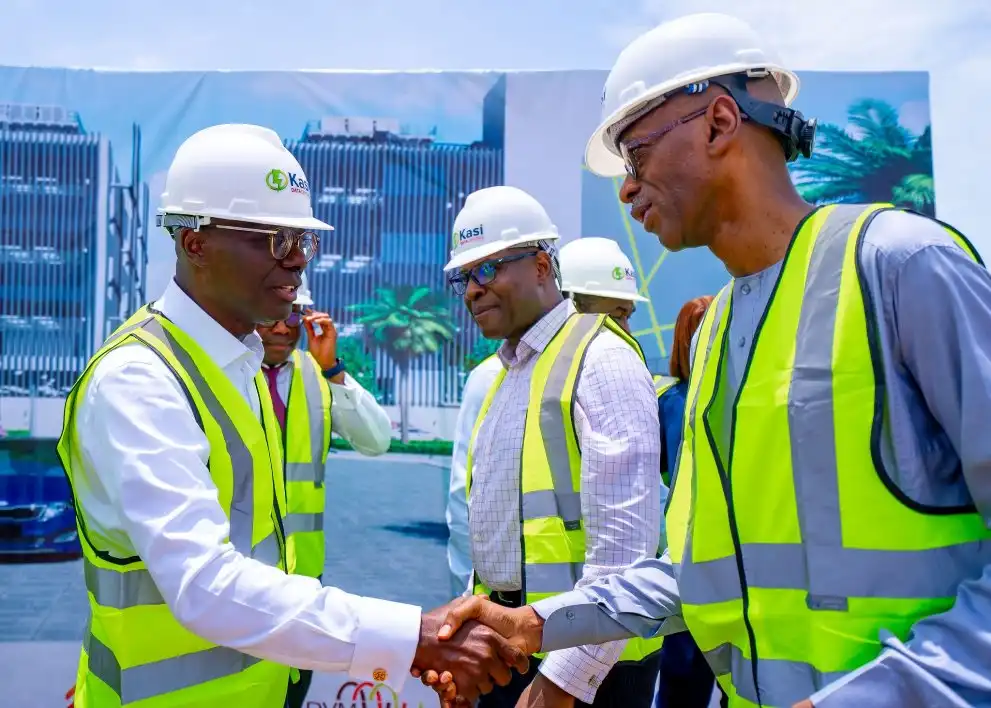
Kasi Cloud has completed LOS1, the first phase of its campus on four hectares at Maiyegun in Lekki, and moved it into commissioning; construction began in 2022 and the full site is designed for about 100MW of IT load. The company points to proximity to six cable landing stations, including Equiano and 2Africa, and to cloud policy rules on in-country hosting of sensitive government and financial data. LOS1's own capacity and the investment were not stated.
Eritrea's transport and communications minister Tesfaselasie Berhane said more than 35 billion Nakfa has gone into telephone and internet expansion since independence, including 184 towers and about 73 km of new cable, with geographic mobile coverage put at 90%. He said international internet capacity grew from half a megabyte in 2001 to 1,536 megabytes, without defining the unit, and that new towers are planned for several sub-zones. The figures come from the state information ministry and are not independently verified; Eritrea still has no submarine cable landing.
The AI Skills and Compute Africa Foundation has launched in Kigali with undisclosed seed funding from Cassava Technologies, which is also its technology partner for localised sovereign compute. The foundation targets compute grants for 25,000 innovators, support for 10,000 AI researchers and AI-related opportunities for 1 million young people. No GPU count or hardware deployment was specified at launch.
After the third Digital Economy Roundtable in Lusaka, the government approved K255 million for digital infrastructure and service quality upgrades, aimed mainly at rural areas. Officials said Zambia's fibre network has grown from about 15,000km in 2021 to more than 45,000km, with national coverage at 94%. The regulator ZICTA will start publishing quarterly network performance reports.
Canalink, GUILAB, International Mauritania Telecom, Orange Group, Orange Côte d'Ivoire, Sonatel and Silverlinks have signed an MoU to start Via Africa, a consortium subsea cable from the UK, France and Portugal down the Atlantic coast via the Canary Islands, Mauritania, Senegal, Guinea, Côte d'Ivoire and Nigeria, with extensions further south planned. Members will jointly fund a route study and are preparing a tender to pick a cable supplier; no capacity or delivery date was given. The stated aim is a route that adds diversity to Africa's existing international links.
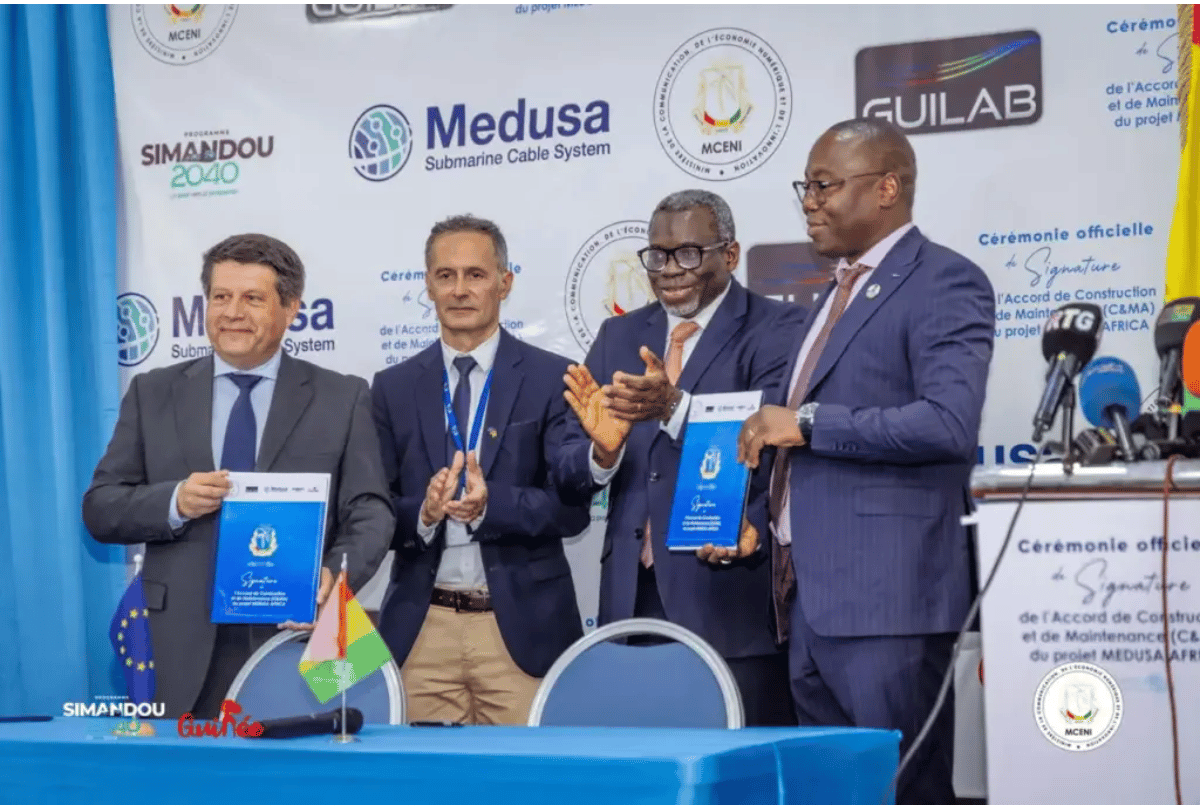
Guinea and the MEDUSA Submarine Cable System signed a construction and maintenance agreement in Conakry to land the MEDUSA Africa cable, which will be the country's second international subsea link after ACE. State-owned GUILAB SA is the landing party and will operate and maintain the infrastructure in Guinea for 25 years. The signing starts marine surveys and landing preparations; no in-service date was given.
Uganda has launched feasibility and environmental studies for a 400MW run-of-river hydropower station on the Victoria Nile at Kiba, with the timeline cut from 18 to 14 months. Officials say proposed data centre projects alone have lodged requests for 887MW of electricity, against dependable firm capacity of about 1,450MW and a February 2026 peak of 1,337MW. The government projects a 40MW supply deficit in 2025/26 rising above 217MW by 2027/28 unless new generation is accelerated.
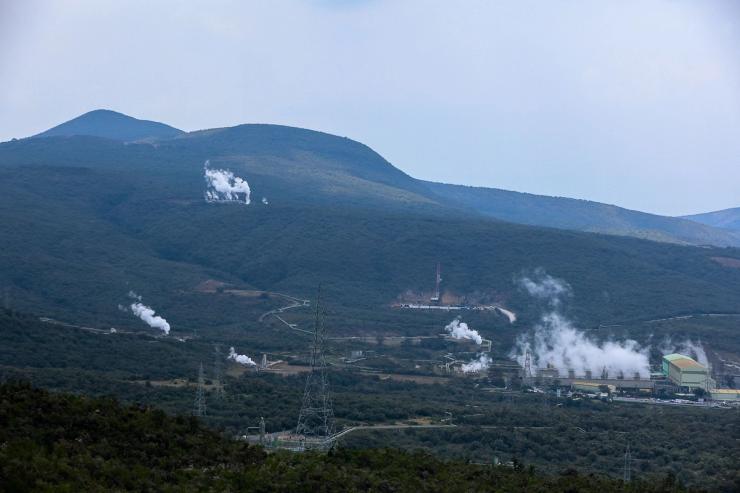
President William Ruto said the geothermal-powered campus planned with Microsoft and Abu Dhabi’s G42 would draw about a third of Kenya’s roughly 3,000MW of installed generation. His framing was blunt: switching the site on would mean switching off power for half the country, leaving the project unlikely to proceed as designed.
ARCEP Bénin's 2025 annual report shows the aerial FTTH distribution network growing from 2,079km to 3,266km in a year, with fixed internet subscriptions rising 163.51% to 105,715, of which 95,354 (90.2%) are fibre to the home. State operator SBIN invested 35.880bn FCFA across fixed and mobile networks in 2025, and the wholesale capacity market grew 46.8% to 18.266bn FCFA. The base is still tiny: fixed internet reaches 0.80% of roughly 13 million people, against 64.9% mobile internet penetration.
Communications Minister Salima Monorma Bah said about US$400 million has gone into Sierra Leone's ICT sector, yet a 60% gap remains between network coverage and actual use. The national fibre backbone now reaches 14 of 16 districts, and the country is preparing to land a second subsea cable backed by a US$15 million investment. She pressed operators to share more infrastructure to bring costs down.
The EllaLink submarine cable has landed at Nouadhibou, giving Mauritania a second, diversified international route. The new branch runs 670km with two fibre pairs and was co-financed by the Mauritanian state and the European Union, connecting the country directly to European digital hubs. Digital transformation minister Ahmed Salem Bede welcomed the landing.
State operator ONATEL signed a US$5,907,000 contract with the ICT secretariat SETIC, which coordinates the World Bank-backed PAFEN programme, to build network infrastructure on 92 rural hills that have no 2G or 3G coverage, reaching about 372,035 people. The signing in Gitega was witnessed by finance and digital economy minister Alain Ndikumana. The government has not published technical specifications or an implementation timeline.
Tanzania's ICT ministry has tabled a TZS 222.6 billion (about USD 89 million) budget for 2026/27, 94.1% of it for development, including support for National Data Centres in Dodoma and Zanzibar. The National ICT Broadband Backbone now spans 15,167km and reaches 122 of 139 districts, and will be extended to the DRC via Lake Tanganyika, with initial payments of TZS 10.4 billion and USD 2.2 million already made. Backbone revenue rose to TZS 160.6 billion by March 2026, and the ICT sector grew 14.3% in 2024.
President Adama Barrow inaugurated QGroup House, an eight-storey smart building containing what is billed as The Gambia's first data centre, calling it a strategic national asset that lets the country hold its data within its borders. The launch also introduced the QFiber broadband service for homes and businesses, with Huawei cited as QCell's long-time technology partner. Capacity, tier, power arrangements and investment were not disclosed.
At the Connected Africa Summit in Nairobi, South Sudan's government spokesperson Ateny said the national data centre is about halfway built and that work has begun on roughly 2,700 km of inland fibre. He added that a National ICT Authority is being set up, a Data Protection Act is in progress and the Cybercrime and Computer Misuse Act 2025 has been signed into law. These are government statements; no completion dates were given.
Eswatini opened a stakeholder workshop in Mbabane on 29 April 2026 to draft a national data policy covering protection, access, privacy and public benefit, backed by the EU, its member states and GIZ through the Data Governance in Africa Initiative. ICT Minister Savannah Maziya said the aim is to make Eswatini one of the safest places to store data. The package also funds sector data protection guidelines for finance and health.
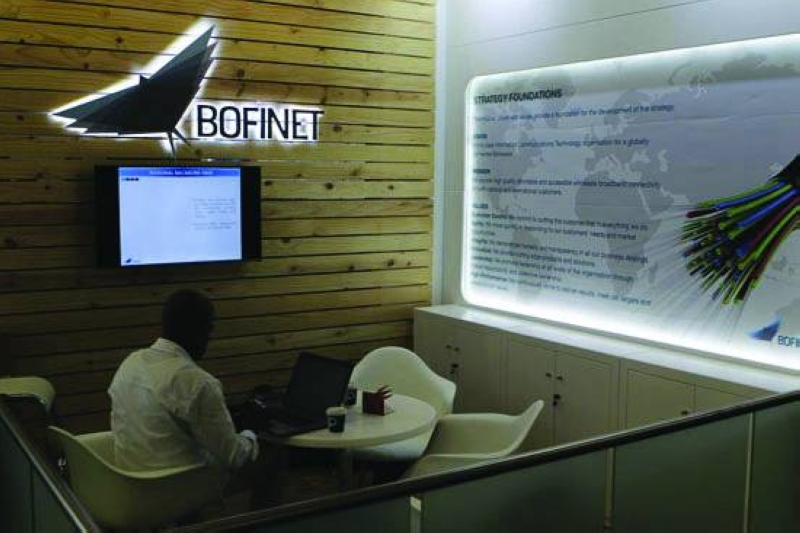
BoFiNet's CEO urged state bodies and private firms to host data at its Digital Delta Data Centre, a Tier III certified, carrier-neutral facility, citing Botswana's Data Protection Act, sovereignty and cost. Government has already decided to move critical services there, and BoFiNet says the site offers 99.982% availability. It pitched local hosting to banks, fintechs and regional operators rather than duplicating infrastructure.
Eswatini has commissioned a Starlink satellite gateway at Gebeni, inaugurated on behalf of King Mswati III, to extend low-orbit satellite service to remote schools, clinics and businesses. Starlink was licensed in January 2023 for five years and began service in December 2025. The landlocked country relies on fibre routed through neighbours, and about 57.6% of people were online in early 2025; no gateway capacity or cost was disclosed.
President João Lourenço opened Angola's government Data Center and Cloud at Camama, Luanda, on 28 April 2026, a US$89m build delivered with Presight, the G42 group company. The 860 m2 facility holds 208 racks, can run up to 13,000 virtual servers, and is tied to ministries and the National Assembly over a 50 Gbps fibre ring. The government says it will host more than 80 digital public services and also sell capacity to domestic and foreign companies.
Civil and installation works on Malawi's National Data Centre in Lilongwe are finished, with eleven government systems hosted virtually and six ministries and agencies co-locating equipment. The site now replicates to a disaster recovery facility in Blantyre, and procurement of more servers is at an advanced stage. The build started under the Digital Malawi Foundation Project and was completed under the World Bank-funded Digital Malawi Acceleration Project.
Balancing Act's African Interconnection Report, commissioned by WIOCC, finds planned carrier-neutral data centres in sub-Saharan Africa fell from 38 to 23, while existing facilities slipped from 75 to 72 and country coverage stalled at 21. It blames smaller operators struggling to sign tenants, weak francophone demand outside Cote d'Ivoire, financing tied to sales milestones, and delays from governments and elections, while consolidation grows. The report also says the Microsoft and G42 Kenya project was pushed back after seismic issues at its Rift Valley site and may move to Nairobi, and that large Nigerian builds have yet to turn into orders.
Angola Telecom and Telecom Namibia signed an MoU and a commercial terms agreement under which Angola Telecom gets long-term international capacity on Google's Equiano cable via its Swakopmund landing. The deal also prepares for Angola Telecom's planned Southern Africa Regional Submarine Cable System (SARSSy), which would tie into Equiano at Swakopmund and serve west coast markets. No cost or capacity figures were disclosed.
Burundi validated a 2025 to 2030 national AI strategy on 22 April 2026, drawn up by the finance and digital economy ministry with UNDP support. Its infrastructure pillar calls for modernising data centres, creating sector hubs, developing sovereign cloud and extending telecom networks, but no capacities, sites or dates are given. The plan also targets training over 1,000 civil servants and about 15 pilots in health and agriculture, against weak data availability and interoperability.
The ICT ministry's chief legal officer said Lesotho's Data Protection Act is only partly implemented because the Data Protection Commission meant to enforce it has not been set up. She said breaches go largely unreported and institutions face no clear consequences for misuse, and called for the commission to be operationalised urgently.
Cabo Verde's government has granted a €37m sovereign guarantee to state-owned Cabo Verde Telecom, a condition for drawing a European Investment Bank loan under the EU Global Gateway programme. The money is earmarked for replacing the inter-island submarine cable and strengthening the archipelago's international connectivity. It sits within the €378m EU support package signed with Cabo Verde in September 2024.
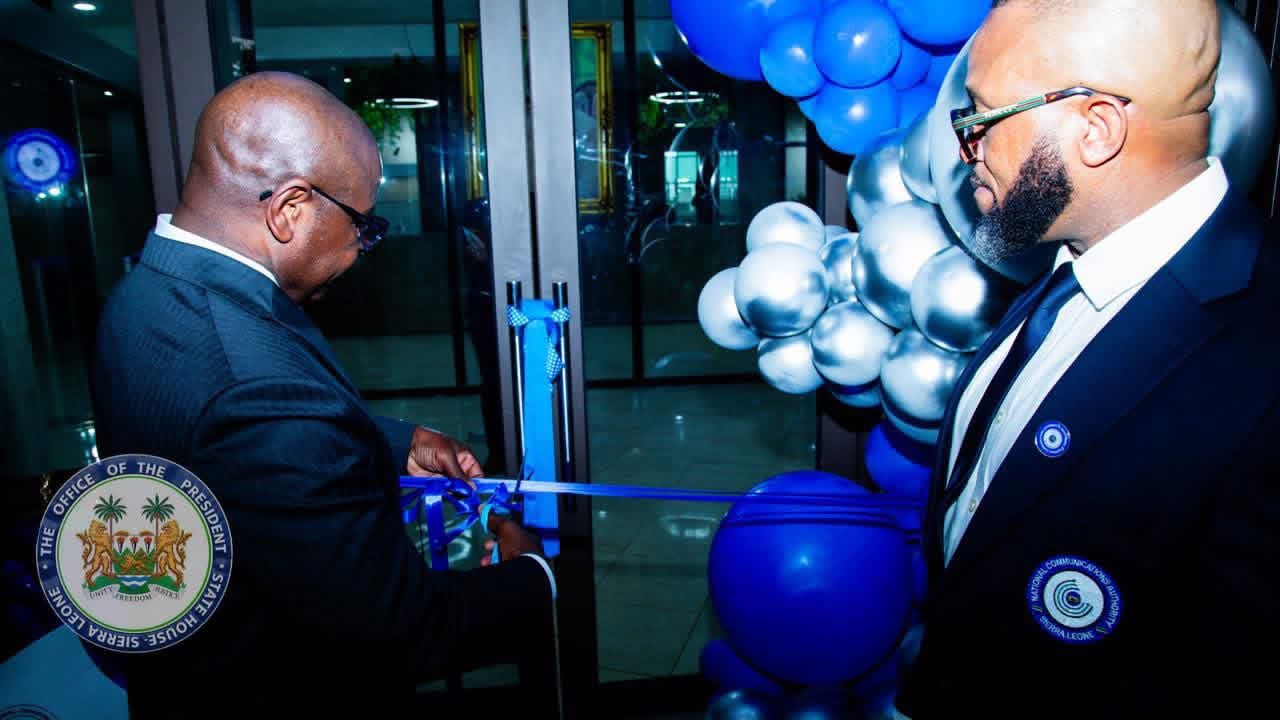
President Julius Maada Bio opened the new 10-storey headquarters of the National Telecommunications Authority at Southridge in Freetown's IMATT area, a building that also houses the communications ministry, a national data centre and network operations systems. Bio said the data centre will improve protection and management of government information; no capacity or cost was disclosed. The paper notes the project, begun in 2015, was among those examined by a post-2018 commission of inquiry into public procurement.
The Bank of Ghana's Cyber and Information Security Directive 2026, launched in Accra in late March to replace the 2018 framework, requires core systems and critical customer data to stay inside Ghana and limits cloud hosting to non-sensitive, front-end services. It applies across banks, microfinance firms, fintechs, savings and loans companies and payment service providers, and extends the sector security operations centre FICSOC to non-bank institutions for the first time. Techlabari notes that many institutions run on AWS, Azure or Google Cloud from outside Ghana, so the rule implies significant re-hosting; the article gives no compliance deadline.
Mauritius launched a National AI Strategy and FAIR ethical guidelines in Phoenix on 9 April 2026, developed by the ICT ministry's AI Unit with UNDP support. Minister Avinash Ramtohul presented AI adoption across priority sectors as a driver of competitiveness and of local firms' regional expansion. The coverage gives no compute, data centre or funding commitments.
The Nexus AI Factory, backed by Nexus Core Systems, Nvidia, Naver and Lloyd Capital, will sit outside Casablanca and serve EMEA. It opens with 40MW of AI compute on Nvidia Blackwell GB200 hardware and is planned to reach 500MW on renewable supply from TAQA.
Oracle launched a public cloud region hosted by N+ONE Datacenters in Casablanca, the first full hyperscaler region in North Africa, with a second planned for Settat. It moves Morocco from "hyperscaler-adjacent" to hyperscaler-present, the shift that separates the top of this index on connectivity from the rest.
The African Development Bank has approved a $200 million loan for Nigeria's Project Bridge, part of an $800 million sovereign package that also includes $500 million from the World Bank and $100 million from the EBRD. The project aims to lay 90,000km of open-access fibre, taking the national backbone from about 30,000km to about 120,000km, reach all 774 local government areas and build cross-border links to Benin, Cameroon, Niger and Chad. The bank says design criteria favour hybrid and renewable power for resilience.
Equinix plans more South African data centres under a R7.5 billion (US$438 million) programme pitched at AI demand, having bought further land in Johannesburg and Cape Town totalling 327,000 square metres. The company plans 160MW of additional capacity in the country and funds its South African build from its own balance sheet. Across Africa it reports 409MW operational and 172MW under construction, and it opened a purpose-built Lagos site at the end of 2025. No completion dates were given; the figures come from an Equinix interview with Bloomberg.
LINX is waiving charges for 12 months, starting April 2026, on all services at LINX Accra, the exchange it brought live at the end of 2025. The fabric spans the Onix, PAIX and Digital Realty data centres, and LINX hopes to draw global carriers and content networks so more Ghanaian traffic stays local. Accra is served by six submarine cables, the report notes.
NCC board chairman Idris Olorunnimbe and executive vice chairman Aminu Maida visited Airtel’s Lekki facility for a briefing on infrastructure and network expansion plans. Visits like this are the visible end of operator-regulator alignment, which is what decides how fast new capacity clears approval.
Digital transition minister Amal El Fallah Seghrouchni launched studies for what Morocco bills as Africa’s largest data centre, targeting 500MW by 2030. The design is entirely renewable-powered and cooled with Atlantic seawater, positioned as a "data embassy" on the edge of the Sahel.
A government-commissioned study by consultancy Mason lists joining the Medusa subsea cable as a priority for Equatorial Guinea, which today relies mainly on the ACE cable. Vice President Nguema Obiang Mangue said a technical committee will review the study with Medusa's team; the cost is put at EUR20m to 60m for a 2029 to 2030 rollout, with Bata a likely landing point. It remains a proposal only, alongside a separate February subsea fibre agreement with Nigeria.
Neutral data centre operator Wingu Africa has launched its Wingu Cloud Exchange (WCX) in Ethiopia, a locally hosted private cloud offering compute, storage, Kubernetes container management and security that can run alongside on-premises systems and global clouds such as Azure and AWS. Wingu pitches local-currency pricing as a way for customers to avoid foreign exchange uncertainty, and positions the in-country platform as a route to meeting data sovereignty rules. WCX first launched in Tanzania in November 2025; no pricing, capacity or customer figures were disclosed.
Ghana's Cabinet has approved US$250 million for a national AI compute centre, Communications and Digital Technology Minister Samuel Nartey George told a UNESCO-backed AI readiness forum in Accra on 31 March 2026. Cabinet also cleared a National AI Strategy due for launch on 24 April, with AI research and computing infrastructure among its four priorities. The report gives no financing breakdown, site, capacity or construction timeline for the centre.
A World Bank mission held a mid-term review of PAFEN, Burundi's US$92 million Digital Economy Foundations Support Project launched in 2024, finding 61% of the budget committed. Alongside a national digital ID and public finance tools, the project includes building a national data centre, and the review aimed to find what is slowing delivery ahead of a 2028 target. The report gives no capacity, site or timetable for the data centre.
Senegal has moved its New Technological Deal into implementation, with authorities planning CFA 1,100 billion ($1.95 billion) over 2025 to 2034 for connectivity, data centres and a sovereign cloud under Vision Sénégal 2050. Data centre capacity is being deployed at Diamniadio and Orana, and the state cloud is meant to keep sensitive public data in the country. The plan also lifts national bandwidth from 600 Mbps to 20 Gbps.
RURA's head of ICT regulation says the regulator is drafting a dedicated data centre framework, with new rules expected before July after stakeholder consultation; current licensing does not prescribe any cooling technology. Any facility abstracting significant water already needs a permit from the Rwanda Water Resources Board. Rwanda has no hyperscale sites yet, and a Kigali operator quoted in the piece estimates cooling takes about 7% of power in efficient hyperscale halls and up to 40% in older designs.
Cassava Technologies has put its first Nvidia-based AI factory into service inside its South African data centres and plans further AI infrastructure in Nigeria, Kenya, Egypt and Morocco. South Africa's CSIR is an early user, and Cassava says it will offer local-language services starting with Swahili before adding Zulu and Afrikaans. The rollout sits on its CAIMEx model exchange launched in November 2025; Nvidia is also an equity investor in Cassava. No investment figure or GPU count was disclosed.
CAR's digital economy ministry reported deliberate cuts to the national fibre network, one on the Bangui to Boali segment and a second on the Carnot to Berberati route, causing a double break and intermittent outages. Similar incidents hit sections run by Cameroon's Camtel, which carry CAR's international traffic. The first cut was repaired while crews were still locating the second, and the ministry called for tighter surveillance of the route.
President Mnangagwa launched Zimbabwe's National AI Strategy for 2026 to 2030, which sets goals for high-performance computing, sovereign data platforms and data centres alongside a phased national AI and data platform. It creates an implementation agency, a regulatory sandbox and a digital regulatory committee reporting to POTRAZ. The report notes power outages and connectivity as current constraints, with tech firms turning to solar and storage, and skills flight as a risk.
Guinea's national data centre in Conakry, inaugurated some months earlier, has finished construction and is moving into operations, with the Corex group in talks with the state to run and maintain it. The site has two grid feeds from opposite sides of the city plus generator backup, but both feeds were down when Le360 visited, and engineers named unreliable electricity as the main risk alongside ageing equipment and round-the-clock staffing. No capacity or cost figures were given.
The World Bank Board approved US$137 million for WARDIP2, the second phase of its West Africa regional digital integration programme, covering Benin, Liberia and Sierra Leone. The money targets broadband expansion, more international connectivity and added data centre capacity, alongside regulatory harmonisation and skills, with about 5.2 million people expected to gain new or better broadband.
Centenary Group's technology arm, Cente-Tech, is finishing a Tier III-ready data centre in Masaka, about 130km from Kampala, with civil works and installation complete and opening set for September 2026. The open-access site will host Centenary Bank's 3 million account holders plus government and enterprise clients and provide an internet point of presence; the operator says its solar-assisted design uses 40% less power than conventional builds. Tier III certification is still being sought, and capacity and cost were not disclosed.
Equity Bank Uganda has moved its core data centre operations to Raxio's Tier III facility in Namanve Industrial Park, completing the cutover in February 2026 and unveiling it on 25 February. The bank, which has more than 2 million customers, says local hosting cuts latency and strengthens disaster recovery, though customers lost access to services for two days during the switch. Bank of Uganda's supervision chief framed in-country digital infrastructure as a financial stability matter.
A presidential decree of 6 March 2026 authorises Cameroon to borrow 1,350,963,161.10 yuan (about CFA108.4bn) from China's Exim Bank for phase IV of the national fibre backbone extension. The loan is meant to carry several thousand kilometres of new fibre into underserved and rural areas. The interest rate, grace period and tenor were not disclosed.
eThekwini council has voted to sign a memorandum of agreement with a Korean power consortium, believed to involve Korea Southern Power, to study a 400MW AI data centre on a 5ha plot at the Lovu River mouth near the Amanzimtoti cable landing station. Estimated at $3bn to $10bn, with the city supplying land and infrastructure and the partner funding the build, it would be roughly a quarter of Durban's current 1,600MW demand and targets operation in 2027/28. The city stresses only feasibility work is approved; power source, cooling water supply and tariffs are undecided, and DA councillors abstained pending environmental and public process.
Tunisia's parliament has begun hearings on a personal data protection bill filed by MPs in July 2025 to replace the 2004 framework. MP Saber Masmoudi says it would strengthen the national data protection body's powers, finances and sanctions division and require a named data protection officer in organisations. He also noted that Tunisia has no specific legal framework for AI.
Open Access Data Centres, part of WIOCC Group, has bought seven NTT DATA facilities in Bloemfontein, Cape Town, East London, Bryanston, Parklands, Gqeberha and Umhlanga, closing on 31 December 2025 after Competition Commission approval. The deal is a sale and leaseback: OADC owns and runs the buildings while NTT leases them back and keeps its customers. It takes OADC's South African capacity past 25MW; terms were not disclosed.
Kasi Cloud, backed by Nigeria’s sovereign wealth fund, is building a $250m hyperscale campus in Lekki against a grid that has never sustained more than about 6GW for 230m people. Diesel backup puts operators near $0.40 to $0.50 per kWh where competing markets pay $0.05 to $0.10, which is the gap the 320MW national pipeline has to absorb.
National Treasury has elevated data centre infrastructure to the same strategic tier as electricity, ports and transport, and is examining incentives to support the build-out. Around 55 facilities are already operating, with more than R50bn of investment expected over three years as Microsoft, Google and AWS expand cloud and AI capacity in the country.
This analysis argues Uganda risks remaining a consumer of foreign AI because it has only about four data centres (Raxio in Namanve, MTN's facility and government sites including NITA-U's National Data Centre). It points to Synectic Technologies' planned Aeonian hyperscale and HPC campus drawing 100MW of surplus power from the 600MW Karuma hydro plant, including a 30MW AI facility, and to new rules requiring organisations to keep data in-country. Industry voices quoted call for private hyperscale-grade investment and policy and finance support.
Algeria's High Commission for Digitization says the first National Data Center at Mohammadia, Algiers, has received Uptime Institute Tier III Design certification. The commission is now pursuing Tier III Facility Construction certification for the site, which it says would be a first in Algeria, and is seeking Tier III Design status for a second national data centre in Blida province.
MTN Group chief executive Ralph Mupita said MTN will reinvest about US$1.1 billion in Ghana over three years, spread across network resilience, 4G and 5G expansion and large-scale data centres to support AI and cloud ambitions. He argued that hyperscale capacity and better use of subsea cable bandwidth could make Ghana a competitive West African hub, though no data centre sites, sizes or dates were named.
The Internet Exchange Point of Nigeria has installed an authoritative DNS server, using hardware from Canada's CIRA, that answers close to 1,000 queries a second so providers can resolve addresses locally rather than abroad. Chief executive Muhammed Rudman said IXPN has also signed an MoU with Verisign to act as a regional resolution site that could host .com and .net infrastructure in Nigeria. The exchange first passed 1Tbps of peak domestic traffic in April 2025.
Sonatel, Orange's Senegalese subsidiary, has switched on its landing of the 2Africa cable, a project it began in 2020 and commissioned in December 2025. The system has 16 fibre pairs and a nominal 180 Tbps, which Sonatel puts at roughly ten times its earlier cables. Sonatel owns the Senegal landing station and runs the terrestrial backhaul, while capacity is sold on an open-access basis through carrier-neutral stations.
Madagascar's data protection commission CMIL, set up under law 2014-038, is building out its governing bodies and held member training with the OIF. Officials said it can issue warnings, impose administrative fines and seize databases, and that several dozen compliance files have been registered so far.
Converged Technology Networks plans what it calls Malawi's first micro data centre, built for AI workloads, with NVIDIA A100 GPUs to be installed within months and rented out on a GPU-as-a-service basis. The company will work with Africa GPU Hub and offer free GPU credits to local researchers and students. Despite the headline, the piece describes a plan rather than a running facility, and gives no investment or capacity figures.
Cyclone Gezani damaged close to 98% of Yas Madagascar's transmission cables in the east, disrupting fibre and voice services around Toamasina, Brickaville and Foulpointe, according to the operator's first assessments. Yas rerouted traffic and brought backup capacity online while repairs continued. The storm made landfall near Toamasina on 10 February 2026.
World Bank country manager Charles Undeland told finance minister Bak Barnaba Chol in Juba that the Bank plans to finance construction of a fibre-optic line in South Sudan to improve connectivity and cut internet costs. The same package would back lower energy prices and public finance reforms. No amount, route or timetable was given.
NOSi, the agency that runs Cabo Verde's state data centre in Praia, switched on a photovoltaic generation system at the facility at a ceremony at the Technology Park on 16 February 2026. Its executive administrator framed it as a step toward energy autonomy and resilience under the ESG strategy NOSi adopted in 2024. No capacity, cost or share of the site's load covered by solar was published.
The two are planning a $250m facility at Maadi Technology Park with about 25MW of IT load, which would be the country’s first hyperscale-class site. It marks Gulf operator capital entering the Egyptian market directly rather than through a local reseller.
Backbone Connectivity Network Nigeria and Equatorial Guinea's transport, telecommunications and AI minister Honorato Evita Oma signed an agreement on principles in Malabo for a new subsea fibre cable between the two countries, also covering cybersecurity cooperation. It follows President Tinubu's August 2024 state visit. The document is a framework only, with no cost, capacity, landing points or schedule disclosed.
Cavaleros has plans for 360MW in Cape Town and 200MW north of Johannesburg, while Teraco is targeting 500MW in total, 290MW of it new in Johannesburg. Together the announced pipeline adds roughly 1,000MW to national demand, about one stage of load shedding, and points to a supply squeeze by 2029 unless generation grows with it.
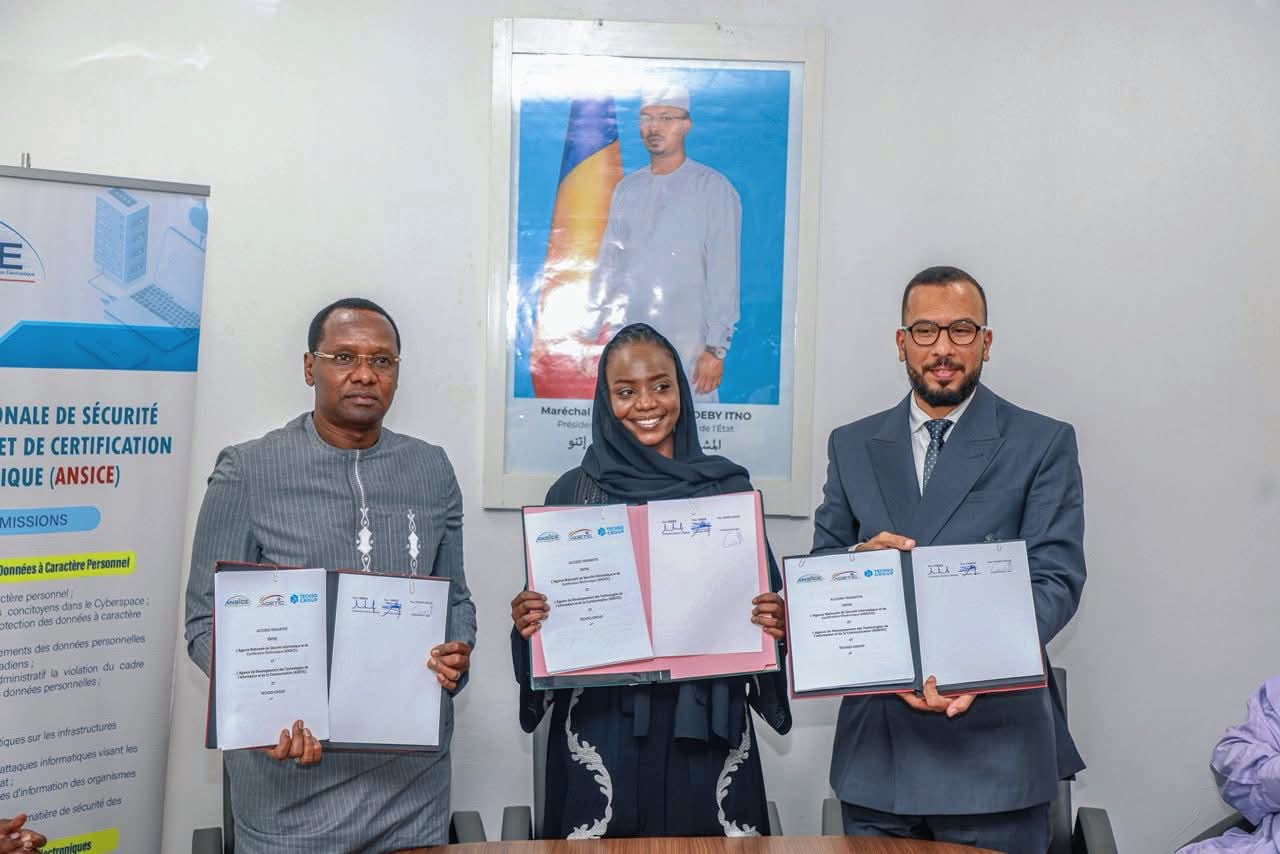
Chad's ICT agency ADETIC and cyber-security agency ANSICE hired TECHSO-GROUP on 5 February 2026 to audit the national data centre, the last step before it opens. The four-level, 500 m2 facility is designed for more than 500 servers and close to 2 million electronic transactions a day. It is part of the roughly EUR175.1m state connectivity programme.
Ethio telecom, Djibouti Telecom and Sudatel Group signed a tripartite agreement under the Horizon Fiber Initiative for a multi-terabit terrestrial corridor from Djibouti's subsea landing stations through Ethiopia to Sudan's landing stations. It follows a December 2024 MoU and is pitched as added resilience and international bandwidth for cloud and hyperscale traffic. No capacity, cost or completion date was disclosed.
South Africa's Competition Tribunal has unconditionally approved STANLIB Infrastructure Fund II taking a stake in Cassava's Africa Data Centres South Africa, following Competition Commission approval in January. STANLIB would hold joint control with an option to move to sole control later; the size of its investment was not disclosed. Africa Data Centres runs nine facilities across six African countries for about 400 enterprise and hyperscale customers.
Chad's telecoms minister told SOTEL and Airtel to negotiate and restart rehabilitation of the 830 km N'Djamena to Mberé fibre route, which the two operators had paused. The fully state-funded segment is Chad's link to subsea cables through Cameroon.
Mali's digital ministry inaugurated a Tier III national data centre during the country's third Digital Week, with digital ministers from the Alliance of Sahel States in attendance. It will host state data, e-government platforms and public digital services and, in the near term, shared digital infrastructure for the AES bloc that also includes Niger and Burkina Faso. No capacity, cost, site or vendor details were published.
iXAfrica will act as host partner for an Oracle Cloud Infrastructure region in Nairobi, the country’s first public cloud region. It sits on a 22MW hyperscale, carrier-neutral campus built for AI workloads and tied to renewable supply, which moves latency-sensitive workloads onshore for the first time.
Prime Minister Rimtalba Jean Emmanuel Ouédraogo opened two modular government-cloud data centres in Ouagadougou costing over CFA 15 billion, part of a policy of keeping no public data abroad. Officials cite 3,000TB of storage, 105,600GB of memory and 28,800 CPU cores, enough for more than 7,000 virtual machines, and project net savings of CFA 85 to 95 billion over ten years. A larger national data centre built to international standards is planned by 2028.
South Sudan's National Communications Authority set up a supervisory committee for the international gateway and the national data centre, with technical help from Swiss firm mgi communications, to digitise gateway revenue and modernise infrastructure. Ecofin reports that lawmakers approved more than $9 billion for a national fibre backbone in July 2025 and that work on 2,400 km of fibre was announced for December 2025; local outlets had reported a $9 million design budget, so the headline figure should be treated with caution. South Sudan ranks 192nd of 193 on the UN e-government index.
Burkina Faso's digital ministry has started building a six-storey Digital Infrastructure Monitoring Center in Ouagadougou to supervise the national backbone, manage state data centres and protect critical digital assets. The project costs about CFA 3.048 billion and was scheduled for delivery in October 2026, nine months after the January 2026 launch. Local firm Cristal Sarl designed it, IC-KC/Tech Pole Expertise is building it and NIEZEN Associates handles supervision.
Madagascar's digital ministry says three foreign firms, two mobile operators and a geostationary satellite provider, want to enter the market. The government lists a sovereign, secure national data centre for public data among its priorities, alongside a personal data protection law and cybersecurity texts, though no budget or timeline was given.
Burundi's National Assembly voted unanimously on 15 January 2026 for a law governing how personal data is collected, processed and used, sponsored by the interior ministry. It sets privacy principles, creates an independent administrative authority to enforce them and adds criminal penalties alongside existing cybercrime rules, though the report gives no penalty amounts. The law is also meant to clear the way for a biometric national ID now being piloted in about a dozen communes.
India's state-owned RailTel will build a greenfield data centre for Ethiopia's Ministry of Foreign Affairs inside the ministry's existing Addis Ababa building, in a deal valued at roughly US$2.2 million and secured with backing from India's Ministry of External Affairs. The build is due within a year, followed by three years of operation and maintenance after go-live. RailTel has not disclosed the facility's size or IT capacity; the project is framed as support for the Digital Ethiopia 2030 strategy.
Operators have announced close to 2GW of Moroccan capacity, against a current continental footprint nearer 500MW, including Iozera’s $500m 386MW Tetouan site and Naver’s 500MW project. Proximity to Europe and subsea landings are the draw; generation and water availability are the constraints on actually building it.
TechCabal counts 17 operating data centres in Nigeria with at least nine more under construction or planned, and puts installed capacity at 65 to 86MW, which industry projections see passing 400MW within three to five years. It names Kasi Cloud's $250m Lekki campus (a first phase of 32 to 44.4MW, racks up to 100kW) and Airtel's $120m Nxtra build in Lagos as the likeliest first AI-grade facilities. Operators quoted say imported equipment, currency swings and reliable power remain the binding constraints, and many projects are still being redesigned.
TechCabal reports that Djibouti now has landing points for 12 major submarine cables, including 2Africa, and carrier-neutral Tier III capacity at the Djibouti Data Centre and the new Wingu Group technology park, making it the main gateway for landlocked Ethiopia. It flags electricity at about 23 US cents per kWh as a cost that could put off power-hungry data centre operators. The piece also covers the Horizon fibre corridor planned to link Djibouti, Addis Ababa and Khartoum, and Ethiopia's still-incomplete telecom liberalisation.
The war has left Sudan's international data traffic running mainly through subsea cables near Port Sudan, with satellite links as emergency backup. Sudani's deputy director general said the operator lost three data transformers, the Tier-4 data centre that hosted state systems, and the Abu Haraz satellite station, at a cost above $70m, though its core data centre has been restored. Engineers cite power shortages, insecurity and scarce spare parts.
Econet InfraCo, backed by Strive Masiyiwa, plans a 300-hectare industrial park near Harare's international airport that includes a large data centre and is anchored by a 100MW solar plant rolled out in stages as demand grows. No investment total or data centre capacity was given, and full development still needs regulatory approvals, though first-phase work has begun. Econet intends to list InfraCo on the Victoria Falls Stock Exchange.
Chad took provisional delivery at Sarh of phase I of its state connectivity modernisation project (PMICE), which cost about EUR175.1m. The phase covers a national data centre, a 1,200 km fibre backbone and new GSM, 3G and 4G sites for state operator SOTEL. Telecoms minister Boukar Michel framed it as extending connectivity beyond the capital to the regions.
State operator Gamtel signed a US$50 million public-private partnership with Senegal's SYSROAD SA Holding at Bijilo to modernise The Gambia's national broadband network, lifting backbone capacity from 40Gbps to 800Gbps (some outlets give the starting point as 50Gbps). The deal follows a 2023 policy shift and has the backing of the presidency, the communications ministry, the regulator PURA and the finance ministry.
Cameroon's personal data law (Law No. 2024/017 of 23 December 2024) gives organisations an 18-month transition that ends on 23 June 2026, after which the new data protection authority, the APDP, starts full enforcement. Sensitive categories such as biometric KYC and medical data face stricter consent, encryption and storage rules. Penalties include fines up to a significant share of turnover, suspension of processing and possible criminal liability for directors.
Post and Telecommunications Minister Sid Ali Zerrouki laid the first stone of the Medusa subsea cable landing point at Collo, west of Skikda, with commissioning planned for the end of 2026. Medusa is described as an 8,700km-plus system linking 10 Mediterranean countries at up to 20Tbps, with Algerian landings at Algiers and Collo and onward links of up to 900km to southern Europe. The ministry frames it as diversifying Algeria's international internet supply and preparing for 5G.
L’Express argues the island’s AI ambitions need continuous baseload power that the current generation and transmission plan does not provide, and that ICT and energy policy are not being sequenced together. The risk it names is stranded assets: Tier IV capacity that cannot run at full load.
Unitel, the only Angolan operator in the 2Africa consortium, opened the cable landing station at Cacuaco in Luanda province after building the Angola branch, at a cost the company puts at about $43m. Angola has been allocated 23.6 Tbps of the system's projected 180 Tbps. The telecoms minister said the harder task now is extending terrestrial networks so the new capacity reaches users beyond the landing point.
Cameroon has finalised an MoU to join the EU-backed Medusa Africa subsea cable led by AFR-IX Telecom and sent it to the Presidency for sign-off. The country's share is put at CFA32.8bn (about US$58.6m), and a Kribi landing would give it a fifth international route alongside SAIL, WACS, SAT-3 and NCSCS, with Medusa due live in 2028. The catch: Camtel uses only around 16% of the capacity on its existing cables.
Starlink switched on service across Sao Tome and Principe, which the company called its 26th African market, adding a satellite alternative for a country of about 240,000 people that depends on submarine cable capacity and patchy terrestrial networks with little backbone investment. The report expects government, tourism operators, banks and higher-income households to be the first users because hardware remains expensive, and gives no pricing or regulator detail.
Stakeholders in The Gambia met to validate a WARDIP-funded feasibility study for a second submarine cable, covering candidate landing sites and beach manholes as well as environmental and social risks. The ACE cable, in service since 2012, is described as near its limits, and the project, first a bilateral plan with Guinea, now involves five countries. A transaction advisory process will settle how the cable contractor is selected.
The operator committed $434m across four corridors: new subsea capacity and 5G-Advanced, an AI corridor with GPU clusters and Tier IV data centre space, a startup corridor and a payments corridor. Mauritius ranks third in Africa on the ITU ICT Development Index at 86.3, and the plan is explicitly about brokering traffic between Africa and Asia.
Angola Cables has launched Cloud Node Luanda-02, its third in-country node on the Clouds2Africa platform after Luanda and Sangano, with further nodes in South Africa, Namibia, Nigeria, Ghana and Tanzania. The company pitches it as a sovereign alternative to the US hyperscalers, billing in kwanzas and keeping backups inside Angola to cut exposure to foreign payments. It paired the launch with Acelera Clouds, a voucher scheme giving startups free use for a limited period.
Orange Sierra Leone commissioned a data centre in Bo, in the Southern Region, on 29 November 2025 with President Julius Maada Bio in attendance. The facility, an investment of more than 23 million euros, replicates the operator's Freetown data centre as a disaster recovery site and extends service toward Makeni, Kono and Kenema. Capacity and tier were not disclosed.
Botswana officially launched the Digital Delta Data Centre, built and run by state wholesaler BoFiNet, which describes it as the country's only Tier III certified, carrier-neutral national facility. BoFiNet pitches it as a potential regional hub on the back of Botswana's fibre network. No capacity or cost figures were published.
Ghana's Cabinet has approved a Dig Once policy, proposed by the Ghana Chamber of Telecommunications, under which all new roads must include fibre ducts and access chambers. Road and construction works cause about 60% of fibre cuts in the country, with repairs costing nearly US$70 million between 2021 and Q3 2025, according to the report. The aim is to cut trenching costs and network downtime for operators.
Orange Mali has secured €80m (US$92.7m) in loans, €50m from the IFC and €30m mobilised from the West African Development Bank (BOAD), to add 300 4G sites and build out a fibre network meant to reach about 300,000 homes and small businesses, close to half of them rural. Part of the money replaces diesel generators at sites with solar, which the parties estimate cuts more than 8,000 tonnes of CO2 a year. It is the first deal under the IFC and Orange Middle East and Africa partnership signed in May 2025, in a market where internet use stood at 35.1% of the population at end-2025.
Ministers from West and Central African states, meeting in Cotonou at a summit hosted by Benin's government with the World Bank, adopted a declaration with 2028 targets that include regional data centres hosting at least 40% of critical government data, national backbones interconnected through regional IXPs, and average data costs cut in half. It also targets three regional AI centres of excellence by 2028 and a Digital Transformation Facility to pool financing, though no amounts are attached.
Niger took provisional handover on 14 November 2025 of all its sections of the Trans-Saharan fibre backbone, 1,031km in total on five routes running to the Algerian, Chadian, Nigerian, Beninese and Burkinabe borders. Cross-border interconnection has no confirmed date: technical talks with Chad have not advanced since June 2025 and the Benin border remains closed. The ITU put internet penetration in Niger at 23.2% in 2023.
State operator TTCL has announced Kilimanjaro One, a 1,900km submarine cable from Dar es Salaam to Mauritius with branches to Unguja and Mafia islands and a possible later spur to Madagascar. Construction is expected to start in 2026, with completion targeted for late 2027; cost and partners were not disclosed. TTCL ties the project to its 14,000km national fibre backbone and to plans for a Pan-African green AI and robotics data centre.
LG3 is the opening phase of a roughly $100m two-year African programme, with the Lagos site slated to open in Q1 2026. Separately Rack Centre began hosting EdgeNext’s CDN and cloud services locally, shortening delivery routes for gaming, fintech and content workloads.
Digital Realty has opened ACR2 in Accra, its first Ghanaian facility and an extension of its PlatformDIGITAL footprint into West Africa, with about 1.7MW of installed IT capacity expected. The site has direct access to the 2Africa subsea cable and local fibre routes, and is aimed at banks, telcos, enterprises and public bodies that need compliant in-country hosting.
The DRC government is marketing the Inga hydro site, rated at 44 GW, as a home for AI data centres, citing cheap renewable power, river water for cooling and existing fibre. The pitch rides on the US$20bn Inga III phase, which has a US$1bn World Bank commitment, and a draft Inga Law meant to set terms for private investors. No data centre operator has signed on, and the site currently generates only a small fraction of its potential.
SOCOF, the DRC's state fibre company, Tanzania's TTCL and Mauritius-based BCS agreed on 20 October 2025 to lay 160 to 186 km of cable under Lake Tanganyika between Kalemie and Kigoma. The link starts at 100 Gbps, is budgeted at US$15m to 20m, and is due to start works in Q1 2026 with full service by end 2027. The partners claim it will halve DRC bandwidth costs and generate US$1bn to 2bn of regional economic value over a decade.
A study presented to the strategic council of the Tunisia Investment Authority urges Tunisia to bring its data protection law into line with the GDPR and to build sovereign cloud capacity for sensitive data. Its recommendations include a special economic zone for cloud and data centres with tax, customs and land incentives, faster renewable power for data centres, and new subsea cables to European and African hubs. It lists four existing Tunisian facilities, including Carthage Data Center.
ST Digital opened a Tier III data centre in the VITIB technology free zone at Grand-Bassam on 2 October 2025, built in eight months as three modules. Ecofin reports about 160 racks, more than 6,000 physical servers and over 50,000 virtual servers; power capacity and the investment amount were not disclosed.
Raxio is opening Raxio AO1 in Cacuaco, Luanda, a carrier-neutral Tier III colocation site whose first phase cost US$30m. The 18,817 m2 plot launches with 100 racks across 9,684 m2, and the local managing director says dozens of companies are already moving equipment in. A second phase depends on how the first performs; Raxio already runs sites in Côte d'Ivoire, DR Congo, Ethiopia, Mozambique, Tanzania and Uganda.
Dutch developer AAAS Energy and US operator ChillMine signed an MoU to develop a data centre campus in Botswana for AI and hyperscale workloads, to be proposed for an energy hub and industrial park near Palapye. Power would come from a solar PV project still under development (the body cites 250MW though the headline says 200MW) plus battery storage, combined with third-party gas projects.
Tlou Energy says its Kala Data Centre at the Lesedi gas-to-power site is close to first revenue, with civil and gas-gathering works done and the first modular data hall on site and being commissioned. Gas-fired generators were still in transit. The modules, built with UAE-based Kala Data under a March 2025 heads of agreement, are designed for Kalahari heat and dust and can scale as gas output grows.
ICT minister Emma Theofelus announced a national data centre as core infrastructure under the National Digital Strategy 2025 to 2029, with the ministry and the Prime Minister’s Office finalising the concept note and project proposal. Specifications and capacity were not disclosed; the country sits 114th on the UN e-Government Development Index.
Somaliland started building a $1 million National Data Center in Hargeisa on 22 September 2025, funded by Taiwan and implemented through the Taiwan International Cooperation and Development Fund. The facility is meant to host core government systems and harden cybersecurity for e-government services, and sits under Somaliland's third National Development Plan (2023 to 2027). Local firms handled the design and construction contracts, and officials linked it to the Taiwan-funded S-Road data exchange already in place.
Synectics Technologies and Schneider Electric plan a sovereign AI centre, the Aeonian project, at the Karuma hydropower plant on the Nile, to be powered by the dam's renewable output and cooled with river water. It will house AI modules and a 10MW USIO supercomputer built on NVIDIA Blackwell GPUs with support from MDCS.AI and Automation NV, and link to a 2,500km fibre network reaching subsea cables in Kenya and Tanzania. The first module is due in 2026 with full capacity targeted for 2028; cost was not disclosed.
Airtel Africa’s data centre arm started work on a two-phase 44MW site outside Nairobi, ready for service in the first quarter of 2027. On completion it would pass iXAfrica’s 22.5MW facility as East Africa’s largest announced campus by installed power.
Djibouti Telecom plans a 3,200 to 3,500km southern extension of the DARE1 subsea cable from Mombasa to Mtunzini in South Africa, with landings at Dar es Salaam and Mtwara in Tanzania, Nacala, Beira and Maputo in Mozambique, and Mahajanga and Toliary in Madagascar. The existing system, live since 2021, links Djibouti with Bosaso and Mogadishu in Somalia and Mombasa at 36Tbps over three fibre pairs. Work is slated to start in 2026 with service targeted for 2028.
Niger's communications minister inaugurated a new internet exchange point in Niamey on 19 August, letting local ISPs swap traffic directly instead of routing it abroad at higher cost. The ministry lists the IXP alongside a planned national data centre, a virtual landing point, telecom upgrades and fibre links to neighbouring countries. ITU figures cited put internet use at 23.2% of the population.
Work began at Nkok, 27km from Libreville, on a facility built with pan-African operator ST Digital to offer sovereign cloud to finance, healthcare and education. The stated aim was to keep regulated data inside national borders rather than in European or South African facilities.
Ethiopian Electric Power says it will sign no new crypto-mining contracts and does not plan to renew existing ones, winding down a sector that brought in USD 220 million last fiscal year at a tariff of 3.14 US cents per kWh paid in hard currency. An energy outlook cited in the piece projects mining will take a third of national output this year, while 15 million households remain off-grid. The utility faces a large funding gap (138 billion Birr expected revenue against 251 billion needed) and will start no new generation projects this year, focusing on finishing GERD, Koysha and eight others.
Liberia's Ministry of Posts and Telecommunications, the ECOWAS Commission's project preparation unit and the World Bank have started work on a second submarine cable to back up the ACE system for Liberia, Sierra Leone, Guinea, Guinea-Bissau and The Gambia. Consultants TACTIS held feasibility consultations in Monrovia in mid-July 2025, and the Liberian landing is expected at Buchanan in Grand Bassa County. The project still needs approval, a financing structure and a construction timetable.
The DRC finance minister signed World Bank agreements worth $1.9bn, of which $400m is earmarked for the digital sector, and the European Union added EUR100m (about $115m), bringing digital funding to roughly $515m. The programme covers broadband extension to underserved regions, links for schools, hospitals and universities, a secure government intranet and a national data centre, alongside skills and startup support.
South Sudan's ICT ministry approved a $9 million budget for the design phase of its national fibre optic network after deliberations by a steering committee chaired by deputy minister David Yau Yau. Officials said contracts for design and deployment would be signed in July 2025. Experts cited rugged terrain, insecurity, sustained funding and transparent contracting as the main risks; no route length or total cost was given.
Oracle set out an expansion of its research and development capability in Morocco, building toward a local engineering base of around 1,000 professionals. The hiring preceded the Casablanca cloud region by ten months and is the kind of skills anchoring that keeps a cloud investment from being purely a real-estate deal.
Côte d'Ivoire's Ministry of Digital Transition has signed an MoU with Raxio under which the government will use Raxio's CIV1 facility in Abidjan to host public services, as part of its national data sovereignty plan. CIV1 opened in September 2024 as the country's first Tier III carrier-neutral colocation site and is designed for 800 racks and 3MW of IT load.
Somalia's Council of Ministers has approved a regulation governing undersea communications cables, setting rules for protecting, maintaining and developing the systems that carry the country's internet traffic. The government presented it as a resilience and national security measure; the report does not detail licensing terms, penalties or the responsible agency.
Presenting a national data centre study in Yaoundé on 22 May 2025, the head of state IT agency CENADI said Cameroon has no data centre certified Tier III. Her main reason is power: sites rely on a single utility, Eneo, and generators count only as backup, not as a second independent source. CENADI wants green energy investment, a shared national cloud across public and private operators, and faster implementing decrees for the 2024 data protection law.
Mauritania's government inaugurated a new internet exchange point at the headquarters of International Mauritania Telecom on 27 May, nine years after the country's first IXP went live in 2016. Officials present it as a way to keep domestic traffic local, cut internet costs and improve security. It came three weeks after a Tier III certified data centre opened in Nouakchott.
The Comoros government scheduled the inauguration of its public administration data centre for 19 May 2025, after restarting the stalled project in 2024. Rated Tier 3 with a stated 44.4 terabits of hosting capacity, it is co-managed by digital agency ANADEN and cable operator Comores Câbles and sits within the Comores Numérique 2028 strategy, which needs about 21 billion Comorian francs (about $47.8m). The AfDB granted about EUR 9.51m in 2024 for a digital economy support project.
The Medusa cable project was inaugurated in Misrata after Libyan International Telecom Company (LITC), part of state holding LPTIC, signed a construction and maintenance agreement for a Misrata landing. The route links Libya to hubs at Marseille and Mazara del Vallo, and local reports expect better internet in Tripoli, Misrata and Benghazi. No capacity figure was given.
Mauritania inaugurated a Tier III data centre in Nouakchott on 8 May 2025, financed with €15m from the European Investment Bank covering construction, supervision and Uptime Institute certification. It was developed under the World Bank co-financed WARCIP programme and will be run by International Mauritania Telecom, owned by the state through Mauripost and the country's three mobile operators. The EIB pitches it at banks and private companies as well as government; no capacity figure was given.
Orange Tunisia opened a 1,000 square metre data centre in Kalaa Kebira, Sousse, designed to Tier III with full system redundancy. It provides cloud, backup and business continuity hosting for Orange's own needs and B2B customers, with fibre links from local operators. The operator calls it a wholly Tunisian build; no investment figure was disclosed.
The €51.85m park, financed largely by the African Development Bank, opened formally in May 2025 after operating since November 2023, and includes a data centre, a disaster recovery site and training facilities. It houses 23 companies from seven countries and 311 staff, with all 52 office units taken.
CSquared and its Togolese joint venture CSquared Woezon, with Nigerian operator Phase3 and Benin's state infrastructure company SBIN, have commissioned a terrestrial fibre route from Lagos to Accra that crosses Benin and Togo, with a quoted latency of 11ms between the two cities. The partners present it as an overland alternative to the coastal subsea cables after the March 2024 seabed rockfall that cut several systems and disrupted service for an estimated 300 million people. Route length and capacity were not disclosed, and the ready-for-service date was left to be announced.
The World Bank approved a US$10 million IDA development policy grant for Guinea-Bissau whose reform package includes support for managing and deploying the national fibre optic backbone. The bank expects the backbone to extend network coverage and lower internet prices, alongside fiscal governance reforms. The release gives no build timeline and does not say how much of the grant relates to digital infrastructure.
The Liberia Telecommunications Authority, LIBTELCO and the Cable Consortium of Liberia have begun rerouting the ACE submarine cable, the country's main internet link since 2011, because a new PHP Park monument sits on its landing point and blocks repair access. The consortium said it had objected to the construction and that the reroute carries real cost and technical risk. A repair ship was due on 22 April, and the regulator said contingency plans would prevent a total blackout.
Equinix, Kasi, Nxtra by Airtel and OADC are all building close to the eight subsea landing stations on Lagos Island, buying short routes to international capacity and access to cooling water. Nigerian capacity is expected to move from about 64MW to roughly 200MW by 2027, second on the continent behind Johannesburg.
Vodacom Mozambique opened a 2,600 square metre carrier-neutral data centre in Tchumene, Maputo Province, starting with 128 racks and expandable to more than 500. AIM reports it is the country's largest facility and brings Mozambique's total to 17 data centres. Construction began in 2021.
Wingu Group has put USD 50 million into the second phase of its carrier-neutral data centre in Dar es Salaam's Mbezi Industrial Area, adding 80 high-density racks for a total of 110 and doubling rack power capacity. The site interconnects 13 operators across two meet-me rooms, and the Tanzanian ISP association is extending its internet exchange into the facility to keep local traffic in-country. Wingu Tanzania opened in 2022 as a combined data centre and cable landing station.
Open Access Data Centres, part of WIOCC Group, set out a $240m multi-phase expansion of its Lagos facility to 24MW, the first 12MW due in 2026. The spend sits inside a wider $500m African build programme aimed at cloud, analytics and AI demand.
ACE Gabon agreed to act as landing party for the Medusa system at Port-Gentil, taking on operations and maintenance across the cable’s expected 25-year life and holding rights on the trunk. Medusa extends a Mediterranean system that already touches Algeria, Egypt, Morocco and Tunisia into West Africa.
Portuguese consultancy Grupo Érre has been picked to lead a World Bank-financed project, worth more than EUR19m, to build a technology centre for Sao Tome and Principe's public administration. A priority is finding a site for a disaster-resilient government data centre, since the existing infrastructure is exposed to flooding and other natural hazards. The firm will handle environmental and climate vulnerability studies and the technical design.
Work began on 16 March 2025 on Algeria's first data centre dedicated to AI, a GPU-equipped computing facility in the Akid Lotfi district of Oran to be run by Algérie Télécom. Ministers Sid Ali Zerrouki and Noureddine Ouadah laid the first stone, and the minister asked planners to consider expanding it to host AI start-ups and training. No capacity, cost or completion date was given; the government targets AI contributing 7% of GDP by 2027.
PAIX Data Centres has secured land in Dakar for its first Senegalese facility, planned at about 918 m² of usable space and up to 1.2MW of critical power, with the first phase due to go live in 2026. The operator is betting on Dakar's cluster of cable landings: ACE, MainOne, SAT3 and SHARE already connect to the site and 2Africa was being installed at the time. PAIX expects around 200 jobs during construction.
The pan-African infrastructure investor took a 42.9% stake in Raya Data Center, alongside $10m from Raya Information Technology, to fund a greenfield Tier III site in Egypt. Raya already runs two Tier III facilities in Cairo, and construction on the new one was set to start in early 2025.
CV Telecom opened bidding on six new submarine segments totalling about 750km to replace end-of-life inter-island fibre, the first project in a Connectivity 2.0 package co-financed by the European Investment Bank at over €80m. Works were set to start in August 2025 and commission by June 2026, ahead of 5G rollout across the islands.
Teraco began construction of JB7, a 40MW critical-load facility on its Isando campus in Ekurhuleni, funded through an R8bn syndicated loan and due to open in 2026. It takes the campus to about 110MW and uses a zero-water cooling design, which matters in a market where the water constraint is as binding as the power one.
The pair announced a $1bn programme anchored on a geothermal-powered data centre campus at KenGen’s Olkaria fields, with a first phase of 100MW and an East Africa Azure cloud region to follow. It was the largest single compute commitment made to the market and set the expectation the 2026 power shortfall later collided with.
Paratus completed a 1,890km link from Johannesburg to Swakopmund through Botswana, connecting into the Equiano cable it lands in Namibia and giving 123ms to Lisbon. It is an alternative to routing everything through Cape Town, which is what turns a landing station into a transit position.
Intelvision landed the 2Africa cable at Mahé in April 2023 in partnership with Vodafone, adding over 600Gbps of international capacity under a 15-year deal worth about $32m. It gives the islands a third independent route alongside SEAS and PEACE, which is the difference between resilient and single-threaded connectivity.