Algeria's post and telecommunications minister laid the foundation stone for a government-owned AI data centre in the Akid Lotfi district of Oran. No capacity or cost figures were released; the facility is meant to give researchers, startups and universities access to AI compute. The government says it expects AI to contribute 7% of GDP by 2027.
Uganda's ICT ministry has launched a National Data Strategy for 2026/27 to 2030/31, developed with UN Global Pulse and UNDP, that targets two Tier IV data centres with 10 petabytes of combined sovereign storage by 2030/31. It also aims to raise government platforms linked through the Ug-Hub integration layer from 135 to 300. The plan is costed at shs1,662.6 billion over five years, funded mainly through government budgets plus partner support and private co-investment, and is meant to lay groundwork for a national AI strategy.
Enterprise estimates Egypt's installed data centre IT load at 15 to 60MW, with only about 20MW of new capacity firmly committed against 400 to 500MW of unfunded plans, as officials aim to finish a first national data centre strategy by end-2026. It argues Gulf insecurity after strikes on regional data centres may favour Egypt, but flags gas-dependent power, US approval for Nvidia chips and data protection guarantees as hurdles. The Electricity Ministry expects the telecom sector to need about 1GW over two years.
The Medusa subsea cable made its first Libyan landing in Benghazi on 17 October 2026, with a second landing planned for Tripoli. Private Benghazi operator O3 Group used the occasion to set out plans for a 12,000-13,000km national fibre network and a Tier III data centre with 160-plus racks, about 2MW expandable to 5MW. The outlet notes that apart from the landing, the figures are design targets rather than built capacity.
Burundi's Council of Ministers adopted a national cybersecurity strategy on 14 October 2026, covering protection of critical infrastructure, a legal and institutional framework and a national incident response team. The strategy had been drafted with World Bank PAFEN support and was awaiting approval as of December 2025. Burundi scored 16.77 out of 100 in the ITU's 2024 Global Cybersecurity Index, with zero on technical and organisational measures.
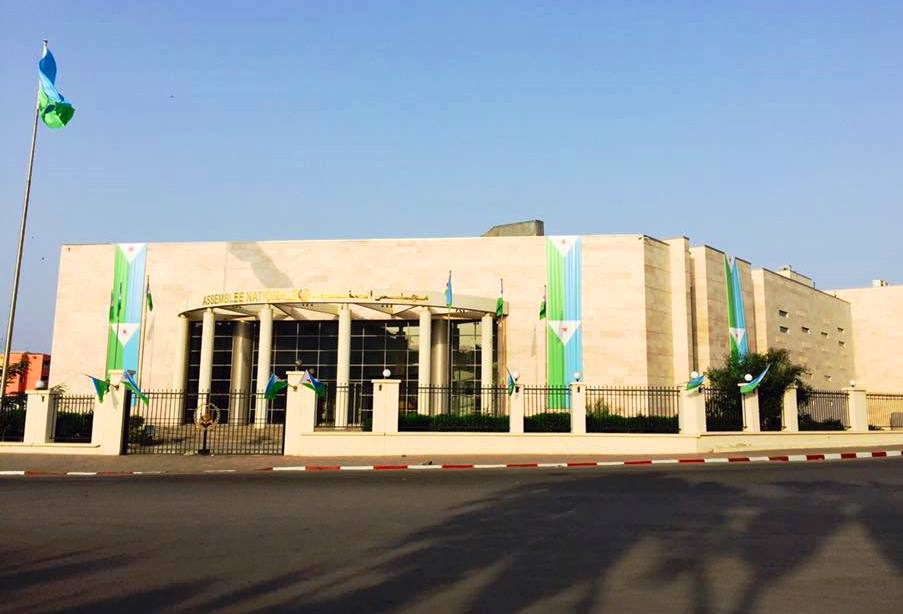
LinkWise's US$1.35 billion integrated project in Djibouti, announced in July 2026 under an MoU with the government, includes a high-performance AI computing centre, a digital industrial park, telecoms infrastructure, international data corridors and renewable generation. Officials expect about 2,000 construction jobs and 500 to 700 skilled posts once operating, and the labour minister met the company on 14 October on local hiring and training. No compute or power capacity has been disclosed, and the project remains at MoU stage.
Equinix's two planned hyperscale data centres at King Air Industria Park, part of a R7.5 billion South African plan, are on hold after appeals by Foxglove, the SAHRC and community groups suspended the city's approval in September. Cape Town mayor Geordin Hill-Lewis, as planning appeals authority, will decide. Equinix has not disclosed the sites' water or power needs.
Liberia is looking for investors in a national data centre, which it pitched at a recent investor dialogue in New York, but participants questioned whether the grid can power it. The country had 126MW of installed generation in 2024, about 70% of it hydro, and 32.5% electricity access per World Bank data, and Mount Coffee output falls in the dry season. Posts and Telecommunications Minister Sekou M. Kromah said feasibility studies will set the approach; no site or investment model has been chosen.
Intro Group will put nearly US$270m into the first phase of the 80MW Kemet Data Center in the Suez Canal Economic Zone, which it intends to be the zone's first Tier III facility. According to the ICT ministry, engineering designs are finished and supply contracts for equipment and systems have been signed. No dates were given for later phases.
Congo's national data centre in Bacongo, Brazzaville, built by China's Sumec, is now promised by end 2026 after work stopped in October 2025 at about 95% complete because the state ran short of funds. The building is designed to Tier III-level availability (99.98%), with three 3,000 kVA generators giving 72 hours of autonomy and a hybrid grid and solar supply under study. It belongs to the Central African Backbone programme, a CFA43.65bn envelope co-financed by the AfDB and the Congolese state.
A World Bank Group private sector diagnostic estimates Djibouti could draw up to US$240 million and 1,300 jobs in data centre investment, plus up to US$390 million in private solar, if it fixes regulation, energy supply and market access. The country hosts up to eight subsea cables but only two data centres, both close to full, with three more in development. The barriers named are opaque licensing (decrees under the 2025 Digital Code are still unclear), self-generation caps and electricity pricing, and a state-owned entity's grip on wholesale internet capacity.
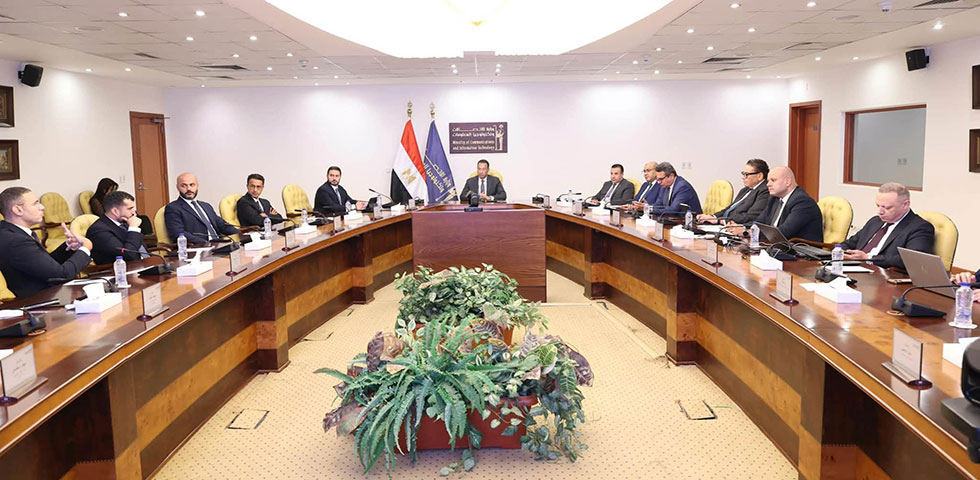
President Al-Sisi directed more investment in cloud and AI and an expansion of large-scale data centres, alongside a wider 5G rollout and steps to reduce concentration risk in communications networks. The meeting set targets of $8bn in digital exports by 2028 and $12bn in digital outsourcing exports in 2029, and reviewed the Karnak Arabic-language AI programme. No data centre capacity or budget was announced.
Communications minister Solly Malatsi told Parliament the National Data and Cloud Policy was designed to give multinationals the certainty to invest in data centres, with incentives handled by the trade department. He said closer work with host municipalities is needed to avoid delays that could deter investment. President Ramaphosa had said in July that hyperscalers have put well over R35.8 billion into local cloud and data centres.