The Ethiopian Artificial Intelligence Institute is courting high-performance computing, cloud and AI infrastructure on the strength of cheap renewable power: the country has 9,760MW installed, about 96% hydro, with 5,150MW at GERD alone. The analysis notes that existing facilities from Raxio and RedFox at the Ethio ICT Park are far below hyperscale, that being landlocked leaves Ethiopia without direct subsea cable access, and that no major hyperscaler has publicly committed. It frames the push as positioning rather than a secured investment pipeline.
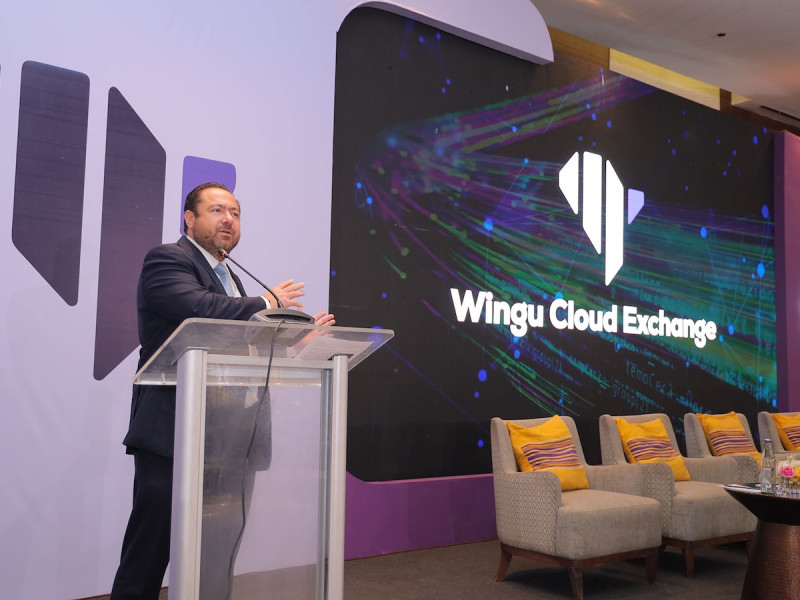
Neutral data centre operator Wingu Africa has launched its Wingu Cloud Exchange (WCX) in Ethiopia, a locally hosted private cloud offering compute, storage, Kubernetes container management and security that can run alongside on-premises systems and global clouds such as Azure and AWS. Wingu pitches local-currency pricing as a way for customers to avoid foreign exchange uncertainty, and positions the in-country platform as a route to meeting data sovereignty rules. WCX first launched in Tanzania in November 2025; no pricing, capacity or customer figures were disclosed.
Ethio telecom, Djibouti Telecom and Sudatel Group signed a tripartite agreement under the Horizon Fiber Initiative for a multi-terabit terrestrial corridor from Djibouti's subsea landing stations through Ethiopia to Sudan's landing stations. It follows a December 2024 MoU and is pitched as added resilience and international bandwidth for cloud and hyperscale traffic. No capacity, cost or completion date was disclosed.
India's state-owned RailTel will build a greenfield data centre for Ethiopia's Ministry of Foreign Affairs inside the ministry's existing Addis Ababa building, in a deal valued at roughly US$2.2 million and secured with backing from India's Ministry of External Affairs. The build is due within a year, followed by three years of operation and maintenance after go-live. RailTel has not disclosed the facility's size or IT capacity; the project is framed as support for the Digital Ethiopia 2030 strategy.
TechCabal reports that Djibouti now has landing points for 12 major submarine cables, including 2Africa, and carrier-neutral Tier III capacity at the Djibouti Data Centre and the new Wingu Group technology park, making it the main gateway for landlocked Ethiopia. It flags electricity at about 23 US cents per kWh as a cost that could put off power-hungry data centre operators. The piece also covers the Horizon fibre corridor planned to link Djibouti, Addis Ababa and Khartoum, and Ethiopia's still-incomplete telecom liberalisation.
Ethiopian Electric Power says it will sign no new crypto-mining contracts and does not plan to renew existing ones, winding down a sector that brought in USD 220 million last fiscal year at a tariff of 3.14 US cents per kWh paid in hard currency. An energy outlook cited in the piece projects mining will take a third of national output this year, while 15 million households remain off-grid. The utility faces a large funding gap (138 billion Birr expected revenue against 251 billion needed) and will start no new generation projects this year, focusing on finishing GERD, Koysha and eight others.