Gabon launched 5G on 26 October 2026, with Moov Africa Gabon Telecom and Airtel covering Libreville, Akanda, Owendo and Port-Gentil, and Airtel also Ntoum, while regulator ARCEP demanded firm service commitments. The report lists the underlying weaknesses: backbone gaps in several provinces, an August 2026 fibre break, copper theft, outages blamed on load shedding, and a May 2026 fault on the ACE Libreville to Sao Tome segment that left three of four submarine systems working.
Equinix's two planned hyperscale data centres at King Air Industria Park, part of a R7.5 billion South African plan, are on hold after appeals by Foxglove, the SAHRC and community groups suspended the city's approval in September. Cape Town mayor Geordin Hill-Lewis, as planning appeals authority, will decide. Equinix has not disclosed the sites' water or power needs.
Liberia is looking for investors in a national data centre, which it pitched at a recent investor dialogue in New York, but participants questioned whether the grid can power it. The country had 126MW of installed generation in 2024, about 70% of it hydro, and 32.5% electricity access per World Bank data, and Mount Coffee output falls in the dry season. Posts and Telecommunications Minister Sekou M. Kromah said feasibility studies will set the approach; no site or investment model has been chosen.
Congo's national data centre in Bacongo, Brazzaville, built by China's Sumec, is now promised by end 2026 after work stopped in October 2025 at about 95% complete because the state ran short of funds. The building is designed to Tier III-level availability (99.98%), with three 3,000 kVA generators giving 72 hours of autonomy and a hybrid grid and solar supply under study. It belongs to the Central African Backbone programme, a CFA43.65bn envelope co-financed by the AfDB and the Congolese state.
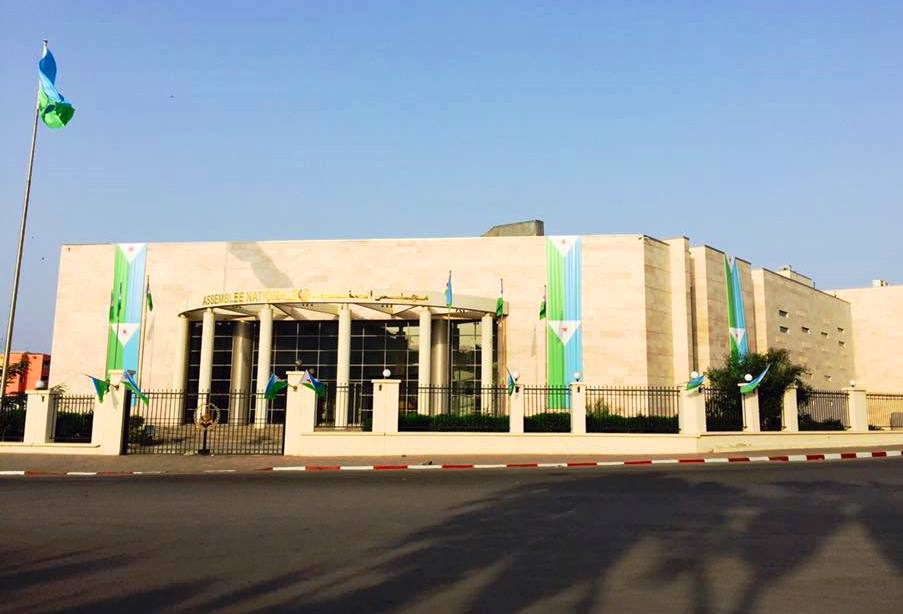
A World Bank Group private sector diagnostic estimates Djibouti could draw up to US$240 million and 1,300 jobs in data centre investment, plus up to US$390 million in private solar, if it fixes regulation, energy supply and market access. The country hosts up to eight subsea cables but only two data centres, both close to full, with three more in development. The barriers named are opaque licensing (decrees under the 2025 Digital Code are still unclear), self-generation caps and electricity pricing, and a state-owned entity's grip on wholesale internet capacity.
The Ethiopian Artificial Intelligence Institute is courting high-performance computing, cloud and AI infrastructure on the strength of cheap renewable power: the country has 9,760MW installed, about 96% hydro, with 5,150MW at GERD alone. The analysis notes that existing facilities from Raxio and RedFox at the Ethio ICT Park are far below hyperscale, that being landlocked leaves Ethiopia without direct subsea cable access, and that no major hyperscaler has publicly committed. It frames the push as positioning rather than a secured investment pipeline.
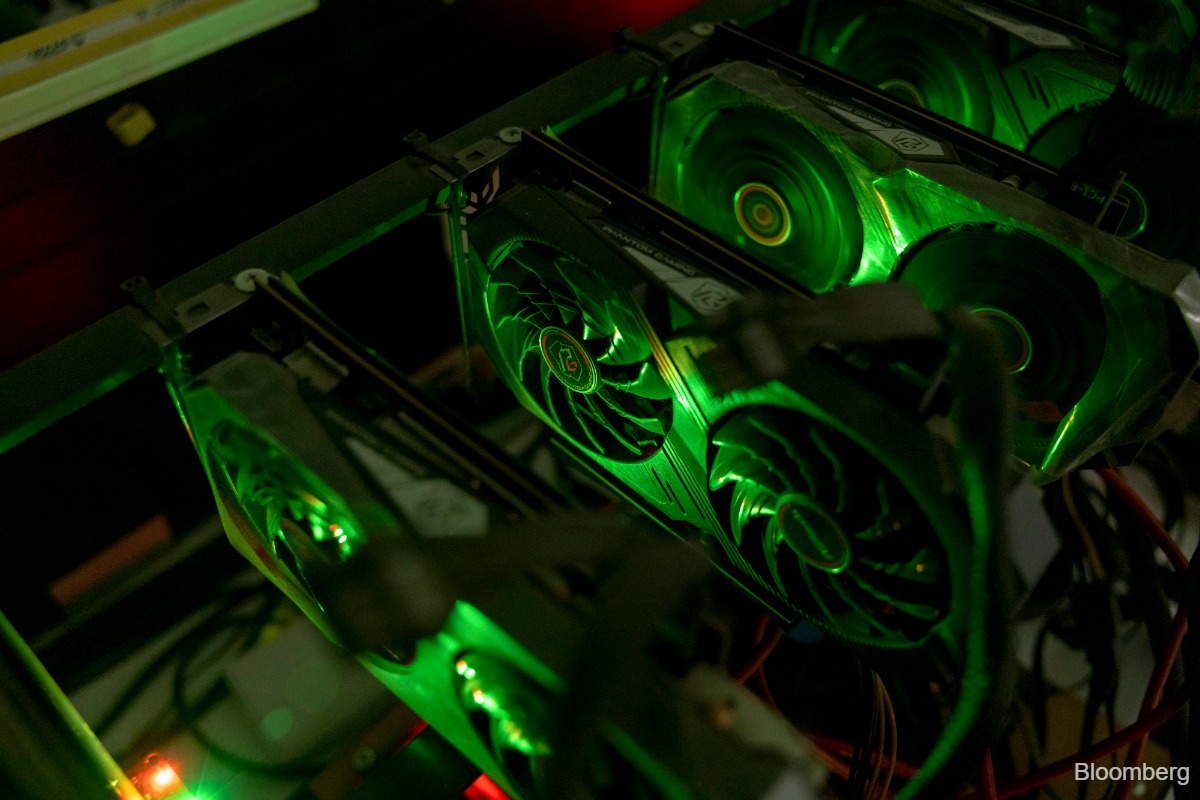
Ethiopia's state utility has throttled electricity to bitcoin miners in stages, first to 75%, then 50% and later 23% of contracted supply, after El Niño-linked drought cut inflows to hydro reservoirs by 20%, according to CEO Ashebir Balcha. Miners use almost a third of the country's 9,730MW output and supplied 35% of Ethiopian Electric Power's revenue last financial year; the utility holds PPAs with 39 mining firms, 31 of them operating. It will reassess in October, may curb power exports further, and has cut its export revenue forecast by 40% to US$279 million.
Communications and IT Minister Angela Kairuki says Tanzania intends to build AI data centres and is seeking international partners for infrastructure, skills and financing, citing clean electricity and adequate water as advantages. She spoke at the 2026 KOAFEC ministerial conference in Seoul, where about US$2.5 million has been secured through the South Korea partnership, including support for a digital technology university at Nala in Dodoma. No site or budget for the AI data centres was given.
ICT Minister Raafat Hendy met Heka Data and a US consortium of data centre developers to discuss a combined data centre and AI hub, with NTRA, ITIDA and Telecom Egypt officials present. Talks covered scope, phasing, investment and streamlining approvals, and stressed matching the build with reliable power supply. No capacity, investment figure or timeline was disclosed; the parties said they would move on to studies.
Teraco's 2026 sustainability report puts its 2025 water usage effectiveness at 0.03 litres per kWh, against 0.95 for Equinix and a US average of about 1.8 cited from Lawrence Berkeley research. The operator says total water use fell from 38,330kl in 2023 to 31,801kl in 2025 while its IT capacity doubled, crediting closed-loop dry and free-air cooling. The figures land as water use has become a flashpoint in South African data centre approvals.
US firm Cybastion plans to invest US$75m in Douala in a sovereign data centre paired with its own power plant, according to the US Embassy, which announced it on 27 August at the first US-Cameroon bilateral economic dialogue. It was one item in a US$7bn package of American investment and trade announcements. Capacity, size and timeline have not been published.
The South African Human Rights Commission opened an inquiry in May 2026 into the rights implications of data centre growth. The Climate Justice Coalition called for a halt to new builds over electricity, water and land pressure, while ISPA argued local facilities use far less water than global averages and that new load could help Eskom, which now faces surplus supply.
Eskom's chairman says the utility has surplus power it cannot sell and is courting US tech firms, but Teraco argues the binding constraint is grid access and wheeling rather than generation. Teraco, at roughly 189MW of critical load, has a 120MW solar plant due for commissioning in Q4 2026 plus NOA wind PPAs, expects new renewables to cover over half its use by end-2027, and wants Eskom to carry power it contracts elsewhere. Any data centre tariff class would need Nersa approval after public consultation, and Teraco expects local AI demand to be mostly smaller inference clusters.
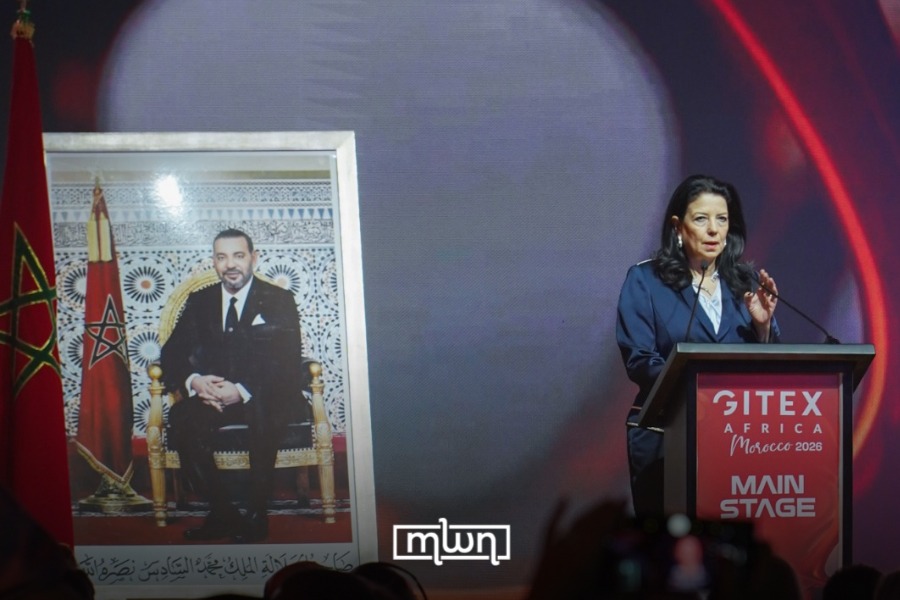
Morocco's digital transition ministry signed an MoU with Vertiv in Rabat covering data centres, cloud, AI, HPC and the power and cooling systems they need. A central item is talks on a 50MW sovereign data centre in Rabat for government cloud, AI and cybersecurity workloads. The minister also met N+ONE Datacenters and Cybastion afterwards; no investment figure was given.
The City of Cape Town has cleared two hyperscale campuses drawing roughly 174MW combined, among the largest new individual loads on the African grid. The approvals land against McKinsey projections that continental installed capacity grows from about 0.4GW today to 1.5–2.2GW by 2030, needing an estimated $10–20bn of investment.
South Africa hosts about 70% of Africa’s data centres and has drawn commitments from Microsoft and Amazon, with the market expected to roughly double to $5bn by 2031. Reuters reports the build-out is colliding with the country’s electricity and water constraints, raising the question of whether new load competes with households already exposed to outages and drought.
A BMI (Fitch Solutions) note counts 14 data centres in Morocco with just 1.5MW in operation at Q2 2026, against 140MW under construction and 400MW in planning, concentrated in Casablanca-Settat and Rabat-Sale-Kenitra. BMI projects cloud spending of $981m by end-2026 and about $2.7bn by 2031, driven by the 2021 rule keeping sensitive data in-country and national AI plans. It names grid limits and execution risk as the main constraints, partly offset by rules allowing on-site renewable self-consumption.
A Sunday outage that knocked out MTN Uganda's calls, data and mobile money traced back to its Mutundwe data centre in Kampala, where one of six generators failed and the UPS went into self-protection, cutting power to the whole site. Stanbic Bank Uganda, which shares the facility, lost internet banking, ATMs, POS and USSD services. MTN said at least 1 million customers had been compensated by the following Tuesday and described its own revenue loss as minor.
Lesotho signed a US$6.2 billion MoU with US-based Convalt Energy for the Kobong project in Mokhotlong district, pairing 1.2GW of hydropower, 4.6GW of solar and up to 4GWh of storage with an AI data centre. Construction is not expected before 2029, and the MoU is a statement of intent that still needs feasibility studies and approvals. Lesotho currently has two data centres, mainly serving telecoms and government.
Airtel is putting $120m into a 38MW facility at Eko Atlantic, designed for AI compute rather than general cloud storage, and targeted to be operational by the end of 2026. It would be the largest data centre in Nigeria and the first of five hyperscale sites the group has flagged for Africa.
Three ministries are jointly building an investment map of sites suitable for large-scale facilities, leaning on a renewable build-out targeted to reach 45% of the energy mix within two years. The strategy is explicitly about becoming a regional hub rather than only serving domestic demand.
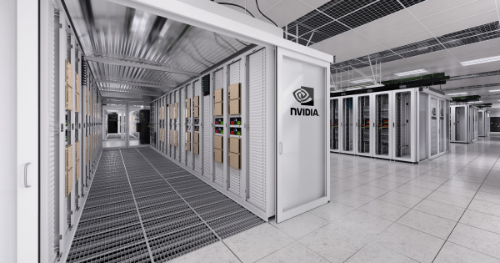
With roughly 406MW of total generation, Rwanda would see a single 100MW AI facility absorb nearly a third of its supply, so experts quoted in this piece argue for small modular edge data centres sited near geothermal or solar plants. It counts three operational data centres in Rwanda against 19 in Kenya and 11 in Tanzania, and cites an estimate of just 30MW of live data centre load across East Africa in 2025. One analyst puts the May 2026 rental price of an NVIDIA H100 in Africa at about $13.55 an hour, roughly 85% above the global average.
A month after opening, Angola's US$89m government data centre still lacks full Uptime Institute certification. Its 12 container modules carry a Tier III rating issued in Presight's name, but the building that houses them has not been assessed, and module certification lapses after one year. Infosi's director-general says the institute is waiting for an Uptime site visit but gave no date, leaving open questions about guarantees for public and private data hosted there.
Uganda has launched feasibility and environmental studies for a 400MW run-of-river hydropower station on the Victoria Nile at Kiba, with the timeline cut from 18 to 14 months. Officials say proposed data centre projects alone have lodged requests for 887MW of electricity, against dependable firm capacity of about 1,450MW and a February 2026 peak of 1,337MW. The government projects a 40MW supply deficit in 2025/26 rising above 217MW by 2027/28 unless new generation is accelerated.
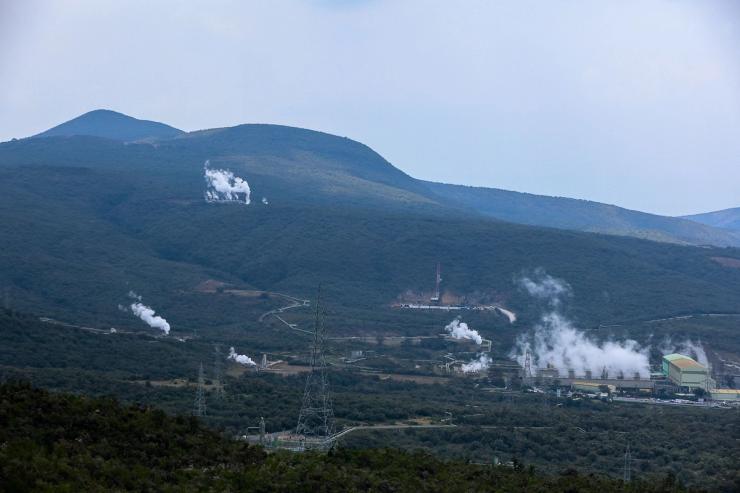
President William Ruto said the geothermal-powered campus planned with Microsoft and Abu Dhabi’s G42 would draw about a third of Kenya’s roughly 3,000MW of installed generation. His framing was blunt: switching the site on would mean switching off power for half the country, leaving the project unlikely to proceed as designed.
Digital transition minister Amal El Fallah Seghrouchni launched studies for what Morocco bills as Africa’s largest data centre, targeting 500MW by 2030. The design is entirely renewable-powered and cooled with Atlantic seawater, positioned as a "data embassy" on the edge of the Sahel.
RURA's head of ICT regulation says the regulator is drafting a dedicated data centre framework, with new rules expected before July after stakeholder consultation; current licensing does not prescribe any cooling technology. Any facility abstracting significant water already needs a permit from the Rwanda Water Resources Board. Rwanda has no hyperscale sites yet, and a Kigali operator quoted in the piece estimates cooling takes about 7% of power in efficient hyperscale halls and up to 40% in older designs.
Guinea's national data centre in Conakry, inaugurated some months earlier, has finished construction and is moving into operations, with the Corex group in talks with the state to run and maintain it. The site has two grid feeds from opposite sides of the city plus generator backup, but both feeds were down when Le360 visited, and engineers named unreliable electricity as the main risk alongside ageing equipment and round-the-clock staffing. No capacity or cost figures were given.
Centenary Group's technology arm, Cente-Tech, is finishing a Tier III-ready data centre in Masaka, about 130km from Kampala, with civil works and installation complete and opening set for September 2026. The open-access site will host Centenary Bank's 3 million account holders plus government and enterprise clients and provide an internet point of presence; the operator says its solar-assisted design uses 40% less power than conventional builds. Tier III certification is still being sought, and capacity and cost were not disclosed.
eThekwini council has voted to sign a memorandum of agreement with a Korean power consortium, believed to involve Korea Southern Power, to study a 400MW AI data centre on a 5ha plot at the Lovu River mouth near the Amanzimtoti cable landing station. Estimated at $3bn to $10bn, with the city supplying land and infrastructure and the partner funding the build, it would be roughly a quarter of Durban's current 1,600MW demand and targets operation in 2027/28. The city stresses only feasibility work is approved; power source, cooling water supply and tariffs are undecided, and DA councillors abstained pending environmental and public process.
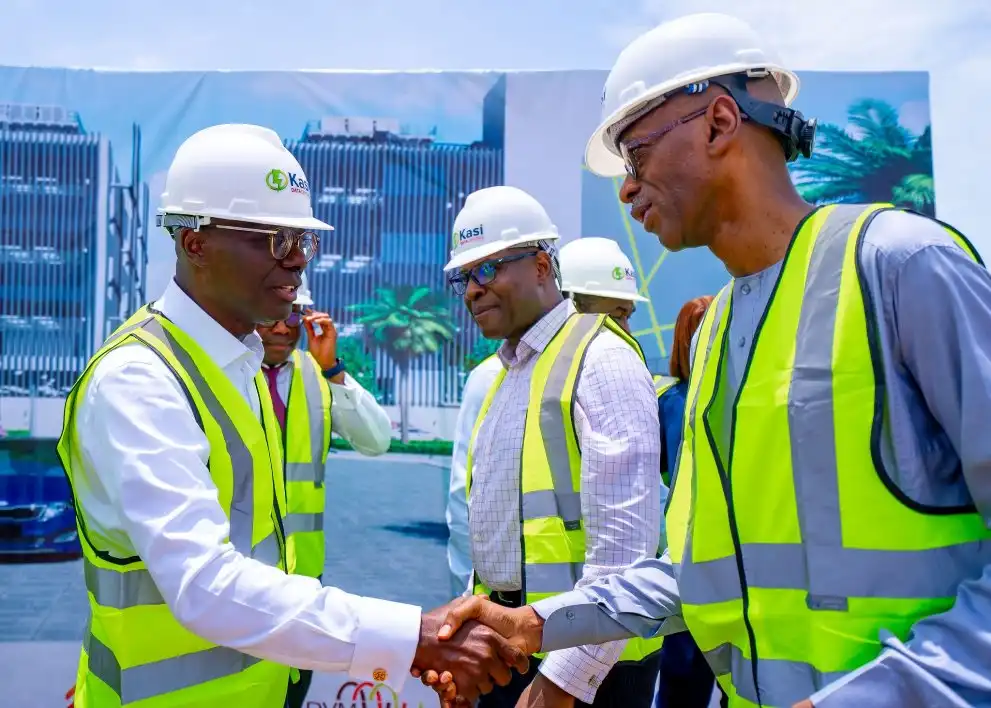
Kasi Cloud, backed by Nigeria’s sovereign wealth fund, is building a $250m hyperscale campus in Lekki against a grid that has never sustained more than about 6GW for 230m people. Diesel backup puts operators near $0.40 to $0.50 per kWh where competing markets pay $0.05 to $0.10, which is the gap the 320MW national pipeline has to absorb.
Algeria's High Commission for Digitization says the first National Data Center at Mohammadia, Algiers, has received Uptime Institute Tier III Design certification. The commission is now pursuing Tier III Facility Construction certification for the site, which it says would be a first in Algeria, and is seeking Tier III Design status for a second national data centre in Blida province.
Cyclone Gezani damaged close to 98% of Yas Madagascar's transmission cables in the east, disrupting fibre and voice services around Toamasina, Brickaville and Foulpointe, according to the operator's first assessments. Yas rerouted traffic and brought backup capacity online while repairs continued. The storm made landfall near Toamasina on 10 February 2026.
NOSi, the agency that runs Cabo Verde's state data centre in Praia, switched on a photovoltaic generation system at the facility at a ceremony at the Technology Park on 16 February 2026. Its executive administrator framed it as a step toward energy autonomy and resilience under the ESG strategy NOSi adopted in 2024. No capacity, cost or share of the site's load covered by solar was published.
Cavaleros has plans for 360MW in Cape Town and 200MW north of Johannesburg, while Teraco is targeting 500MW in total, 290MW of it new in Johannesburg. Together the announced pipeline adds roughly 1,000MW to national demand, about one stage of load shedding, and points to a supply squeeze by 2029 unless generation grows with it.
Operators have announced close to 2GW of Moroccan capacity, against a current continental footprint nearer 500MW, including Iozera’s $500m 386MW Tetouan site and Naver’s 500MW project. Proximity to Europe and subsea landings are the draw; generation and water availability are the constraints on actually building it.
TechCabal counts 17 operating data centres in Nigeria with at least nine more under construction or planned, and puts installed capacity at 65 to 86MW, which industry projections see passing 400MW within three to five years. It names Kasi Cloud's $250m Lekki campus (a first phase of 32 to 44.4MW, racks up to 100kW) and Airtel's $120m Nxtra build in Lagos as the likeliest first AI-grade facilities. Operators quoted say imported equipment, currency swings and reliable power remain the binding constraints, and many projects are still being redesigned.