Algeria's post and telecommunications minister laid the foundation stone for a government-owned AI data centre in the Akid Lotfi district of Oran. No capacity or cost figures were released; the facility is meant to give researchers, startups and universities access to AI compute. The government says it expects AI to contribute 7% of GDP by 2027.
FiveNines Group will lead design management and permitting preparation for a 20MW AI data centre on the outskirts of Casablanca for Nexus Core Systems, built on NVIDIA's Vera Rubin NVL72 reference architecture. The facility is the first block of the 180MW AI factory that Nexus agreed with Moroccan agencies in April 2026 and plans to deliver next year. Investment for the 20MW phase was not stated.
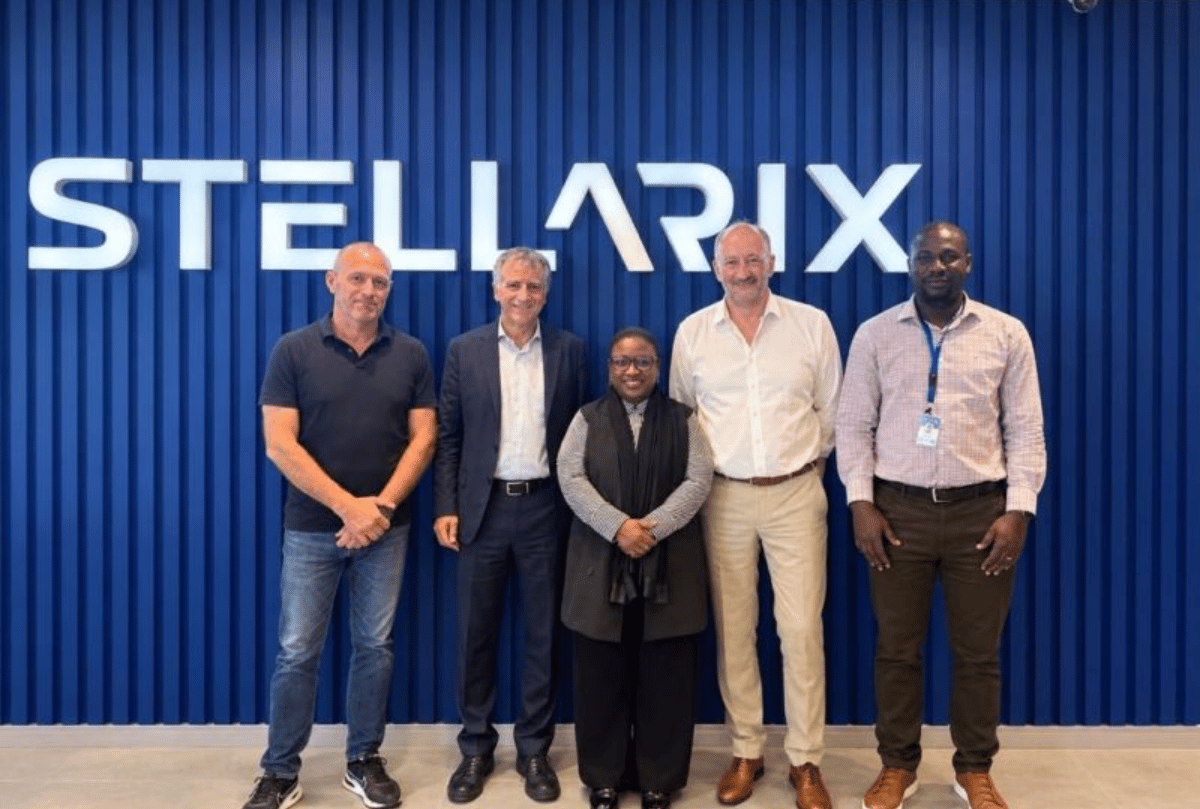
Stellarix, the data centre business of the Axian Group, has added capacity at its Senegal facility, pitching it at sovereign cloud, AI workloads and enterprise hosting. Snef, SERTEM Groupe and Kent Data Centres worked on the build. The announcement gives no megawatt, investment or timing figures, so the scale of the expansion is undisclosed.
Intro Group will put nearly US$270m into the first phase of the 80MW Kemet Data Center in the Suez Canal Economic Zone, which it intends to be the zone's first Tier III facility. According to the ICT ministry, engineering designs are finished and supply contracts for equipment and systems have been signed. No dates were given for later phases.
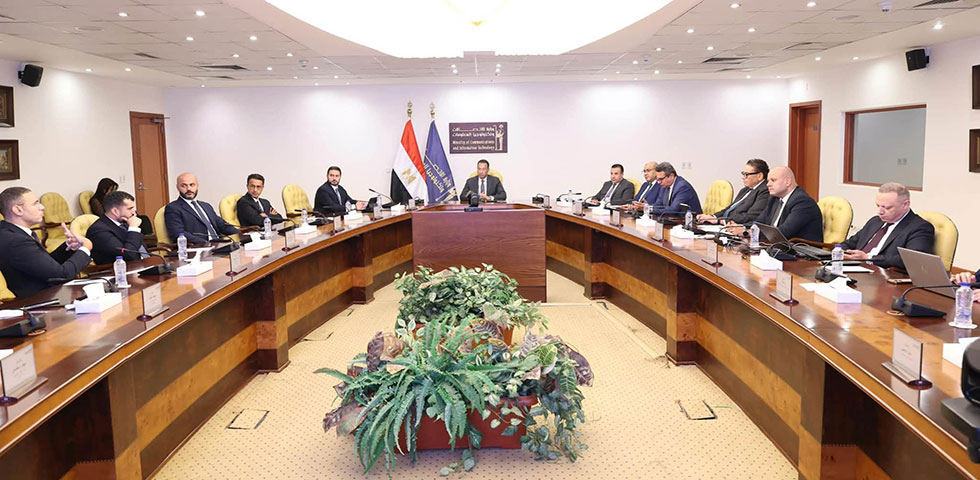
President Al-Sisi directed more investment in cloud and AI and an expansion of large-scale data centres, alongside a wider 5G rollout and steps to reduce concentration risk in communications networks. The meeting set targets of $8bn in digital exports by 2028 and $12bn in digital outsourcing exports in 2029, and reviewed the Karnak Arabic-language AI programme. No data centre capacity or budget was announced.
Communications minister Solly Malatsi told Parliament the National Data and Cloud Policy was designed to give multinationals the certainty to invest in data centres, with incentives handled by the trade department. He said closer work with host municipalities is needed to avoid delays that could deter investment. President Ramaphosa had said in July that hyperscalers have put well over R35.8 billion into local cloud and data centres.
The Ethiopian Artificial Intelligence Institute is courting high-performance computing, cloud and AI infrastructure on the strength of cheap renewable power: the country has 9,760MW installed, about 96% hydro, with 5,150MW at GERD alone. The analysis notes that existing facilities from Raxio and RedFox at the Ethio ICT Park are far below hyperscale, that being landlocked leaves Ethiopia without direct subsea cable access, and that no major hyperscaler has publicly committed. It frames the push as positioning rather than a secured investment pipeline.
Côte d'Ivoire's first state-owned national data centre, under construction in the VITIB zone at Grand-Bassam, is reported on track to open in 2027 with 1.73MW of IT load, 3MW of total power, 228 racks and 10PB of storage. Washington-based Cybastion leads the build with Ivorian contractor Porteo Group and Cisco, HPE and Schneider Electric as technology partners, backed by a $66.1m US EXIM guarantee approved in August 2025 within a $170m package. Construction had passed 20% by December 2025, and the site joins a private market that already includes Equinix, PAIX, Stellarix, Raxio and ST Digital.
Communications and IT Minister Angela Kairuki says Tanzania intends to build AI data centres and is seeking international partners for infrastructure, skills and financing, citing clean electricity and adequate water as advantages. She spoke at the 2026 KOAFEC ministerial conference in Seoul, where about US$2.5 million has been secured through the South Korea partnership, including support for a digital technology university at Nala in Dodoma. No site or budget for the AI data centres was given.
Telekom Networks Malawi has bought the OCL data centre in Kanengo, Lilongwe, to expand its enterprise offering, including data centre as a service. The operator says the facility will also carry its Mpamba mobile money platform and planned AI services. Neither the price nor the site's capacity was disclosed.
Digital Parks Africa, part of the Master Power Technologies group, announced Nigeria Data Centre 1, a carrier-neutral Lagos facility for banks, cloud and connectivity providers, at ITW Africa on 8 September 2026; capacity, cost and timeline were not disclosed. The report sets it against a Lagos pipeline of about 146MW and a Central Bank of Nigeria directive that payment data generated in Nigeria be stored locally, with full compliance due on 1 January 2027.
Vodafone Egypt and Cassava Technologies launched what they call Egypt's first sovereign AI factory, offering NVIDIA GPU capacity as a service with data kept inside Egypt. It sits within Vodafone Egypt's plan to spend more than EGP 20bn this fiscal year. GPU count, site and project cost were not disclosed.
Vodafone Business, Elsewedy Electric and Cassava Technologies are forming Africa Data Centers Egypt, starting at 20MW and planned to grow to 200MW for AI workloads. ICT minister Raafat Hindy expects about US$200m in the first phase rising to US$1bn at full build, with Elsewedy bringing energy and construction capability. The minister also said a national data centre strategy is being prepared.
Digital Realty has opened NBO2, a 6.2MW facility beside its existing NBO1 on a Nairobi campus planned for 34,000 square metres, with up to 4,000 square metres of IT space in the new building. The site connects to more than 100 networks, two internet exchange points and a satellite teleport for backup. The former iColo business now trades under the Digital Realty brand in Kenya and Mozambique. Mordor Intelligence puts Kenya's total data centre capacity at 15MW in 2025, forecast to reach 25MW by 2030.
Nigeria's Ministry of Communications, Innovation and Digital Economy has launched a National Digital Cloud Policy that seeks US$750 million of private investment within 24 months and aims to make the country a West African cloud and hosting hub. It covers data centres, cloud and AI compute, applies sovereignty rules to defined categories of government and regulated data, and proposes a National Digital Marketplace to pool ministries' cloud buying. Rollout runs in three phases over two years, alongside Project BRIDGE.
Lesotho's ICT ministry and the UN ran a five-day workshop in Maseru from 17 to 21 August 2026 to draft a National AI Strategy and a Data Centre Blueprint for secure, resilient data infrastructure. The work builds on AI, data management, and broadband and shared infrastructure policies validated in 2025. The Deputy Prime Minister urged building safeguards, capacity and infrastructure before scaling AI investment.
A mid-term review of Congo's digital plan finds that the network has grown faster than its use. WACS (2012) and 2Africa (2023) land at Matombi, an operator-funded backbone runs Matombi to Pointe-Noire to Brazzaville, the regulator ARPCE runs a Pointe-Noire data centre, and the Central African Backbone already reaches Gabon and CAR with the Cameroon link still being built. Meanwhile e-government services remain largely undigitised, though mobile data volumes grew more than 40% year on year.
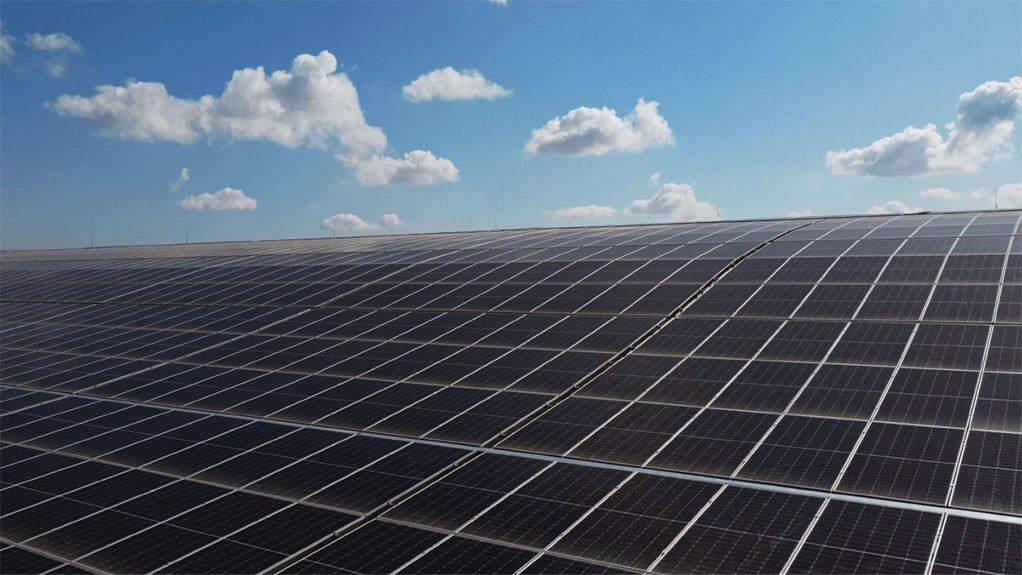
Eskom's chairman says the utility has surplus power it cannot sell and is courting US tech firms, but Teraco argues the binding constraint is grid access and wheeling rather than generation. Teraco, at roughly 189MW of critical load, has a 120MW solar plant due for commissioning in Q4 2026 plus NOA wind PPAs, expects new renewables to cover over half its use by end-2027, and wants Eskom to carry power it contracts elsewhere. Any data centre tariff class would need Nersa approval after public consultation, and Teraco expects local AI demand to be mostly smaller inference clusters.
Equinix is taking its Johannesburg 1 site in Germiston, opened in 2024 on a $160m investment, from 4MW to 24MW through two further 10MW phases, with the facility designed for AI loads including liquid cooling. The company has set aside R7.5bn for South Africa overall and bought more land in Johannesburg and Cape Town earlier in 2026, though its local MD says nothing is being built on those plots yet and further capacity depends on customer demand.
The City of Cape Town has cleared two hyperscale campuses drawing roughly 174MW combined, among the largest new individual loads on the African grid. The approvals land against McKinsey projections that continental installed capacity grows from about 0.4GW today to 1.5–2.2GW by 2030, needing an estimated $10–20bn of investment.
Cloud provider Bubble, the first company licensed by INTIC in the advanced category, will run two availability zones, one in Maputo City and one at Beluluane in Maputo Province. The company says the dual-site setup improves continuity and keeps customer data and applications in the country.
South Africa hosts about 70% of Africa’s data centres and has drawn commitments from Microsoft and Amazon, with the market expected to roughly double to $5bn by 2031. Reuters reports the build-out is colliding with the country’s electricity and water constraints, raising the question of whether new load competes with households already exposed to outages and drought.
Raxio Group plans to open TZ1 on the outskirts of Dar es Salaam this year, billed as Tanzania's first carrier-neutral Tier III facility, with 6MW of IT load, 800 racks and a 4,000 square metre footprint, joining 11 existing data centres in the country. Raxio says it will use the SEACOM and EASSy cables to sell IP transit to landlocked neighbours, and reports signing six times as many power contracts in the first half of 2026 as in all of 2025. Shareholders Meridiam and Roha have lifted Raxio's funding pool to US$380 million.
Axian group data centre operator Stellarix says its operations in Madagascar, Tanzania and Senegal now hold ISO 9001, ISO 22301 and ISO/IEC 27001 certification, covering colocation, cloud, managed connectivity and cybersecurity. No site capacities were disclosed.
A BMI (Fitch Solutions) note counts 14 data centres in Morocco with just 1.5MW in operation at Q2 2026, against 140MW under construction and 400MW in planning, concentrated in Casablanca-Settat and Rabat-Sale-Kenitra. BMI projects cloud spending of $981m by end-2026 and about $2.7bn by 2031, driven by the 2021 rule keeping sensitive data in-country and national AI plans. It names grid limits and execution risk as the main constraints, partly offset by rules allowing on-site renewable self-consumption.