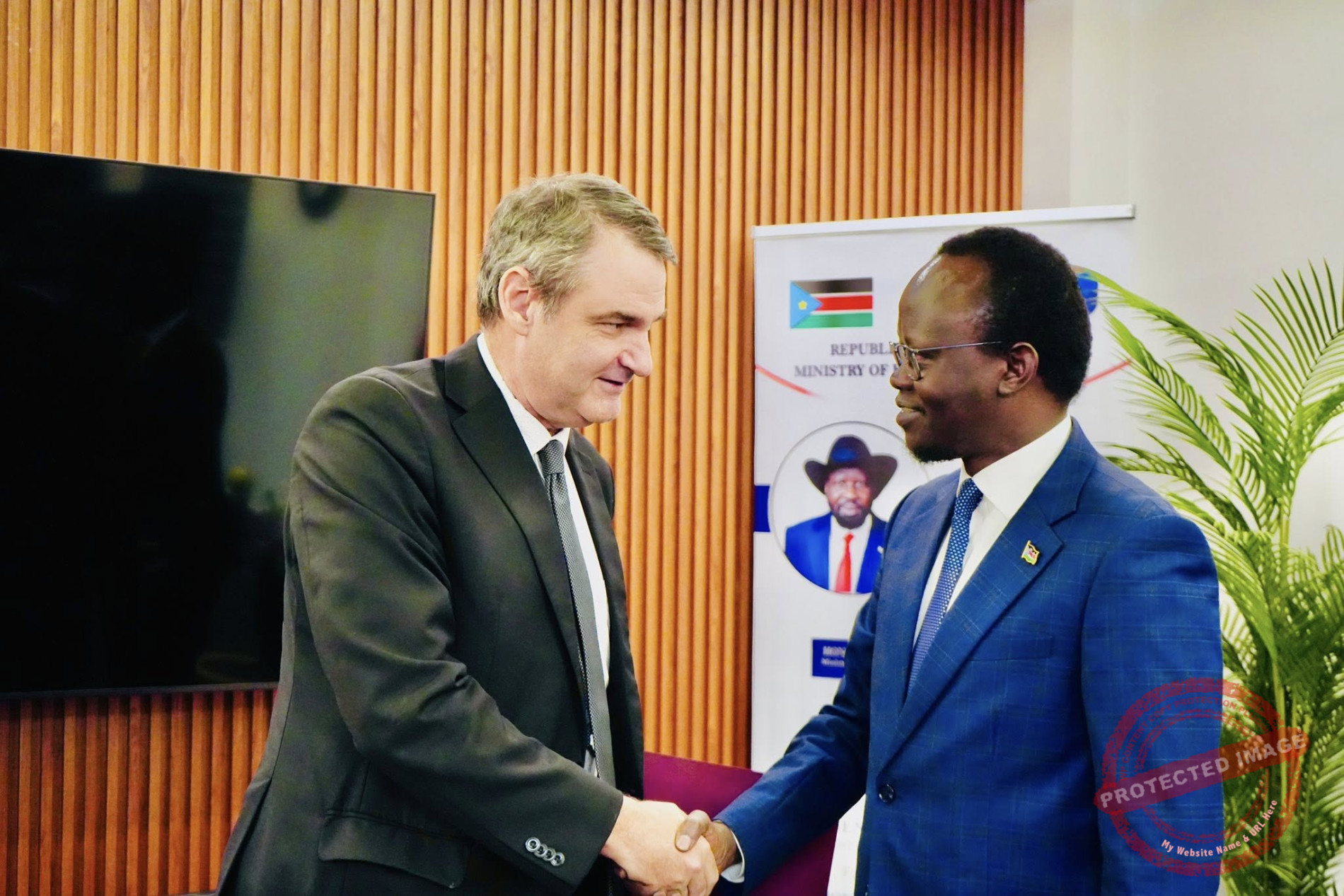
CAR's digital economy minister Roger Andjalandji proposed creating a local internet exchange point at a network resilience session on the sidelines of the ITU Plenipotentiary Conference in Doha on 10 November 2026. The country has had no IXP since at least the World Bank's 2020 assessment, and the Bank says one could cut international bandwidth costs by up to 50%. He also called for more diverse regional fibre routes and better integration of satellite and terrestrial networks.
On 8 October 2026 the Central African Republic revived a plan to connect to DR Congo's fibre, which runs about 650 km from Kinshasa to the WACS landing at Moanda, to reduce its reliance on routes through Cameroon and Congo. Route, cost and timeline were not given. CAR's 935 km national backbone dates from February 2023, and internet penetration was about 12% at end 2025.
Niger was set to open its fibre link with Algeria on 5 October 2026 at Assamaka on the border, giving the landlocked country a northern route onto Algerian international capacity along the Agadez to Assamaka corridor of the Trans-Saharan backbone. Niger's share of the backbone is 1,031km on five routes plus an 88km urban loop connecting government sites to a planned Tier III national data centre. Its existing southern path through Benin reaches three subsea systems with about 580 Gbit/s of combined installed capacity at end-2024.
Angola Cables is fitting Ciena WaveLogic 6 Extreme optics to its SACS (6,165 km, Angola to Brazil) and MONET (10,556 km, Brazil to the US) systems, enabling 800 Gb/s services and capacity sold from 100 Gbps up to a full fibre pair. The company quotes a 130 ms round trip between Angola and the United States. It is pitching the upgraded route to hyperscale, cloud, wholesale and content customers, along with spectrum and managed fibre offerings.
Cabo Verde Telecom and exchange operator DE-CIX signed a letter of intent to study a South Atlantic interconnection corridor between Lisbon and São Paulo, with CVTelecom supplying transport capacity and DE-CIX its exchange ecosystems in Europe and the Americas. CVTelecom would gain access to DE-CIX in Frankfurt, Madrid, Marseille, New York and São Paulo; scope and commercial terms await a definitive agreement, and no dates were given.
A World Bank Group private sector diagnostic estimates Djibouti could draw up to US$240 million and 1,300 jobs in data centre investment, plus up to US$390 million in private solar, if it fixes regulation, energy supply and market access. The country hosts up to eight subsea cables but only two data centres, both close to full, with three more in development. The barriers named are opaque licensing (decrees under the 2025 Digital Code are still unclear), self-generation caps and electricity pricing, and a state-owned entity's grip on wholesale internet capacity.
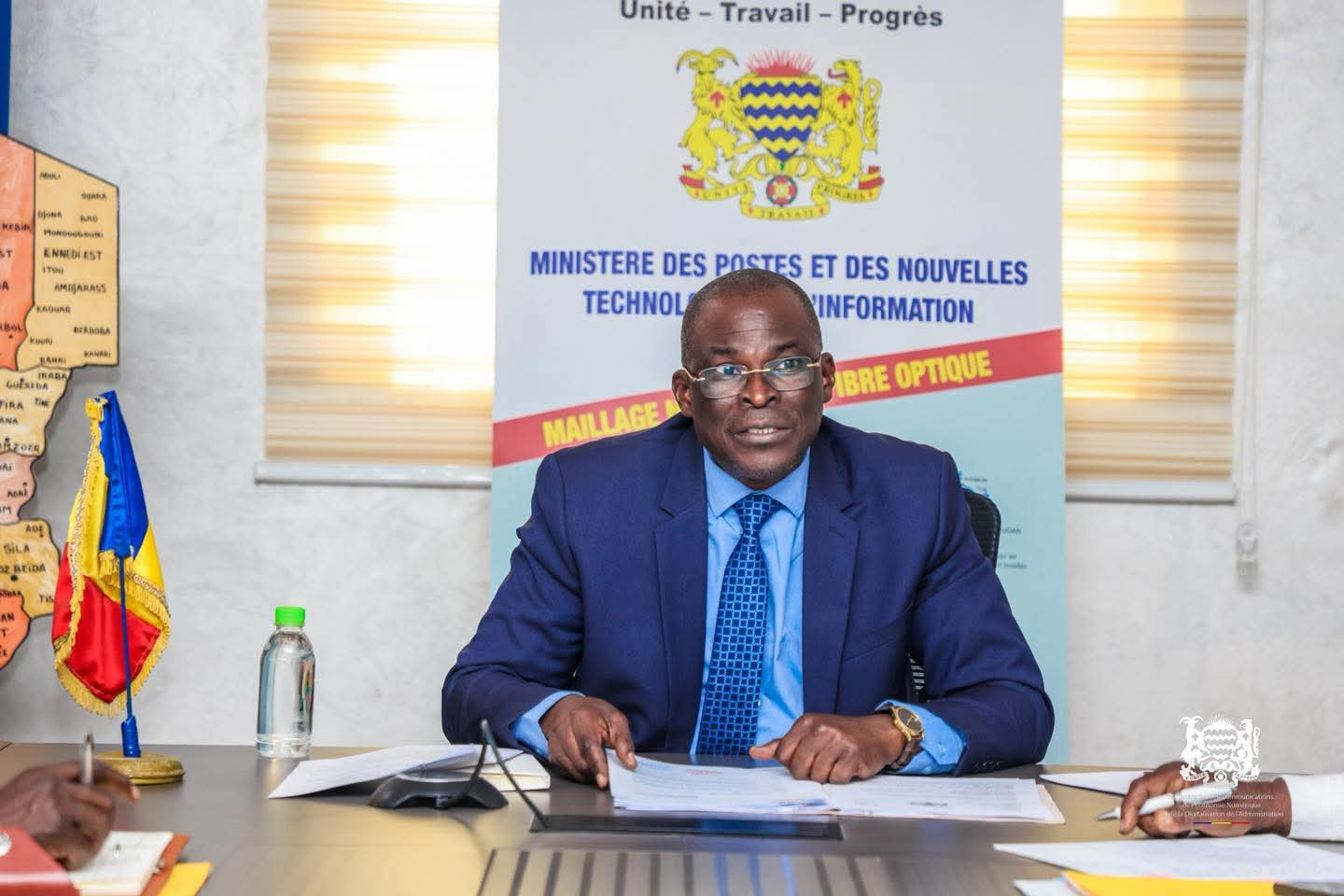
Chad's telecoms minister told the World Bank on 15 September 2026 that the country needs about 8,000 km more fibre, and that six provinces are still off the national backbone. Since the conflict in Sudan cut the eastern link, Chad's only working international exit runs through Cameroon. The report notes that the 1,200 km in the state modernisation programme is planned capacity rather than installed cable, and that a World Bank project with about US$92.2m in grants runs to 2029.
Nigeria's digital economy minister Bosun Tijani visited N'Djamena on 16 September 2026 to discuss linking Chad to Nigeria's planned 90,000 km open-access BRIDGE fibre network, which would give Chad access to international capacity landing at Lagos. The two sides signed a joint communiqué and handed details to technical teams. No financing was mentioned.
Somaliland Cable (Somcable) operates both the 2Africa and PEACE subsea landings at Berbera and is tying them into terrestrial fibre toward Ethiopia and South Sudan, pitching Berbera as an alternative gateway to Kenya's Mombasa for landlocked markets. The company says the two physically separate subsea routes give it a technical edge, and it has opened talks with Ethio Telecom on larger international capacity leases. No distances, capacities or investment values were given.
Gabon plans 1,651 km of new fibre, close to doubling its national backbone, under a public-private partnership between asset holder SPIN and Gabon Fiber S.A. validated at Libreville workshops and due for signature on 14 September 2026. Authorities put current international capacity across 2Africa, ACE, Maroc Telecom West Africa and SAT-3/WASC systems at 20 terabytes, rising to 400 with Medusa Africa by 2028. An August fibre cut across four provinces and rising cable theft underline resilience problems.
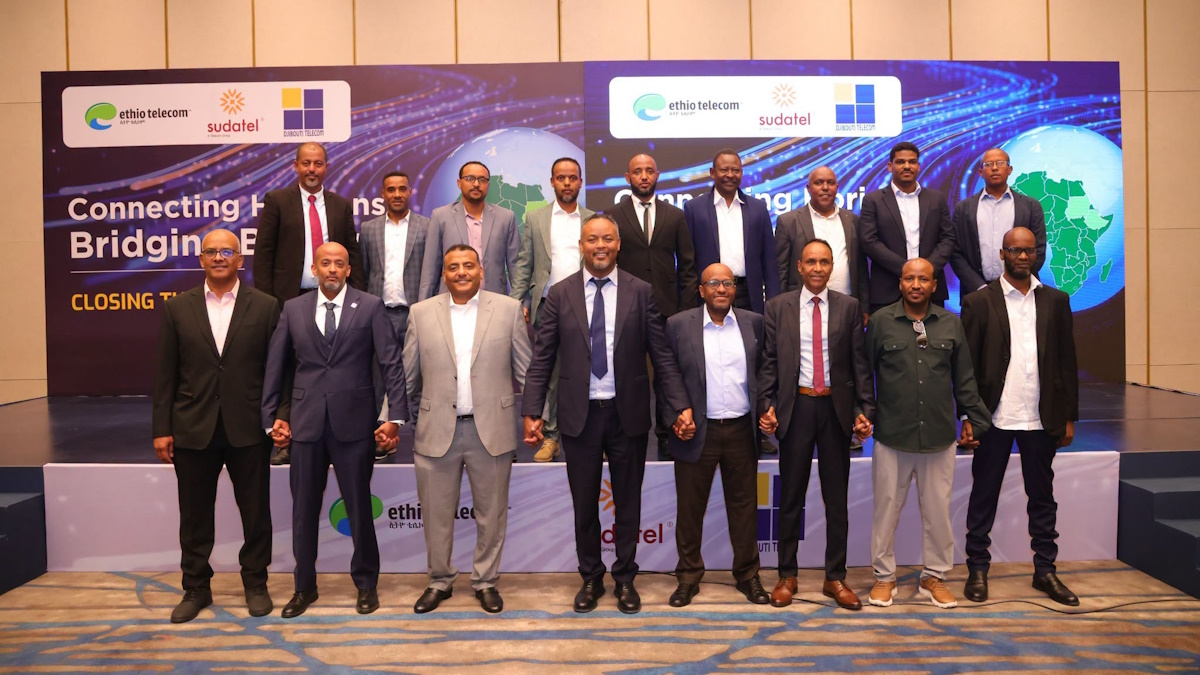
Ethio Telecom, Djibouti Telecom and Sudatel are moving the Horizon Fibre terrestrial corridor toward commercial launch after a stakeholder meeting in Addis Ababa attended by Google, Meta, Microsoft, AWS, Airtel Africa, WIOCC, China Mobile International and others. The multi-terabit route links subsea landing stations in Djibouti and Port Sudan through Ethiopia, offering carriers and hyperscalers an overland alternative to the Red Sea path. Ciena, Nokia and BringCom are advising on the architecture; route length and a build timeline were not given.
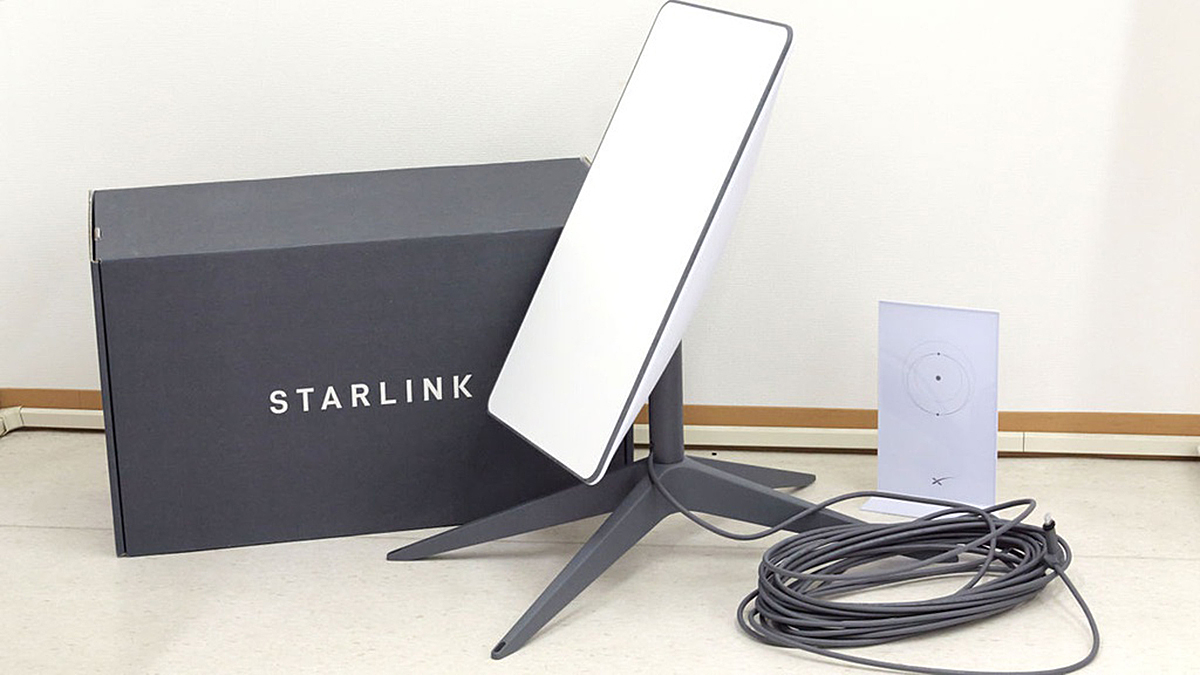
On 8 September 2026 Equatorial Guinea's government gave the telecom regulator ORTEL control of Starlink's commercial operations, under the state secretariat for artificial intelligence, after months of talks with SpaceX over licence fees, tax, security requirements and a possible local entity. Licence terms, ORTEL's operating role and the tax regime have not been published.
Algeria Telecom and Niger Telecom signed agreements in Niamey on 8 September 2026 for a 100Gb terrestrial link between In Guezzam and Agadez, with Algeria donating the transmission equipment, as part of the Trans-Saharan backbone that also targets Nigeria, Chad, Mali and Mauritania. The telling figure is on the compute side: according to Niger's digital economy minister, the backbone was 97% built at the start of 2026, but the national data centre attached to the same project was only 8% complete. The Niger fibre segment received provisional acceptance in November 2025; no financing figures were given.
The US Trade and Development Agency signed an agreement on 9 September 2026 to fund a feasibility study by CSquared Ghana for an open-access fibre network strung along power lines run by the Northern Electricity Distribution Company (NEDCo). The study is to assess commercial viability, technical design, expected demand and a financing plan for northern Ghana. The grant size and route length were not disclosed.
Mauritius-based INDOI (IOX) and partners announced the LuLu Coastal Cable System, about 500 km along Kenya's coast with five landings from Mombasa to Lamu, including Vipingo SEZ, Kilifi and Malindi, pairing a submarine cable with a protected terrestrial route. Blue Trade Investments is the Kenyan landing party, with ARISE IIP, AfriTrade and Kingdom Bank involved; the developers cite 144 fibre pairs and up to 60 Tbps per pair. Ready for service is targeted for Q2 2028 subject to contracts, and no supplier, construction start or cost has been named.
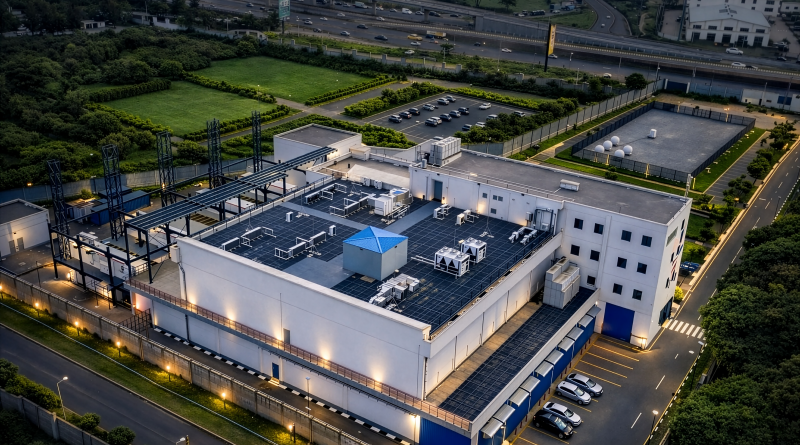
Digital Realty has opened NBO2, a 6.2MW facility beside its existing NBO1 on a Nairobi campus planned for 34,000 square metres, with up to 4,000 square metres of IT space in the new building. The site connects to more than 100 networks, two internet exchange points and a satellite teleport for backup. The former iColo business now trades under the Digital Realty brand in Kenya and Mozambique. Mordor Intelligence puts Kenya's total data centre capacity at 15MW in 2025, forecast to reach 25MW by 2030.
Orange has announced ReuNION, a 16-fibre-pair cable of about 320Tbit/s linking La Reunion to the South African coast, costing about EUR93.1m with EU, French state and operator funding, and due for service in 2028. It is meant to replace the Safe cable, in service since 2002 from Melkbosstrand and Mtunzini via Mauritius to Asia, which Reunion operators expect to reach end of life from 2027. Orange has not named the South African landing site.
Telecom Egypt has contracted Power Sub Link to build a repeaterless cable of about 200km from Sharm El Sheikh to Taba, extending its Red Sea festoon into one subsea route linking Suez, Zafarana, Ras Ghareb, Sharm El Sheikh and Taba. The operator cites about five petabits per second of capacity and a ready-for-service date in Q4 2027. It adds landing options and redundancy for Asia-Europe traffic crossing Egypt.
After a fibre cut in Cameroon knocked out service in the Central African Republic, Ecofin examines the country's reliance on the Central Africa Backbone route through Cameroon, where Camtel has previously cut off Chad over unpaid bills. The planned Congo link is not yet live, with the Owando to Ouesso section still under construction and jointly run by two operators. Routes via South Sudan, Sudan, Kenya, Nigeria or North Africa are described as theoretical and dependent on cost, distance and politics.
KINIX, the Kinshasa internet exchange run by ISPA-DRC, has added the Tier III Raxio DRC facility alongside OADC's FIH1, making it a two-site exchange. It counts 23 networks over 25 connections, including all four Congolese mobile operators plus Meta and Cloudflare, and moves more than 1 Tbps, which it expects to pass 2 Tbps after the Raxio deployment. Operators from outside the DRC already peer there as KINIX positions itself as a Central African hub.
A mid-term review of Congo's digital plan finds that the network has grown faster than its use. WACS (2012) and 2Africa (2023) land at Matombi, an operator-funded backbone runs Matombi to Pointe-Noire to Brazzaville, the regulator ARPCE runs a Pointe-Noire data centre, and the Central African Backbone already reaches Gabon and CAR with the Cameroon link still being built. Meanwhile e-government services remain largely undigitised, though mobile data volumes grew more than 40% year on year.
Botswana Fibre Networks has finished its 2025-2026 local access programme, a P43m build taking fibre to Moshupa, Ramotswa-Taung and Thamaga. It connected 191 business, government and residential customers across the three villages and created 210 construction jobs.
Project BRIDGE, Nigeria's plan for about 90,000km of new fibre reaching all 774 local government areas, has moved into execution with the incorporation of Bridge Open Access as its project company. Private investors are to hold the majority stake and government a minority, and the World Bank, AfDB and EBRD have committed financing, though no amounts or rollout dates were given. Right-of-way disputes and vandalism remain risks.
Óscar Ondo handed over leadership of GITGE, the state telecom infrastructure company, on 7 August 2026 after nearly 13 years, having been named Secretary of State for Telecommunications and AI Systems by Decree 61/2026. The piece credits GITGE with Ceiba-1, Ceiba-2 and the Ultramar link to Sao Tome, and says international capacity rose from about 500 Mbps to over 30 Gbps. Feasibility studies under the AfDB-backed PARED project cover FTTH in four towns, cable landing buildings in Malabo and Bata, and a possible new international submarine cable.
Cloud provider Bubble, the first company licensed by INTIC in the advanced category, will run two availability zones, one in Maputo City and one at Beluluane in Maputo Province. The company says the dual-site setup improves continuity and keeps customer data and applications in the country.
State operator Getesa signed a six-month programme with Huawei to add capacity and fix the congestion an audit traced to its equipment and bandwidth. The government also wants to commercialise the roughly 2,000 km fibre network owned by power utility Segesa, possibly through a dedicated company with Huawei as technical partner. The country had about 1.18 million internet users at end 2025.
Wholesale infrastructure firm CSquared said on 13 July 2026 that it has activated capacity on the 2Africa West subsea cable, adding a route alongside its Equiano capacity, which lands in Nigeria and Togo. Its terrestrial backbone carries traffic from landing points such as Accra, Lagos and Abidjan inland to Burkina Faso, Mali, Guinea, Sierra Leone and Liberia. The move follows cable cuts off Cote d'Ivoire in March 2024 and again in June 2026 that disrupted connectivity across the region. No capacity figure was disclosed.
Raxio Group plans to open TZ1 on the outskirts of Dar es Salaam this year, billed as Tanzania's first carrier-neutral Tier III facility, with 6MW of IT load, 800 racks and a 4,000 square metre footprint, joining 11 existing data centres in the country. Raxio says it will use the SEACOM and EASSy cables to sell IP transit to landlocked neighbours, and reports signing six times as many power contracts in the first half of 2026 as in all of 2025. Shareholders Meridiam and Roha have lifted Raxio's funding pool to US$380 million.
Paratus Zimbabwe and Powertel Communications have lit the first phase of a DWDM fibre route between Plumtree and Bulawayo, carrying 800Gbps initially and scalable beyond 10Tbps. The route, built under a June 2025 public-private partnership, is meant to link Zimbabwe with Botswana, Zambia and South Africa, with the Bulawayo to Livingstone leg expected by September 2026. Powertel keeps ownership while Paratus uses the capacity under an IRU.
The ECOWAS Commission hosted delegates from The Gambia, Guinea, Guinea-Bissau, Liberia and Sierra Leone in Abuja from 29 June to 10 July 2026 to evaluate bids for submarine cable capacity. The procurement is a step toward a World Bank-funded second cable under WARDIP, meant to give the five countries a redundant route beyond their current single cable. Bidders and contract values were not disclosed.
The DRC telecoms ministry signed an MoU with China's Genew Technologies for about 1,700 km of fibre laid along the Congo River from Muanda to Kisangani, plus some 400 km of land connections. Genew's CEO puts the total at US$1.5bn, with more than US$400m needed for the first phase. No financing structure or implementation timeline has been disclosed.
MTN Ghana told customers on 27 June 2026 that subsea cable cuts off Abidjan, Côte d'Ivoire, were degrading internet and data services in Ghana and several neighbouring countries. Banks, digital platforms, e-commerce firms and businesses relying on cloud services were hit, and the operator said it was working with international partners on repairs without giving a restoration date.
Somalia's National Communications Authority and the IFC convened the first Submarine Cable Landing Technical Working Group, a two-day meeting in Nairobi with operators, cable companies and ISPs on the resilience of the country's undersea links. Sessions covered implementation of the submarine cable regulations, market competition and infrastructure investment, and reviewed a new report on the Somali telecoms market. No figures were reported.
The City of Windhoek may push for amendments to the Local Authorities Act after the Supreme Court ruled it lacks power to provide telecoms services, stalling plans to commercialise its fibre network with Telecom Namibia. The ruling ends a dispute that began when Paratus objected to the licence CRAN granted the city in 2020. The city says nothing has yet been spent on the commercial component.
Orange Tunisie says the Medusa subsea cable, which landed at Bizerte on 1 November 2025, is now in service and carrying its first international traffic. Orange owns the Tunisian section and the Bizerte landing station; the Tunisian segment has four fibre pairs of 24Tbps each, and the full system is planned to exceed 8,000km and reach 13 countries. It is Tunisia's first new international cable since Orange's Didon system in 2014.
At a workshop in Abidjan, Liberia, Sierra Leone and Guinea agreed a roadmap with TRANSCO CLSG and consultants TACTIS to commercialise spare fibre along the CLSG power transmission line, targeting live capacity before the end of 2026. Liberia wants terrestrial backup routes through Côte d'Ivoire and Guinea because its only international link is the ACE cable landing in Monrovia. Next steps are naming national consortium members, drafting a consortium agreement and signing commercial terms; no financial figures were given.
The facility, inaugurated in Victoria, is built with redundant power, cooling and network paths and is pitched at regional clients needing secure hosting for cloud, financial and government workloads. For a market of under 100,000 people, the bet is that connectivity and stability, not domestic demand, are what fill the racks.
The Central African Republic's digital economy ministry announced a planned fibre interconnection with South Sudan, to be delivered by the Central African Digital Development Agency with MTN as operator; no route, schedule or technical design has been released. CAR currently reaches the sea through the Central African Backbone links to Cameroon and Congo, and officials say penetration rose from 15.5% in early 2025 to about 30%. South Sudan is itself landlocked, and vandalism and thin domestic fibre remain constraints.
ACIX, the exchange DE-CIX runs for the NGO Internet Pour Tous, has added OADC Texaf's FIH1 data centre in Kinshasa to its original site at local ISP United SA, making it the DRC's first distributed internet exchange. ACIX began operating in 2023 as part of DE-CIX's entry into Africa. DE-CIX says the second site will let more networks connect, and it is open to operators, ISPs, cloud and content providers, banks and international carriers.
Kasi Cloud has completed LOS1, the first phase of its campus on four hectares at Maiyegun in Lekki, and moved it into commissioning; construction began in 2022 and the full site is designed for about 100MW of IT load. The company points to proximity to six cable landing stations, including Equiano and 2Africa, and to cloud policy rules on in-country hosting of sensitive government and financial data. LOS1's own capacity and the investment were not stated.
Eritrea's transport and communications minister Tesfaselasie Berhane said more than 35 billion Nakfa has gone into telephone and internet expansion since independence, including 184 towers and about 73 km of new cable, with geographic mobile coverage put at 90%. He said international internet capacity grew from half a megabyte in 2001 to 1,536 megabytes, without defining the unit, and that new towers are planned for several sub-zones. The figures come from the state information ministry and are not independently verified; Eritrea still has no submarine cable landing.
After the third Digital Economy Roundtable in Lusaka, the government approved K255 million for digital infrastructure and service quality upgrades, aimed mainly at rural areas. Officials said Zambia's fibre network has grown from about 15,000km in 2021 to more than 45,000km, with national coverage at 94%. The regulator ZICTA will start publishing quarterly network performance reports.
Canalink, GUILAB, International Mauritania Telecom, Orange Group, Orange Côte d'Ivoire, Sonatel and Silverlinks have signed an MoU to start Via Africa, a consortium subsea cable from the UK, France and Portugal down the Atlantic coast via the Canary Islands, Mauritania, Senegal, Guinea, Côte d'Ivoire and Nigeria, with extensions further south planned. Members will jointly fund a route study and are preparing a tender to pick a cable supplier; no capacity or delivery date was given. The stated aim is a route that adds diversity to Africa's existing international links.
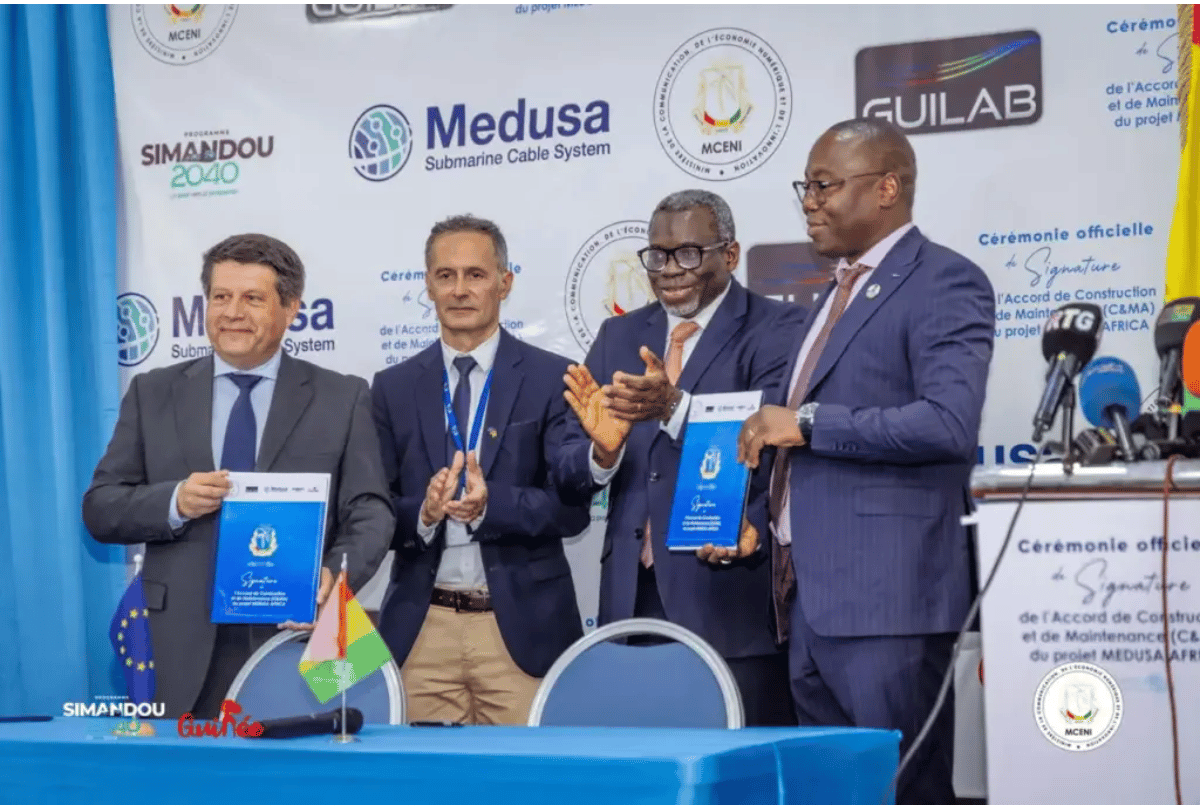
Guinea and the MEDUSA Submarine Cable System signed a construction and maintenance agreement in Conakry to land the MEDUSA Africa cable, which will be the country's second international subsea link after ACE. State-owned GUILAB SA is the landing party and will operate and maintain the infrastructure in Guinea for 25 years. The signing starts marine surveys and landing preparations; no in-service date was given.
ARCEP Bénin's 2025 annual report shows the aerial FTTH distribution network growing from 2,079km to 3,266km in a year, with fixed internet subscriptions rising 163.51% to 105,715, of which 95,354 (90.2%) are fibre to the home. State operator SBIN invested 35.880bn FCFA across fixed and mobile networks in 2025, and the wholesale capacity market grew 46.8% to 18.266bn FCFA. The base is still tiny: fixed internet reaches 0.80% of roughly 13 million people, against 64.9% mobile internet penetration.
Communications Minister Salima Monorma Bah said about US$400 million has gone into Sierra Leone's ICT sector, yet a 60% gap remains between network coverage and actual use. The national fibre backbone now reaches 14 of 16 districts, and the country is preparing to land a second subsea cable backed by a US$15 million investment. She pressed operators to share more infrastructure to bring costs down.
The EllaLink submarine cable has landed at Nouadhibou, giving Mauritania a second, diversified international route. The new branch runs 670km with two fibre pairs and was co-financed by the Mauritanian state and the European Union, connecting the country directly to European digital hubs. Digital transformation minister Ahmed Salem Bede welcomed the landing.
State operator ONATEL signed a US$5,907,000 contract with the ICT secretariat SETIC, which coordinates the World Bank-backed PAFEN programme, to build network infrastructure on 92 rural hills that have no 2G or 3G coverage, reaching about 372,035 people. The signing in Gitega was witnessed by finance and digital economy minister Alain Ndikumana. The government has not published technical specifications or an implementation timeline.
Tanzania's ICT ministry has tabled a TZS 222.6 billion (about USD 89 million) budget for 2026/27, 94.1% of it for development, including support for National Data Centres in Dodoma and Zanzibar. The National ICT Broadband Backbone now spans 15,167km and reaches 122 of 139 districts, and will be extended to the DRC via Lake Tanganyika, with initial payments of TZS 10.4 billion and USD 2.2 million already made. Backbone revenue rose to TZS 160.6 billion by March 2026, and the ICT sector grew 14.3% in 2024.
At the Connected Africa Summit in Nairobi, South Sudan's government spokesperson Ateny said the national data centre is about halfway built and that work has begun on roughly 2,700 km of inland fibre. He added that a National ICT Authority is being set up, a Data Protection Act is in progress and the Cybercrime and Computer Misuse Act 2025 has been signed into law. These are government statements; no completion dates were given.
Eswatini has commissioned a Starlink satellite gateway at Gebeni, inaugurated on behalf of King Mswati III, to extend low-orbit satellite service to remote schools, clinics and businesses. Starlink was licensed in January 2023 for five years and began service in December 2025. The landlocked country relies on fibre routed through neighbours, and about 57.6% of people were online in early 2025; no gateway capacity or cost was disclosed.
Civil and installation works on Malawi's National Data Centre in Lilongwe are finished, with eleven government systems hosted virtually and six ministries and agencies co-locating equipment. The site now replicates to a disaster recovery facility in Blantyre, and procurement of more servers is at an advanced stage. The build started under the Digital Malawi Foundation Project and was completed under the World Bank-funded Digital Malawi Acceleration Project.
Angola Telecom and Telecom Namibia signed an MoU and a commercial terms agreement under which Angola Telecom gets long-term international capacity on Google's Equiano cable via its Swakopmund landing. The deal also prepares for Angola Telecom's planned Southern Africa Regional Submarine Cable System (SARSSy), which would tie into Equiano at Swakopmund and serve west coast markets. No cost or capacity figures were disclosed.
Cabo Verde's government has granted a €37m sovereign guarantee to state-owned Cabo Verde Telecom, a condition for drawing a European Investment Bank loan under the EU Global Gateway programme. The money is earmarked for replacing the inter-island submarine cable and strengthening the archipelago's international connectivity. It sits within the €378m EU support package signed with Cabo Verde in September 2024.
Oracle launched a public cloud region hosted by N+ONE Datacenters in Casablanca, the first full hyperscaler region in North Africa, with a second planned for Settat. It moves Morocco from "hyperscaler-adjacent" to hyperscaler-present, the shift that separates the top of this index on connectivity from the rest.
The African Development Bank has approved a $200 million loan for Nigeria's Project Bridge, part of an $800 million sovereign package that also includes $500 million from the World Bank and $100 million from the EBRD. The project aims to lay 90,000km of open-access fibre, taking the national backbone from about 30,000km to about 120,000km, reach all 774 local government areas and build cross-border links to Benin, Cameroon, Niger and Chad. The bank says design criteria favour hybrid and renewable power for resilience.
LINX is waiving charges for 12 months, starting April 2026, on all services at LINX Accra, the exchange it brought live at the end of 2025. The fabric spans the Onix, PAIX and Digital Realty data centres, and LINX hopes to draw global carriers and content networks so more Ghanaian traffic stays local. Accra is served by six submarine cables, the report notes.
A government-commissioned study by consultancy Mason lists joining the Medusa subsea cable as a priority for Equatorial Guinea, which today relies mainly on the ACE cable. Vice President Nguema Obiang Mangue said a technical committee will review the study with Medusa's team; the cost is put at EUR20m to 60m for a 2029 to 2030 rollout, with Bata a likely landing point. It remains a proposal only, alongside a separate February subsea fibre agreement with Nigeria.
Neutral data centre operator Wingu Africa has launched its Wingu Cloud Exchange (WCX) in Ethiopia, a locally hosted private cloud offering compute, storage, Kubernetes container management and security that can run alongside on-premises systems and global clouds such as Azure and AWS. Wingu pitches local-currency pricing as a way for customers to avoid foreign exchange uncertainty, and positions the in-country platform as a route to meeting data sovereignty rules. WCX first launched in Tanzania in November 2025; no pricing, capacity or customer figures were disclosed.
Senegal has moved its New Technological Deal into implementation, with authorities planning CFA 1,100 billion ($1.95 billion) over 2025 to 2034 for connectivity, data centres and a sovereign cloud under Vision Sénégal 2050. Data centre capacity is being deployed at Diamniadio and Orana, and the state cloud is meant to keep sensitive public data in the country. The plan also lifts national bandwidth from 600 Mbps to 20 Gbps.
Cassava Technologies has put its first Nvidia-based AI factory into service inside its South African data centres and plans further AI infrastructure in Nigeria, Kenya, Egypt and Morocco. South Africa's CSIR is an early user, and Cassava says it will offer local-language services starting with Swahili before adding Zulu and Afrikaans. The rollout sits on its CAIMEx model exchange launched in November 2025; Nvidia is also an equity investor in Cassava. No investment figure or GPU count was disclosed.
CAR's digital economy ministry reported deliberate cuts to the national fibre network, one on the Bangui to Boali segment and a second on the Carnot to Berberati route, causing a double break and intermittent outages. Similar incidents hit sections run by Cameroon's Camtel, which carry CAR's international traffic. The first cut was repaired while crews were still locating the second, and the ministry called for tighter surveillance of the route.
The World Bank Board approved US$137 million for WARDIP2, the second phase of its West Africa regional digital integration programme, covering Benin, Liberia and Sierra Leone. The money targets broadband expansion, more international connectivity and added data centre capacity, alongside regulatory harmonisation and skills, with about 5.2 million people expected to gain new or better broadband.
A presidential decree of 6 March 2026 authorises Cameroon to borrow 1,350,963,161.10 yuan (about CFA108.4bn) from China's Exim Bank for phase IV of the national fibre backbone extension. The loan is meant to carry several thousand kilometres of new fibre into underserved and rural areas. The interest rate, grace period and tenor were not disclosed.
The Internet Exchange Point of Nigeria has installed an authoritative DNS server, using hardware from Canada's CIRA, that answers close to 1,000 queries a second so providers can resolve addresses locally rather than abroad. Chief executive Muhammed Rudman said IXPN has also signed an MoU with Verisign to act as a regional resolution site that could host .com and .net infrastructure in Nigeria. The exchange first passed 1Tbps of peak domestic traffic in April 2025.
Sonatel, Orange's Senegalese subsidiary, has switched on its landing of the 2Africa cable, a project it began in 2020 and commissioned in December 2025. The system has 16 fibre pairs and a nominal 180 Tbps, which Sonatel puts at roughly ten times its earlier cables. Sonatel owns the Senegal landing station and runs the terrestrial backhaul, while capacity is sold on an open-access basis through carrier-neutral stations.
Cyclone Gezani damaged close to 98% of Yas Madagascar's transmission cables in the east, disrupting fibre and voice services around Toamasina, Brickaville and Foulpointe, according to the operator's first assessments. Yas rerouted traffic and brought backup capacity online while repairs continued. The storm made landfall near Toamasina on 10 February 2026.
World Bank country manager Charles Undeland told finance minister Bak Barnaba Chol in Juba that the Bank plans to finance construction of a fibre-optic line in South Sudan to improve connectivity and cut internet costs. The same package would back lower energy prices and public finance reforms. No amount, route or timetable was given.
Backbone Connectivity Network Nigeria and Equatorial Guinea's transport, telecommunications and AI minister Honorato Evita Oma signed an agreement on principles in Malabo for a new subsea fibre cable between the two countries, also covering cybersecurity cooperation. It follows President Tinubu's August 2024 state visit. The document is a framework only, with no cost, capacity, landing points or schedule disclosed.
Ethio telecom, Djibouti Telecom and Sudatel Group signed a tripartite agreement under the Horizon Fiber Initiative for a multi-terabit terrestrial corridor from Djibouti's subsea landing stations through Ethiopia to Sudan's landing stations. It follows a December 2024 MoU and is pitched as added resilience and international bandwidth for cloud and hyperscale traffic. No capacity, cost or completion date was disclosed.
Chad's telecoms minister told SOTEL and Airtel to negotiate and restart rehabilitation of the 830 km N'Djamena to Mberé fibre route, which the two operators had paused. The fully state-funded segment is Chad's link to subsea cables through Cameroon.
iXAfrica will act as host partner for an Oracle Cloud Infrastructure region in Nairobi, the country’s first public cloud region. It sits on a 22MW hyperscale, carrier-neutral campus built for AI workloads and tied to renewable supply, which moves latency-sensitive workloads onshore for the first time.
South Sudan's National Communications Authority set up a supervisory committee for the international gateway and the national data centre, with technical help from Swiss firm mgi communications, to digitise gateway revenue and modernise infrastructure. Ecofin reports that lawmakers approved more than $9 billion for a national fibre backbone in July 2025 and that work on 2,400 km of fibre was announced for December 2025; local outlets had reported a $9 million design budget, so the headline figure should be treated with caution. South Sudan ranks 192nd of 193 on the UN e-government index.
Burkina Faso's digital ministry has started building a six-storey Digital Infrastructure Monitoring Center in Ouagadougou to supervise the national backbone, manage state data centres and protect critical digital assets. The project costs about CFA 3.048 billion and was scheduled for delivery in October 2026, nine months after the January 2026 launch. Local firm Cristal Sarl designed it, IC-KC/Tech Pole Expertise is building it and NIEZEN Associates handles supervision.
TechCabal reports that Djibouti now has landing points for 12 major submarine cables, including 2Africa, and carrier-neutral Tier III capacity at the Djibouti Data Centre and the new Wingu Group technology park, making it the main gateway for landlocked Ethiopia. It flags electricity at about 23 US cents per kWh as a cost that could put off power-hungry data centre operators. The piece also covers the Horizon fibre corridor planned to link Djibouti, Addis Ababa and Khartoum, and Ethiopia's still-incomplete telecom liberalisation.
The war has left Sudan's international data traffic running mainly through subsea cables near Port Sudan, with satellite links as emergency backup. Sudani's deputy director general said the operator lost three data transformers, the Tier-4 data centre that hosted state systems, and the Abu Haraz satellite station, at a cost above $70m, though its core data centre has been restored. Engineers cite power shortages, insecurity and scarce spare parts.
Chad took provisional delivery at Sarh of phase I of its state connectivity modernisation project (PMICE), which cost about EUR175.1m. The phase covers a national data centre, a 1,200 km fibre backbone and new GSM, 3G and 4G sites for state operator SOTEL. Telecoms minister Boukar Michel framed it as extending connectivity beyond the capital to the regions.
State operator Gamtel signed a US$50 million public-private partnership with Senegal's SYSROAD SA Holding at Bijilo to modernise The Gambia's national broadband network, lifting backbone capacity from 40Gbps to 800Gbps (some outlets give the starting point as 50Gbps). The deal follows a 2023 policy shift and has the backing of the presidency, the communications ministry, the regulator PURA and the finance ministry.
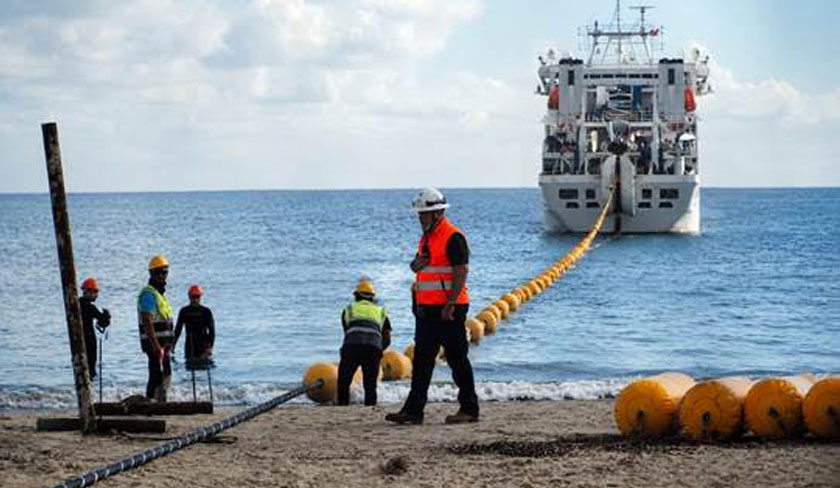
Post and Telecommunications Minister Sid Ali Zerrouki laid the first stone of the Medusa subsea cable landing point at Collo, west of Skikda, with commissioning planned for the end of 2026. Medusa is described as an 8,700km-plus system linking 10 Mediterranean countries at up to 20Tbps, with Algerian landings at Algiers and Collo and onward links of up to 900km to southern Europe. The ministry frames it as diversifying Algeria's international internet supply and preparing for 5G.
Unitel, the only Angolan operator in the 2Africa consortium, opened the cable landing station at Cacuaco in Luanda province after building the Angola branch, at a cost the company puts at about $43m. Angola has been allocated 23.6 Tbps of the system's projected 180 Tbps. The telecoms minister said the harder task now is extending terrestrial networks so the new capacity reaches users beyond the landing point.
Cameroon has finalised an MoU to join the EU-backed Medusa Africa subsea cable led by AFR-IX Telecom and sent it to the Presidency for sign-off. The country's share is put at CFA32.8bn (about US$58.6m), and a Kribi landing would give it a fifth international route alongside SAIL, WACS, SAT-3 and NCSCS, with Medusa due live in 2028. The catch: Camtel uses only around 16% of the capacity on its existing cables.
Starlink switched on service across Sao Tome and Principe, which the company called its 26th African market, adding a satellite alternative for a country of about 240,000 people that depends on submarine cable capacity and patchy terrestrial networks with little backbone investment. The report expects government, tourism operators, banks and higher-income households to be the first users because hardware remains expensive, and gives no pricing or regulator detail.
Stakeholders in The Gambia met to validate a WARDIP-funded feasibility study for a second submarine cable, covering candidate landing sites and beach manholes as well as environmental and social risks. The ACE cable, in service since 2012, is described as near its limits, and the project, first a bilateral plan with Guinea, now involves five countries. A transaction advisory process will settle how the cable contractor is selected.
The operator committed $434m across four corridors: new subsea capacity and 5G-Advanced, an AI corridor with GPU clusters and Tier IV data centre space, a startup corridor and a payments corridor. Mauritius ranks third in Africa on the ITU ICT Development Index at 86.3, and the plan is explicitly about brokering traffic between Africa and Asia.
Angola Cables has launched Cloud Node Luanda-02, its third in-country node on the Clouds2Africa platform after Luanda and Sangano, with further nodes in South Africa, Namibia, Nigeria, Ghana and Tanzania. The company pitches it as a sovereign alternative to the US hyperscalers, billing in kwanzas and keeping backups inside Angola to cut exposure to foreign payments. It paired the launch with Acelera Clouds, a voucher scheme giving startups free use for a limited period.
Orange Sierra Leone commissioned a data centre in Bo, in the Southern Region, on 29 November 2025 with President Julius Maada Bio in attendance. The facility, an investment of more than 23 million euros, replicates the operator's Freetown data centre as a disaster recovery site and extends service toward Makeni, Kono and Kenema. Capacity and tier were not disclosed.
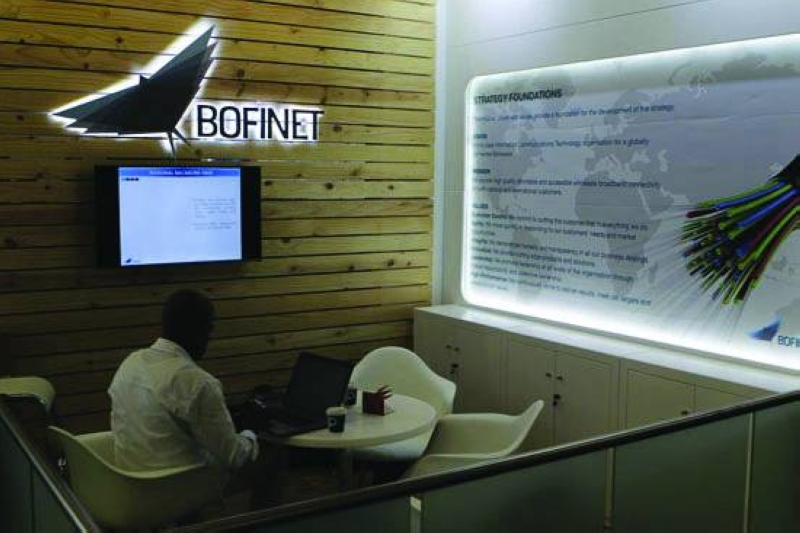
Botswana officially launched the Digital Delta Data Centre, built and run by state wholesaler BoFiNet, which describes it as the country's only Tier III certified, carrier-neutral national facility. BoFiNet pitches it as a potential regional hub on the back of Botswana's fibre network. No capacity or cost figures were published.
Ghana's Cabinet has approved a Dig Once policy, proposed by the Ghana Chamber of Telecommunications, under which all new roads must include fibre ducts and access chambers. Road and construction works cause about 60% of fibre cuts in the country, with repairs costing nearly US$70 million between 2021 and Q3 2025, according to the report. The aim is to cut trenching costs and network downtime for operators.
Orange Mali has secured €80m (US$92.7m) in loans, €50m from the IFC and €30m mobilised from the West African Development Bank (BOAD), to add 300 4G sites and build out a fibre network meant to reach about 300,000 homes and small businesses, close to half of them rural. Part of the money replaces diesel generators at sites with solar, which the parties estimate cuts more than 8,000 tonnes of CO2 a year. It is the first deal under the IFC and Orange Middle East and Africa partnership signed in May 2025, in a market where internet use stood at 35.1% of the population at end-2025.
Ministers from West and Central African states, meeting in Cotonou at a summit hosted by Benin's government with the World Bank, adopted a declaration with 2028 targets that include regional data centres hosting at least 40% of critical government data, national backbones interconnected through regional IXPs, and average data costs cut in half. It also targets three regional AI centres of excellence by 2028 and a Digital Transformation Facility to pool financing, though no amounts are attached.
Niger took provisional handover on 14 November 2025 of all its sections of the Trans-Saharan fibre backbone, 1,031km in total on five routes running to the Algerian, Chadian, Nigerian, Beninese and Burkinabe borders. Cross-border interconnection has no confirmed date: technical talks with Chad have not advanced since June 2025 and the Benin border remains closed. The ITU put internet penetration in Niger at 23.2% in 2023.
State operator TTCL has announced Kilimanjaro One, a 1,900km submarine cable from Dar es Salaam to Mauritius with branches to Unguja and Mafia islands and a possible later spur to Madagascar. Construction is expected to start in 2026, with completion targeted for late 2027; cost and partners were not disclosed. TTCL ties the project to its 14,000km national fibre backbone and to plans for a Pan-African green AI and robotics data centre.
LG3 is the opening phase of a roughly $100m two-year African programme, with the Lagos site slated to open in Q1 2026. Separately Rack Centre began hosting EdgeNext’s CDN and cloud services locally, shortening delivery routes for gaming, fintech and content workloads.
Digital Realty has opened ACR2 in Accra, its first Ghanaian facility and an extension of its PlatformDIGITAL footprint into West Africa, with about 1.7MW of installed IT capacity expected. The site has direct access to the 2Africa subsea cable and local fibre routes, and is aimed at banks, telcos, enterprises and public bodies that need compliant in-country hosting.
SOCOF, the DRC's state fibre company, Tanzania's TTCL and Mauritius-based BCS agreed on 20 October 2025 to lay 160 to 186 km of cable under Lake Tanganyika between Kalemie and Kigoma. The link starts at 100 Gbps, is budgeted at US$15m to 20m, and is due to start works in Q1 2026 with full service by end 2027. The partners claim it will halve DRC bandwidth costs and generate US$1bn to 2bn of regional economic value over a decade.
Airtel Africa’s data centre arm started work on a two-phase 44MW site outside Nairobi, ready for service in the first quarter of 2027. On completion it would pass iXAfrica’s 22.5MW facility as East Africa’s largest announced campus by installed power.
Djibouti Telecom plans a 3,200 to 3,500km southern extension of the DARE1 subsea cable from Mombasa to Mtunzini in South Africa, with landings at Dar es Salaam and Mtwara in Tanzania, Nacala, Beira and Maputo in Mozambique, and Mahajanga and Toliary in Madagascar. The existing system, live since 2021, links Djibouti with Bosaso and Mogadishu in Somalia and Mombasa at 36Tbps over three fibre pairs. Work is slated to start in 2026 with service targeted for 2028.