CAR's digital economy minister Roger Andjalandji proposed creating a local internet exchange point at a network resilience session on the sidelines of the ITU Plenipotentiary Conference in Doha on 10 November 2026. The country has had no IXP since at least the World Bank's 2020 assessment, and the Bank says one could cut international bandwidth costs by up to 50%. He also called for more diverse regional fibre routes and better integration of satellite and terrestrial networks.
On 8 October 2026 the Central African Republic revived a plan to connect to DR Congo's fibre, which runs about 650 km from Kinshasa to the WACS landing at Moanda, to reduce its reliance on routes through Cameroon and Congo. Route, cost and timeline were not given. CAR's 935 km national backbone dates from February 2023, and internet penetration was about 12% at end 2025.
Niger was set to open its fibre link with Algeria on 5 October 2026 at Assamaka on the border, giving the landlocked country a northern route onto Algerian international capacity along the Agadez to Assamaka corridor of the Trans-Saharan backbone. Niger's share of the backbone is 1,031km on five routes plus an 88km urban loop connecting government sites to a planned Tier III national data centre. Its existing southern path through Benin reaches three subsea systems with about 580 Gbit/s of combined installed capacity at end-2024.
Angola Cables is fitting Ciena WaveLogic 6 Extreme optics to its SACS (6,165 km, Angola to Brazil) and MONET (10,556 km, Brazil to the US) systems, enabling 800 Gb/s services and capacity sold from 100 Gbps up to a full fibre pair. The company quotes a 130 ms round trip between Angola and the United States. It is pitching the upgraded route to hyperscale, cloud, wholesale and content customers, along with spectrum and managed fibre offerings.
Cabo Verde Telecom and exchange operator DE-CIX signed a letter of intent to study a South Atlantic interconnection corridor between Lisbon and São Paulo, with CVTelecom supplying transport capacity and DE-CIX its exchange ecosystems in Europe and the Americas. CVTelecom would gain access to DE-CIX in Frankfurt, Madrid, Marseille, New York and São Paulo; scope and commercial terms await a definitive agreement, and no dates were given.
A World Bank Group private sector diagnostic estimates Djibouti could draw up to US$240 million and 1,300 jobs in data centre investment, plus up to US$390 million in private solar, if it fixes regulation, energy supply and market access. The country hosts up to eight subsea cables but only two data centres, both close to full, with three more in development. The barriers named are opaque licensing (decrees under the 2025 Digital Code are still unclear), self-generation caps and electricity pricing, and a state-owned entity's grip on wholesale internet capacity.
Chad's telecoms minister told the World Bank on 15 September 2026 that the country needs about 8,000 km more fibre, and that six provinces are still off the national backbone. Since the conflict in Sudan cut the eastern link, Chad's only working international exit runs through Cameroon. The report notes that the 1,200 km in the state modernisation programme is planned capacity rather than installed cable, and that a World Bank project with about US$92.2m in grants runs to 2029.
Nigeria's digital economy minister Bosun Tijani visited N'Djamena on 16 September 2026 to discuss linking Chad to Nigeria's planned 90,000 km open-access BRIDGE fibre network, which would give Chad access to international capacity landing at Lagos. The two sides signed a joint communiqué and handed details to technical teams. No financing was mentioned.
Somaliland Cable (Somcable) operates both the 2Africa and PEACE subsea landings at Berbera and is tying them into terrestrial fibre toward Ethiopia and South Sudan, pitching Berbera as an alternative gateway to Kenya's Mombasa for landlocked markets. The company says the two physically separate subsea routes give it a technical edge, and it has opened talks with Ethio Telecom on larger international capacity leases. No distances, capacities or investment values were given.
Gabon plans 1,651 km of new fibre, close to doubling its national backbone, under a public-private partnership between asset holder SPIN and Gabon Fiber S.A. validated at Libreville workshops and due for signature on 14 September 2026. Authorities put current international capacity across 2Africa, ACE, Maroc Telecom West Africa and SAT-3/WASC systems at 20 terabytes, rising to 400 with Medusa Africa by 2028. An August fibre cut across four provinces and rising cable theft underline resilience problems.
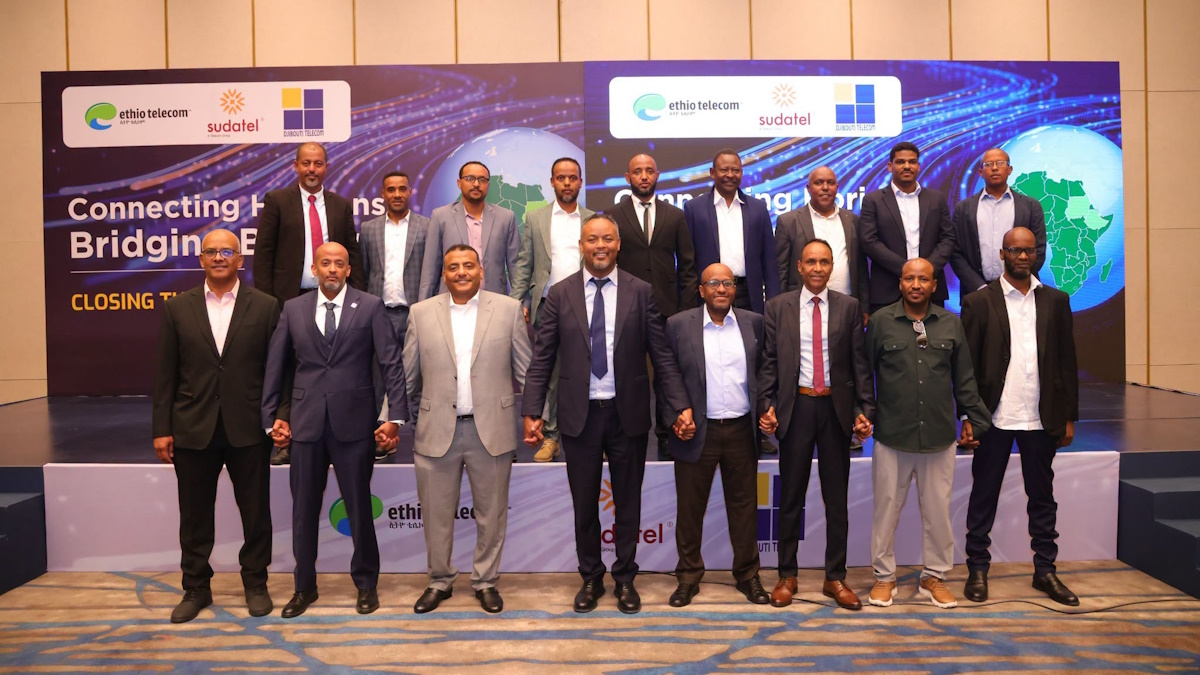
Ethio Telecom, Djibouti Telecom and Sudatel are moving the Horizon Fibre terrestrial corridor toward commercial launch after a stakeholder meeting in Addis Ababa attended by Google, Meta, Microsoft, AWS, Airtel Africa, WIOCC, China Mobile International and others. The multi-terabit route links subsea landing stations in Djibouti and Port Sudan through Ethiopia, offering carriers and hyperscalers an overland alternative to the Red Sea path. Ciena, Nokia and BringCom are advising on the architecture; route length and a build timeline were not given.
On 8 September 2026 Equatorial Guinea's government gave the telecom regulator ORTEL control of Starlink's commercial operations, under the state secretariat for artificial intelligence, after months of talks with SpaceX over licence fees, tax, security requirements and a possible local entity. Licence terms, ORTEL's operating role and the tax regime have not been published.
Algeria Telecom and Niger Telecom signed agreements in Niamey on 8 September 2026 for a 100Gb terrestrial link between In Guezzam and Agadez, with Algeria donating the transmission equipment, as part of the Trans-Saharan backbone that also targets Nigeria, Chad, Mali and Mauritania. The telling figure is on the compute side: according to Niger's digital economy minister, the backbone was 97% built at the start of 2026, but the national data centre attached to the same project was only 8% complete. The Niger fibre segment received provisional acceptance in November 2025; no financing figures were given.
The US Trade and Development Agency signed an agreement on 9 September 2026 to fund a feasibility study by CSquared Ghana for an open-access fibre network strung along power lines run by the Northern Electricity Distribution Company (NEDCo). The study is to assess commercial viability, technical design, expected demand and a financing plan for northern Ghana. The grant size and route length were not disclosed.
Mauritius-based INDOI (IOX) and partners announced the LuLu Coastal Cable System, about 500 km along Kenya's coast with five landings from Mombasa to Lamu, including Vipingo SEZ, Kilifi and Malindi, pairing a submarine cable with a protected terrestrial route. Blue Trade Investments is the Kenyan landing party, with ARISE IIP, AfriTrade and Kingdom Bank involved; the developers cite 144 fibre pairs and up to 60 Tbps per pair. Ready for service is targeted for Q2 2028 subject to contracts, and no supplier, construction start or cost has been named.
Digital Realty has opened NBO2, a 6.2MW facility beside its existing NBO1 on a Nairobi campus planned for 34,000 square metres, with up to 4,000 square metres of IT space in the new building. The site connects to more than 100 networks, two internet exchange points and a satellite teleport for backup. The former iColo business now trades under the Digital Realty brand in Kenya and Mozambique. Mordor Intelligence puts Kenya's total data centre capacity at 15MW in 2025, forecast to reach 25MW by 2030.
Orange has announced ReuNION, a 16-fibre-pair cable of about 320Tbit/s linking La Reunion to the South African coast, costing about EUR93.1m with EU, French state and operator funding, and due for service in 2028. It is meant to replace the Safe cable, in service since 2002 from Melkbosstrand and Mtunzini via Mauritius to Asia, which Reunion operators expect to reach end of life from 2027. Orange has not named the South African landing site.
Telecom Egypt has contracted Power Sub Link to build a repeaterless cable of about 200km from Sharm El Sheikh to Taba, extending its Red Sea festoon into one subsea route linking Suez, Zafarana, Ras Ghareb, Sharm El Sheikh and Taba. The operator cites about five petabits per second of capacity and a ready-for-service date in Q4 2027. It adds landing options and redundancy for Asia-Europe traffic crossing Egypt.
After a fibre cut in Cameroon knocked out service in the Central African Republic, Ecofin examines the country's reliance on the Central Africa Backbone route through Cameroon, where Camtel has previously cut off Chad over unpaid bills. The planned Congo link is not yet live, with the Owando to Ouesso section still under construction and jointly run by two operators. Routes via South Sudan, Sudan, Kenya, Nigeria or North Africa are described as theoretical and dependent on cost, distance and politics.
KINIX, the Kinshasa internet exchange run by ISPA-DRC, has added the Tier III Raxio DRC facility alongside OADC's FIH1, making it a two-site exchange. It counts 23 networks over 25 connections, including all four Congolese mobile operators plus Meta and Cloudflare, and moves more than 1 Tbps, which it expects to pass 2 Tbps after the Raxio deployment. Operators from outside the DRC already peer there as KINIX positions itself as a Central African hub.
A mid-term review of Congo's digital plan finds that the network has grown faster than its use. WACS (2012) and 2Africa (2023) land at Matombi, an operator-funded backbone runs Matombi to Pointe-Noire to Brazzaville, the regulator ARPCE runs a Pointe-Noire data centre, and the Central African Backbone already reaches Gabon and CAR with the Cameroon link still being built. Meanwhile e-government services remain largely undigitised, though mobile data volumes grew more than 40% year on year.
Botswana Fibre Networks has finished its 2025-2026 local access programme, a P43m build taking fibre to Moshupa, Ramotswa-Taung and Thamaga. It connected 191 business, government and residential customers across the three villages and created 210 construction jobs.
Project BRIDGE, Nigeria's plan for about 90,000km of new fibre reaching all 774 local government areas, has moved into execution with the incorporation of Bridge Open Access as its project company. Private investors are to hold the majority stake and government a minority, and the World Bank, AfDB and EBRD have committed financing, though no amounts or rollout dates were given. Right-of-way disputes and vandalism remain risks.
Óscar Ondo handed over leadership of GITGE, the state telecom infrastructure company, on 7 August 2026 after nearly 13 years, having been named Secretary of State for Telecommunications and AI Systems by Decree 61/2026. The piece credits GITGE with Ceiba-1, Ceiba-2 and the Ultramar link to Sao Tome, and says international capacity rose from about 500 Mbps to over 30 Gbps. Feasibility studies under the AfDB-backed PARED project cover FTTH in four towns, cable landing buildings in Malabo and Bata, and a possible new international submarine cable.
Cloud provider Bubble, the first company licensed by INTIC in the advanced category, will run two availability zones, one in Maputo City and one at Beluluane in Maputo Province. The company says the dual-site setup improves continuity and keeps customer data and applications in the country.