Nigeria's digital economy minister Bosun Tijani visited N'Djamena on 16 September 2026 to discuss linking Chad to Nigeria's planned 90,000 km open-access BRIDGE fibre network, which would give Chad access to international capacity landing at Lagos. The two sides signed a joint communiqué and handed details to technical teams. No financing was mentioned.
Canalink, GUILAB, International Mauritania Telecom, Orange Group, Orange Côte d'Ivoire, Sonatel and Silverlinks have signed an MoU to start Via Africa, a consortium subsea cable from the UK, France and Portugal down the Atlantic coast via the Canary Islands, Mauritania, Senegal, Guinea, Côte d'Ivoire and Nigeria, with extensions further south planned. Members will jointly fund a route study and are preparing a tender to pick a cable supplier; no capacity or delivery date was given. The stated aim is a route that adds diversity to Africa's existing international links.
The African Development Bank has approved a $200 million loan for Nigeria's Project Bridge, part of an $800 million sovereign package that also includes $500 million from the World Bank and $100 million from the EBRD. The project aims to lay 90,000km of open-access fibre, taking the national backbone from about 30,000km to about 120,000km, reach all 774 local government areas and build cross-border links to Benin, Cameroon, Niger and Chad. The bank says design criteria favour hybrid and renewable power for resilience.
Cassava Technologies has put its first Nvidia-based AI factory into service inside its South African data centres and plans further AI infrastructure in Nigeria, Kenya, Egypt and Morocco. South Africa's CSIR is an early user, and Cassava says it will offer local-language services starting with Swahili before adding Zulu and Afrikaans. The rollout sits on its CAIMEx model exchange launched in November 2025; Nvidia is also an equity investor in Cassava. No investment figure or GPU count was disclosed.
The Internet Exchange Point of Nigeria has installed an authoritative DNS server, using hardware from Canada's CIRA, that answers close to 1,000 queries a second so providers can resolve addresses locally rather than abroad. Chief executive Muhammed Rudman said IXPN has also signed an MoU with Verisign to act as a regional resolution site that could host .com and .net infrastructure in Nigeria. The exchange first passed 1Tbps of peak domestic traffic in April 2025.
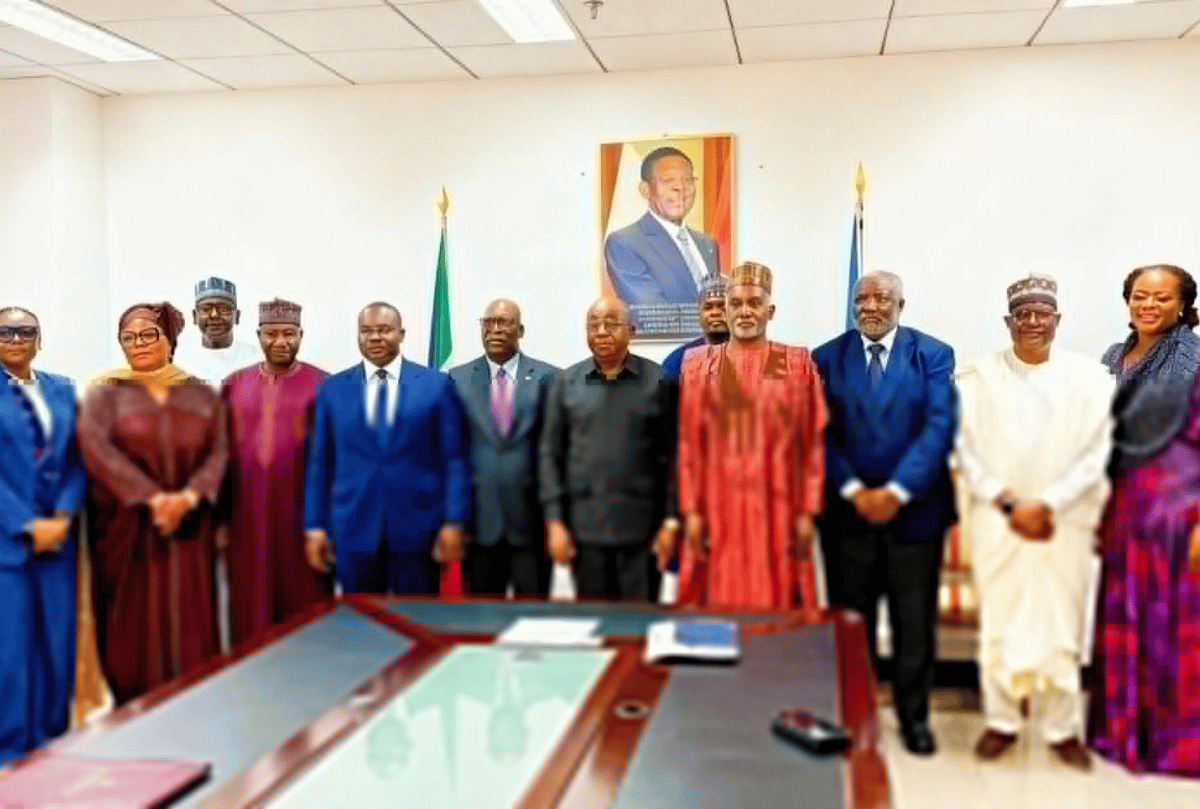
Backbone Connectivity Network Nigeria and Equatorial Guinea's transport, telecommunications and AI minister Honorato Evita Oma signed an agreement on principles in Malabo for a new subsea fibre cable between the two countries, also covering cybersecurity cooperation. It follows President Tinubu's August 2024 state visit. The document is a framework only, with no cost, capacity, landing points or schedule disclosed.
LG3 is the opening phase of a roughly $100m two-year African programme, with the Lagos site slated to open in Q1 2026. Separately Rack Centre began hosting EdgeNext’s CDN and cloud services locally, shortening delivery routes for gaming, fintech and content workloads.
CSquared and its Togolese joint venture CSquared Woezon, with Nigerian operator Phase3 and Benin's state infrastructure company SBIN, have commissioned a terrestrial fibre route from Lagos to Accra that crosses Benin and Togo, with a quoted latency of 11ms between the two cities. The partners present it as an overland alternative to the coastal subsea cables after the March 2024 seabed rockfall that cut several systems and disrupted service for an estimated 300 million people. Route length and capacity were not disclosed, and the ready-for-service date was left to be announced.
Equinix, Kasi, Nxtra by Airtel and OADC are all building close to the eight subsea landing stations on Lagos Island, buying short routes to international capacity and access to cooling water. Nigerian capacity is expected to move from about 64MW to roughly 200MW by 2027, second on the continent behind Johannesburg.