Communications minister Solly Malatsi told Parliament the National Data and Cloud Policy was designed to give multinationals the certainty to invest in data centres, with incentives handled by the trade department. He said closer work with host municipalities is needed to avoid delays that could deter investment. President Ramaphosa had said in July that hyperscalers have put well over R35.8 billion into local cloud and data centres.
South Africa hosts about 70% of Africa’s data centres and has drawn commitments from Microsoft and Amazon, with the market expected to roughly double to $5bn by 2031. Reuters reports the build-out is colliding with the country’s electricity and water constraints, raising the question of whether new load competes with households already exposed to outages and drought.
Balancing Act's African Interconnection Report, commissioned by WIOCC, finds planned carrier-neutral data centres in sub-Saharan Africa fell from 38 to 23, while existing facilities slipped from 75 to 72 and country coverage stalled at 21. It blames smaller operators struggling to sign tenants, weak francophone demand outside Cote d'Ivoire, financing tied to sales milestones, and delays from governments and elections, while consolidation grows. The report also says the Microsoft and G42 Kenya project was pushed back after seismic issues at its Rift Valley site and may move to Nairobi, and that large Nigerian builds have yet to turn into orders.
Equinix plans more South African data centres under a R7.5 billion (US$438 million) programme pitched at AI demand, having bought further land in Johannesburg and Cape Town totalling 327,000 square metres. The company plans 160MW of additional capacity in the country and funds its South African build from its own balance sheet. Across Africa it reports 409MW operational and 172MW under construction, and it opened a purpose-built Lagos site at the end of 2025. No completion dates were given; the figures come from an Equinix interview with Bloomberg.
Cassava Technologies has put its first Nvidia-based AI factory into service inside its South African data centres and plans further AI infrastructure in Nigeria, Kenya, Egypt and Morocco. South Africa's CSIR is an early user, and Cassava says it will offer local-language services starting with Swahili before adding Zulu and Afrikaans. The rollout sits on its CAIMEx model exchange launched in November 2025; Nvidia is also an equity investor in Cassava. No investment figure or GPU count was disclosed.
Open Access Data Centres, part of WIOCC Group, has bought seven NTT DATA facilities in Bloemfontein, Cape Town, East London, Bryanston, Parklands, Gqeberha and Umhlanga, closing on 31 December 2025 after Competition Commission approval. The deal is a sale and leaseback: OADC owns and runs the buildings while NTT leases them back and keeps its customers. It takes OADC's South African capacity past 25MW; terms were not disclosed.
National Treasury has elevated data centre infrastructure to the same strategic tier as electricity, ports and transport, and is examining incentives to support the build-out. Around 55 facilities are already operating, with more than R50bn of investment expected over three years as Microsoft, Google and AWS expand cloud and AI capacity in the country.
Cavaleros has plans for 360MW in Cape Town and 200MW north of Johannesburg, while Teraco is targeting 500MW in total, 290MW of it new in Johannesburg. Together the announced pipeline adds roughly 1,000MW to national demand, about one stage of load shedding, and points to a supply squeeze by 2029 unless generation grows with it.
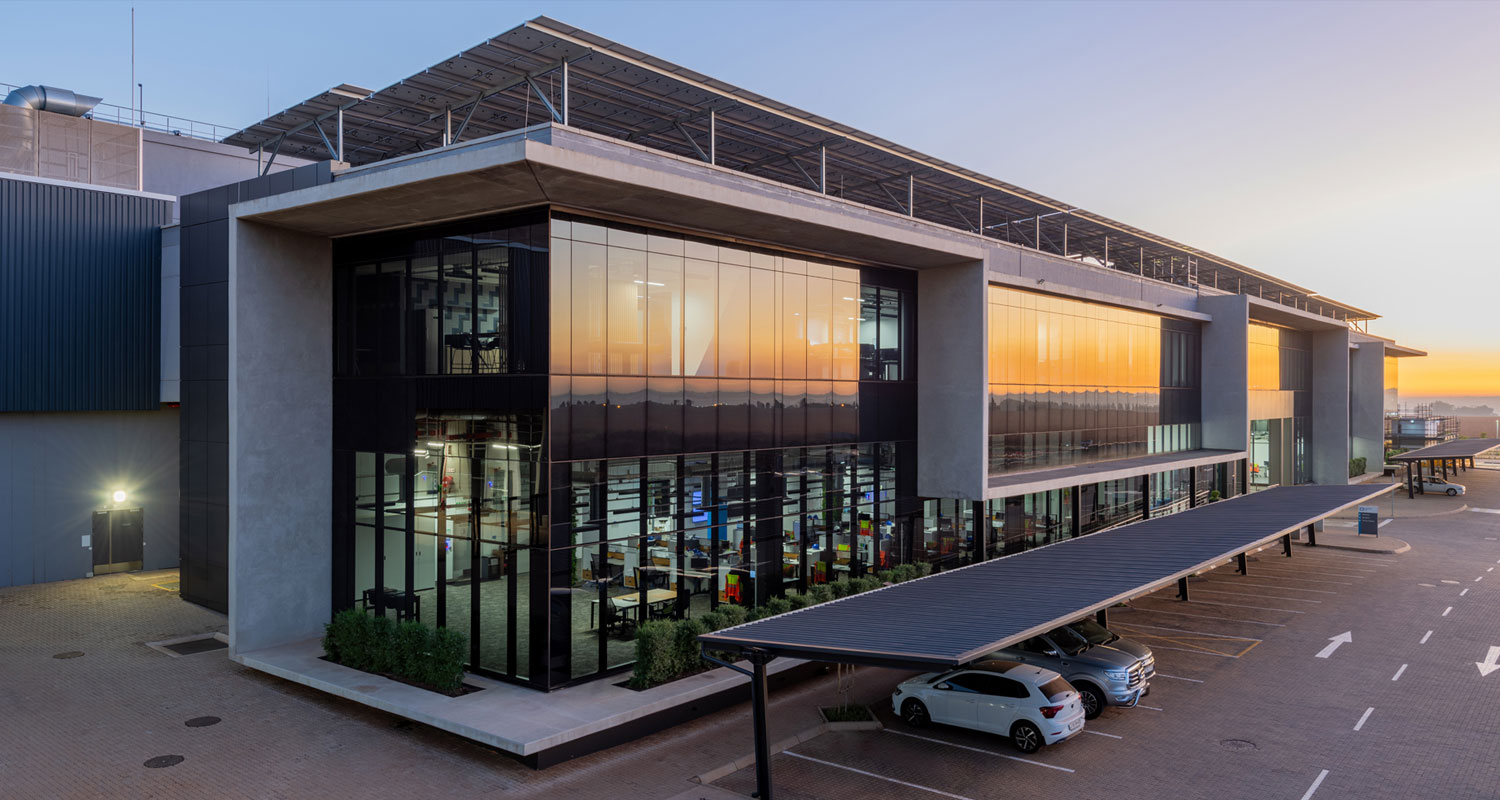
Teraco began construction of JB7, a 40MW critical-load facility on its Isando campus in Ekurhuleni, funded through an R8bn syndicated loan and due to open in 2026. It takes the campus to about 110MW and uses a zero-water cooling design, which matters in a market where the water constraint is as binding as the power one.