Judge a site on the infrastructure that reaches it, not the country it sits in.
Where is land worth assembling for data centre use, and what makes it worth it?
Connectivity, power, and demand read separately per market, so a site can be judged on the infrastructure that reaches it rather than on the country it happens to sit in.
“Good connectivity” describes a coastal landing station and a single upstream provider equally well, and the distinction between them is what separates a campus site from a plot with a view.
Power and demand assessed apart
The power case and the occupier case usually arrive in different reports on different bases, and they rarely reconcile in the room where the decision actually gets made.
Capital partners will not take it on trust
A lender asked to fund an assembly wants to check the inputs rather than accept a summary, and a thesis built on figures that cannot be attributed gets discounted.
No read on the credible occupier set
Land is only worth assembling if somebody will build on it, and that question needs the operators already active in the market rather than a demand narrative.
What Africa Digital gives you
One public framework, applied identically to all 54 African markets, with every input sourced and dated.
The routes decide the address
Fibre reach, coastal access for submarine cable landings, and existing hyperscale presence carry their own weights inside the connectivity pillar rather than being folded into one claim.
Demand and power in the same view
A market page shows the demand side and the power side against the same 100-point scale, so the case for a build is legible in one place instead of being assembled from three reports that disagree.
Evidence a capital partner will accept
Every figure carries its source and its date, and the whole methodology is public. That is the difference between a land thesis a lender can check and one they have to take on trust.
Who is active, market by market
Every market page carries that market’s sourced coverage, so the operators, projects, and financings actually moving there are readable as published record rather than as a demand narrative.
54
markets scored
5
pillars per market
259
stories on the wire
The five pillars
Connectivity and Fibre is the pillar that decides which locations inside a market are worth assembling land in. It is one of the five the composite is built from, and it is scored the same way in every market.
Power Infrastructure
Generation capacity and electrification underpinning always-on compute.
Connectivity & FibreYour focus
Submarine-cable access, fibre reach, and hyperscale footprint.
Currency & GDP
Monetary stability and the size of the economy.
Market Demand
Addressable market size and workforce readiness.
Investment Climate
Governance, ease of doing business, capital inflows, and language reach.
The composite is a weighted sum of these five pillars. What each pillar measures, and how much it carries, is our own model and is not published; every market is scored on the same five pillars, under the same model. Full method
CAR's digital economy minister Roger Andjalandji proposed creating a local internet exchange point at a network resilience session on the sidelines of the ITU Plenipotentiary Conference in Doha on 10 November 2026. The country has had no IXP since at least the World Bank's 2020 assessment, and the Bank says one could cut international bandwidth costs by up to 50%. He also called for more diverse regional fibre routes and better integration of satellite and terrestrial networks.
Gabon launched 5G on 26 October 2026, with Moov Africa Gabon Telecom and Airtel covering Libreville, Akanda, Owendo and Port-Gentil, and Airtel also Ntoum, while regulator ARCEP demanded firm service commitments. The report lists the underlying weaknesses: backbone gaps in several provinces, an August 2026 fibre break, copper theft, outages blamed on load shedding, and a May 2026 fault on the ACE Libreville to Sao Tome segment that left three of four submarine systems working.
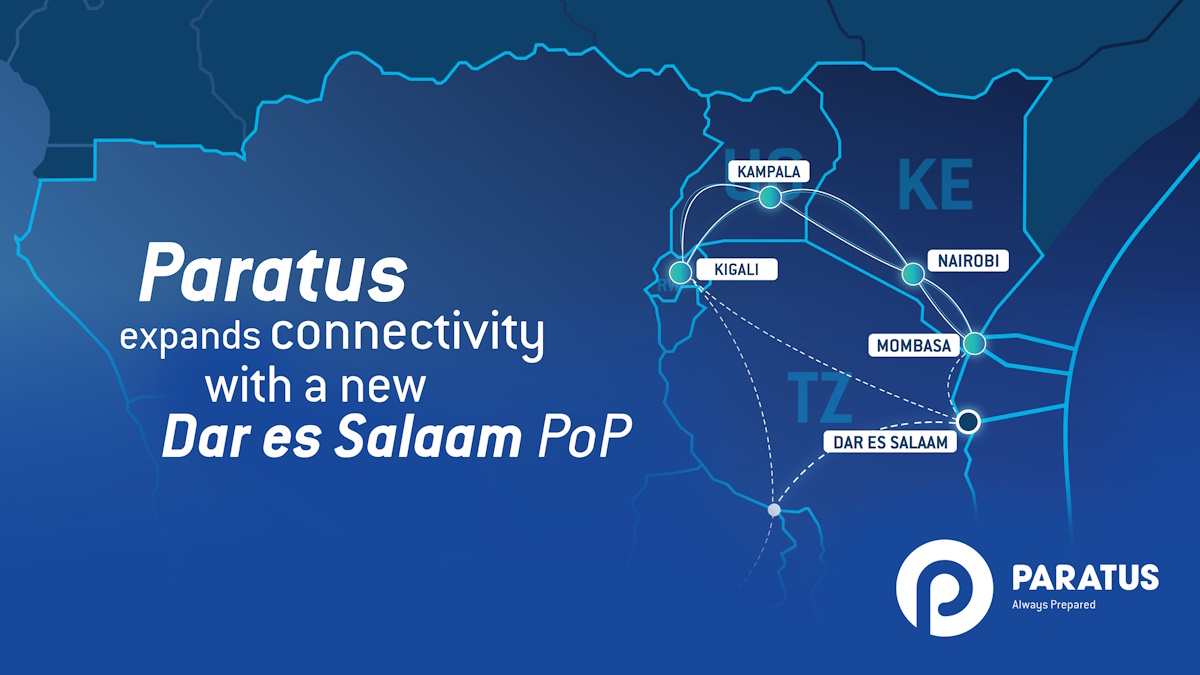
Paratus Tanzania set up a point of presence at Wingu's Dar es Salaam data centre in September 2026, linking Tanzania into the Paratus network north to Nairobi via Mombasa, south to Maputo and Johannesburg, and onward to Europe and the US. The company says the POP supports its Kigali-Mombasa fibre strategy and gives access to international subsea capacity for IP transit, Layer 2 and wholesale services. This is a company-issued release and no investment figure was disclosed.
Give us the market and the location you are looking at. We can look at what reaches that site, what is already built nearby, and who the credible occupier set is.
The full ranking, every market profile, and the whole methodology are public. Nothing on this site sits behind a signup, so this form is for work you want from us, not access you already have.

 Central African Republic